





Victoria’s police chief says investigators are working to reassure witnesses facing “violence and intimidation” from criminals in the construction sector, with police still yet to lay any charges related to corruption on taxpayer-funded Big Build sites.
In an interview with ABC Radio Melbourne, Chief Commissioner Mike Bush said it would be “long journey” for police investigating organised crime in the construction industry to build the necessary evidence base to bring charges relating to corruption and crime in the sector.
Taskforce Hawk was established two years ago to target crime in the construction sector and major Victorian government infrastructure projects, including the infiltration of outlaw motorcycle gangs.
“If you can imagine how some of the victims of those crimes actually feel, they have been heavily intimidated,”
Commissioner Bush said.
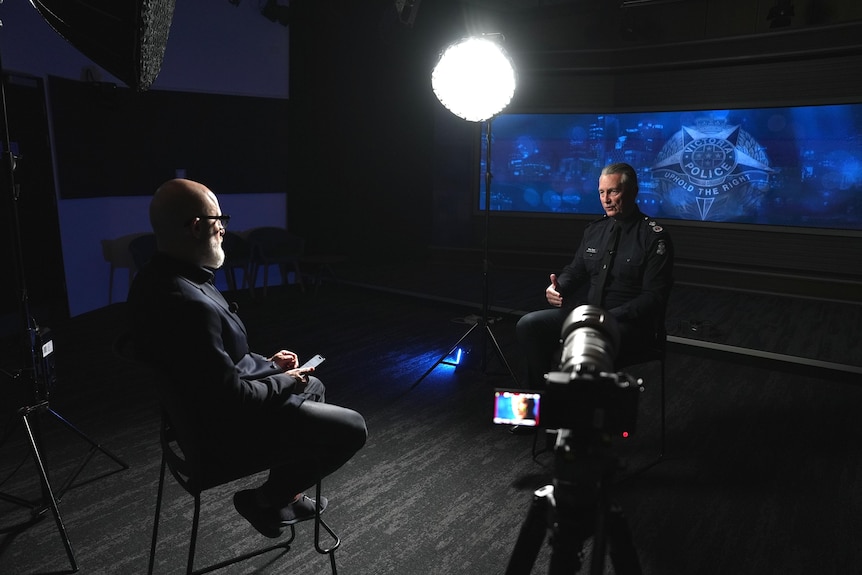
Chief Commissioner Bush and the ABC’s Raf Epstein during their wide-ranging interview. (ABC News: Darryl Torpy)
“Our team have been working really well to reassure them, to keep them safe, and bring those people forward, so those arrests are based upon people who are finally feeling reassured that we are here for them, that we’ll look after them.
“But that’s quite a long journey. Again, if you think about the modus operandi of the people who are committing these crimes it’s pure violence and intimidation.”
On Wednesday detectives from Taskforce Hawk arrested underworld figure Mick Gatto before releasing him without charge.
Mr Gatto, a self-described “mediator and arbitrator” in the construction industry, was named in a report for Queensland’s Commission of Inquiry into the CFMEU last year as a “malignant influence” who maintains criminal associations.c
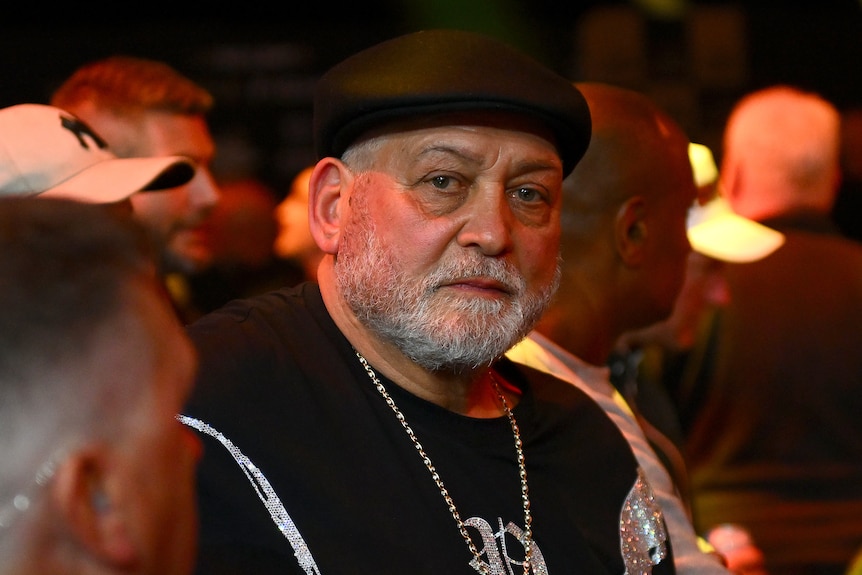
Mick Gatto was arrested on Wednesday and released without charge. (AAP: Morgan Hancock)
Commissioner Bush declined to comment publicly on Mr Gatto’s arrest.
“That’s an ongoing investigation,” he said.
He also declined to say if any criminal charges could be expected from Taskforce Hawk’s investigations.
“We are going to work very hard towards holding anyone to account that is involved in corruption, whether it be Big Build [sites], or any construction where corruption is concerned,” Commissioner Bush said.
“Before we can charge people, before we can put matters before the court, we absolutely need the evidence. Part of the evidence is that firsthand evidence from victims and people who were involved.
“But there also needs to be a suite of evidence to support those charges.”
‘Our job is to work our way up’
With organised crime-related firebombings continuing to menace business owners across Melbourne, Commissioner Bush said police were working to unearth the criminal networks responsible.
Police say crime syndicates have been commissioning young people to carry out firebombing attacks at Melbourne hospitality venues, establishing Operation Eclipse last month to put a stop to the attacks.
Commissioner Bush said the firebombings would stop when police “worked our way to the top of the tree”.
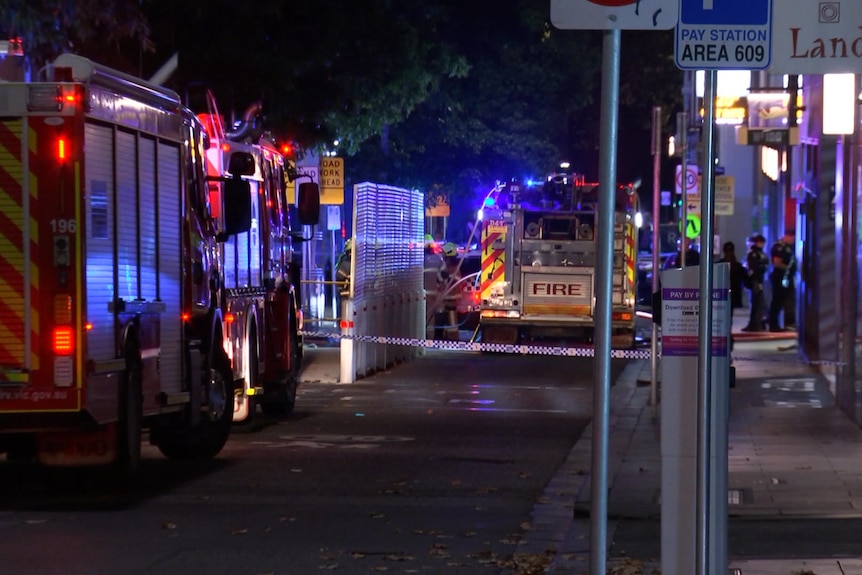
Hospitality venues and other businesses across Melbourne continue to be firebombed. (ABC News)
“We’ve had over 65 arrests, over 350 charges laid against people, but they are mainly the people who are doing the arson attacks, the kidnappings, the home invasions,” he said.
“Our absolute priority is to work out who are tasking these crimes. So they are tasking young people. This is obviously serious organised crime.
“It’s our job to get there. Everyone at Victoria Police is aware of the situation, they’re very alert, and we deploy a wide range of resources to do this.”
While police target those “pulling the strings”, Commissioner Bush asked those tasked with the attacks to consider the victims who were being terrorised.
“I’ve spoken to some of these young people and they are unaware of the impact that they have,” he said.
“We’ve got victims who suffer not just psychologically, because it’s very traumatic to go through these things, but they also suffer financially.
“People are out of work as a result. They’ve lost their income.
“I appeal to these young people [to] think of others, as well as yourself. You should be going to jail if you commit a serious crime, for the safety of the community.
“But you should also think about the impact of your actions on innocent people, because it’s significant.”

Chief Commissioner Bush says victims can suffer psychologically and financially. (ABC News: Darryl Torpy)
Commissioner Bush said he was adamant young people would be deterred from committing crime if there was “certainty of consequence”.
He said it was police’s view that if young people made bad decisions that hurt people “there has got to be a consequence”.
“We have had some young people that have been held to account by the courts who say, ‘Oh, I didn’t expect that,'”
he said.
“So when they are tasked, when they are co-opted by these serious organised crime people, who task them to these jobs, they give them this assurance that because you’re young you’ll be OK’. It shouldn’t be OK.”
Experts say crime is poised to be major issue at the upcoming November state election amid persistent concerns about youth crime.
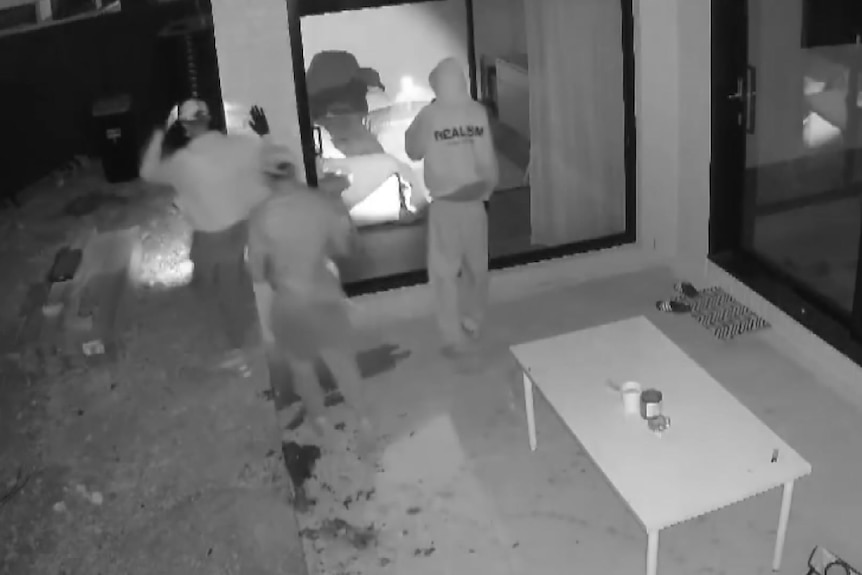
Police say youth offenders are involved in many home invasions in Victoria. (ABC News)
The latest crime statistics this year showed an increase in youth offending which the state government has labelled as “unacceptably high”.
The state government last year strengthened bail and sentencing laws and passed adult time for violent crime legislation that allows children to be sent to adult courts and face significantly longer prison sentences.
Police rethinking station staffing and operations
Following Victoria Police’s decision last week to cut police stations hours at some Melbourne stations, Commissioner Bush said the organisation was re-evaluating how it would staff police stations.
He said that while police stations were reassuring to the public, they also represented a problem to policing: cops sitting behind desks.
“A real principle for us is we’ve got a lot of very capable police officers who are working behind counters. Other people can do that job,” he said.
“[We want] our very capable, highly trained police officers out behind desks and out on the street. That’s our priority.”
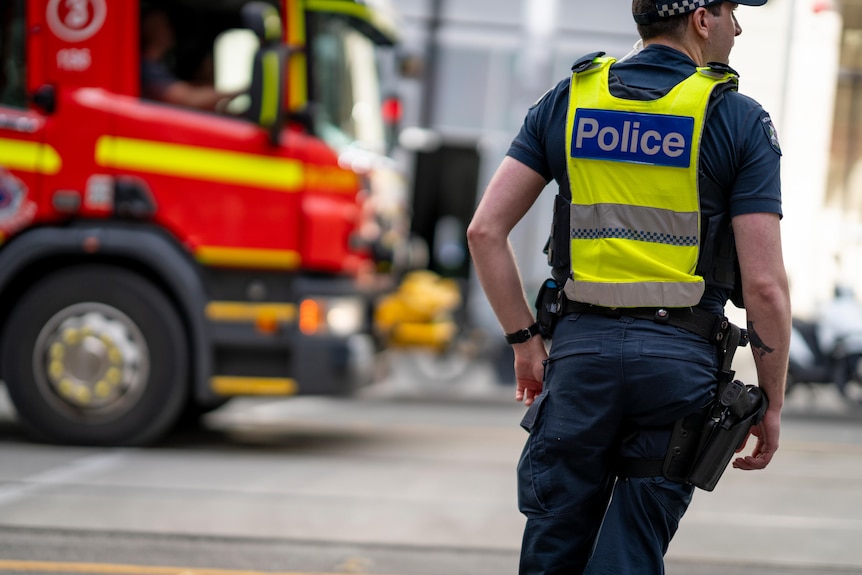
Getting members out on the streets is a priority for Victoria Police. (ABC News: Danielle Bonica)
Beyond the push to get more police on the frontline, Commissioner Bush said how stations would be operated and staffed were ongoing questions.
“We are not closing police stations. But we will limit the services we provide and provide other channels,”
he said.
“One way [to staff police stations] is through our reservists, and perhaps finding other people to do those roles. But they don’t need to be operational sworn officers.
“A lot of what happens over our police counters is police officers signing statutory declarations. We can find other ways for people to get that done.”
He said it was critical the public knew when and where police stations were open, but stressed that stations were not generally a first port of call in an emergency.
“We’ve got to provide a service to the public that they deserve … and also give certainty to which stations are actually open 24/7,” he said.
“We don’t want to be changing and setting false expectations.
“But if you need us, you call us. I don’t encourage anyone who needs us, especially urgently, to go to a police station.”
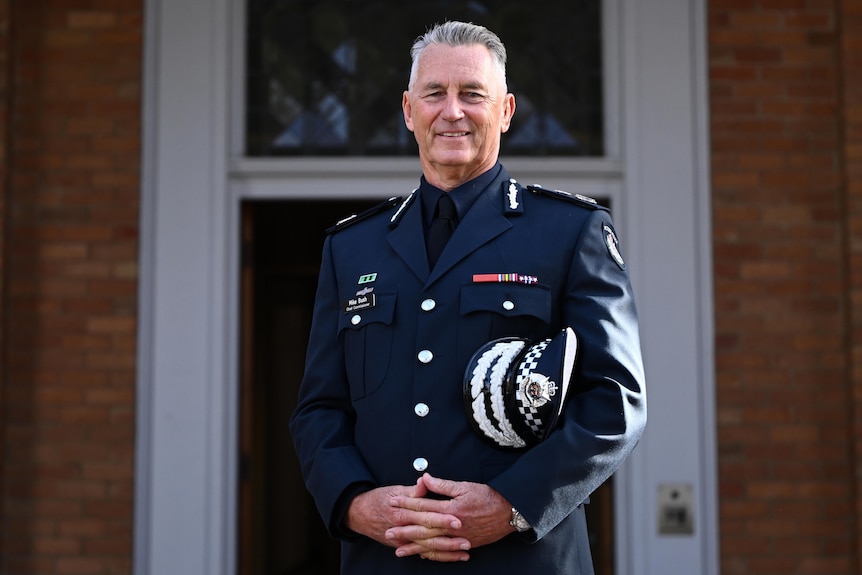
Commissioner Bush recently visited Mildura, the location of a new regional training academy. (AAP: Joel Carrett)
And with Victoria Police looking to fill 1,500 vacancies in the next three years, Commissioner Bush said he would be looking to the regions to boost the front-lines.
He said the force was looking to set up regional training academies, like the one planned for Mildura, to lure recruits from across the border.
“The reason why regional recruiting is so good is because we want to recruit locally, train locally, and deploy locally,” he said.
“A lot of our regions are quite short staffed and one of the reasons is because if we send people there, there is no accommodation.
“But if you grow up there, you’ve got a home, you’ve got your infrastructure, you’re a lot keener.
“We want to increase those numbers, absolutely.”