








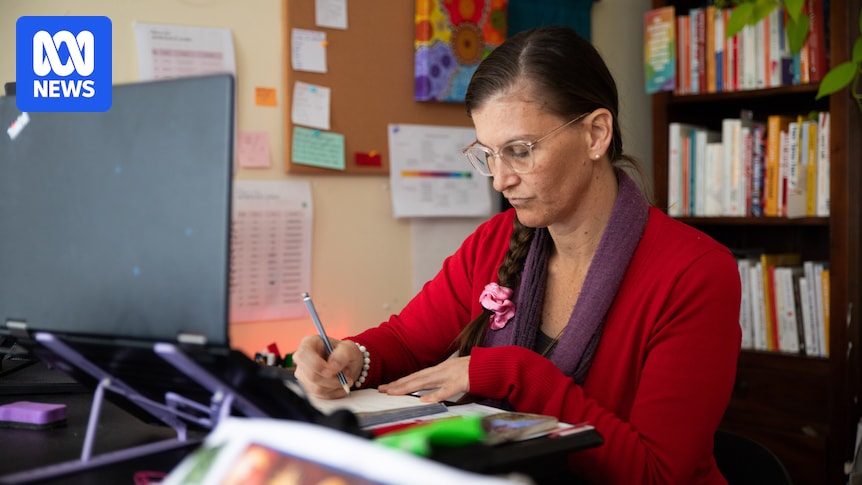
Amid a surging cost-of-living crisis, Trish Owen would like to work more hours, but earning too much could mean she loses her government-provided house — and a new study suggests she is not alone.
Ms Owen has been living in social housing in Perth for two decades, and believes she is “stuck” there because of Western Australia’s tight income eligibility limit for social housing — the strictest in the country.
“There’s this glass ceiling that I’m always bouncing against,” Ms Owen said.
WA’s income cap — the maximum amount someone can earn before they no longer qualify for public housing — is well below other states.
Trish Owens has faced homelessness before as a single mother. (ABC News: KENITH PNG)
The WA housing minister John Carey said income limits ensure social housing goes to those most in need, noting they have risen nine times since 2020.
But a new report commissioned by housing advocacy group Shelter WA found while there had been minor tweaks, that figure has been “effectively stagnant” for more than a decade.
Income ‘juggle’
Working as a housing consultant and advocate herself, Ms Owen said she was limiting her hours for fear of exceeding the $551 per week earnings cap, and putting her at risk of losing her social housing.
Having once been homeless as a single a mother battling mental health challenges, it is something she does not want to experience again.
“It’s a dance,” she said. “I get rent reviews every six months with housing, my income affects my housing, and it affects my Centrelink, so it’s this juggle.”
The income cap for a single person in social housing in most of WA is $58 below Queensland and less than half the highest cap of $1,114 in the Northern Territory.
Ms Owen said she would not be able to afford a private rental in the current market, let alone save for a deposit to buy her own place.
Turning down work
Ms Owen’s experience is not isolated, according to a Shelter WA report called The Eligibility Trap, which surveyed 181 people in the state either living in social housing or on the waitlist.
It found almost nine in 10 people surveyed managed their hours because of income eligibility caps and nearly half turned down work or additional hours to stay under the threshold.
Shelter WA chief executive Kath Snell said the situation was “really frustrating”.
“Here we have an enormous amount of people that are ready and willing to work but are absolutely petrified of losing their home should they take on extra hours,” she said.
The eligibility caps were also impacting people on the waitlist in WA, which had 23,395 applications as of March this year.
“That’s problematic,” Ms Snell said.
“If there’s a chance of work while you’re on that waitlist, people are having to say no because they will lose their place on that waitlist and there’s already a huge wait.”
Work or home conundrum
Ms Snell said there should be no disincentive for people to work.
“When you go into social housing, it doesn’t mean that you should be penalised, and it doesn’t mean that there should be disincentives to work,” she said.
Kath Snell lived in social housing as a child, but says both of her parents were able to work and save money. (
ABC News: Keane Bourke
)
“As a child I lived in social housing with my family. My parents were able to work, save money and went on to buy their own property.
“That can’t happen at the moment in Western Australia.
“People shouldn’t have to choose between working and having a home, they should be able to do both.”
Record high housing demand
The report recommended immediately raising WA’s income eligibility limit and indexing it to either inflation or to a relevant commonwealth payment rate.
But it did undertake detailed analysis on the impact such a move would have on the demand for social housing in Perth and WA, which is at record highs.
Demand for social housing in WA is at record levels. (ABC News: Kenith Png)
It acknowledged raising the cap to align with the real cost of renting would require “significant” investment in affordable housing stock for it to work.
Victoria substantially increased income caps in 2023-24 and experienced only a temporary, short-lived increase in applications, which subsequently flattened, in part due to an increase in social housing supply.
Minister Carey said he understood housing pressures were pushing more people to “seek the safety net of public housing”.
He also pointed to a recently announced overhaul to how the waitlist prioritises applicants and state government investment in new social homes.
“Since 2021, more than 4,000 new social homes have been delivered, and we are on track to deliver 9,800 by 2030,” he said.