







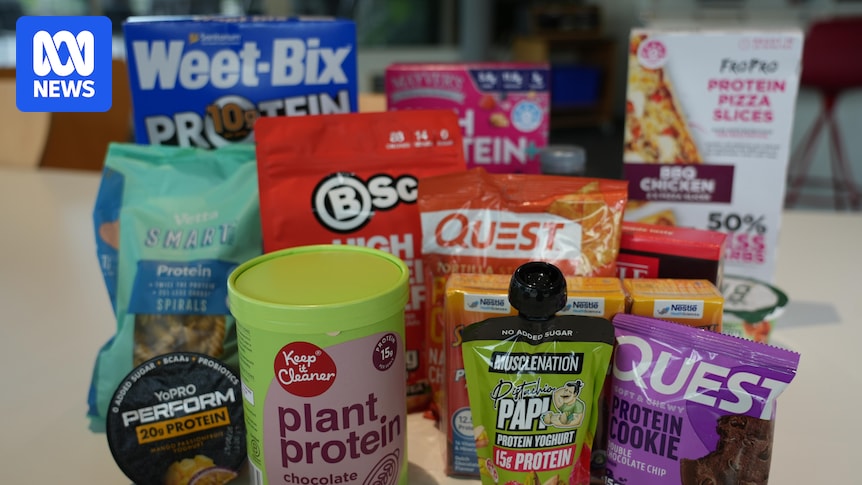
The protein craze sweeping the world is transforming Australia’s food industry, unlocking lucrative new opportunities for local food manufacturers.
What started as a niche market for bodybuilders has burst out of the gym and into mainstream households.
Today, supermarkets stock an astonishing range of protein-enhanced products, including yoghurt, pasta, bread, cereals, snacks, and even protein-infused water.
How protein became big business
Driving the trend are social media influencers and food marketers espousing the wellness and longevity benefits of protein.
Their targets are fitness fans, the diet-conscious, menopausal women, and the over-60s trying to maintain muscle mass.
Josh Gadischke says protein remains one of the strongest trends in food manufacturing. (ABC Landline: Cameron Lang)
In Kingaroy, three hours north-west of Brisbane, local cold-pressed nut oil processor Josh Gadischke has timed his entry into the market perfectly.
The managing director of Plenty Foods opened a new $22 million high-protein peanut powder factory in February and is already capitalising on the booming market with sales here and overseas.
He buys locally grown peanuts, classed as second grade due to blemishes and splits, and turns them into a low-fat, high-protein powder.
Blemished and split peanuts are being transformed into high-protein powder for food manufacturers. (ABC Landline: Cameron Lang)
“Protein is a big trend in food,”
Mr Gadischke said.
“We’ve seen a number of cycles through our time in manufacturing, and certainly protein is the one that’s here and now.
“Every food manufacturer is trying to boost protein content in their products, and I don’t think that trend is going to go away anytime soon.”
Turning peanuts into powder
The defatting and powdering process is done by an expensive imported press, the only one in Australia.
“We’ve seen other manufacturers try to produce a powder, but it’s very difficult to get a fine texture like this and the high protein amount,” Mr Gadischke said.
“So yes, the press is our secret recipe to producing a superfine nut powder.”
Plenty Foods’s peanut powder contains 55 per cent protein. (ABC Landline: Cameron Lang)
He believes his talc-like powder, which boasts a 55 per cent protein content, will compete strongly against traditional whey, soy and pea proteins, because it’s dairy and gluten free and has a pleasant taste.
“Some of those other traditional proteins can leave a lingering bad taste in the back of your throat that’s difficult for food manufacturers to overcome or try to mask,” Mr Gadischke said.
“The fineness of this is a real secret to the product because it gives it full dissolvability in beverages and sports nutrition drinks.“
The factory has been built with ten years of growth and a more than doubling of staff from 40 to 100 in mind.
Deb Frecklington says local manufacturing gives peanut growers confidence there is a market for their product. (ABC Landline: Cameron Lang)
Local member and Queensland Attorney-General Deb Frecklington said the new factory had buoyed locals saddened by the decline of the local peanut industry.
Kingaroy was once known as the peanut capital of Australia, but fierce competition from cheap imports and changing rainfall patterns saw growers exit the industry.
“To have a value-adding manufacturing factory right here gives confidence back to those growers that there is an end use for their product,” Ms Frecklington said.
New demand for an old crop
Local peanut grower Trevor Campbell was excited that there was a new buyer for the hard-to-sell second-grade nuts.
Trevor Campbell says increased demand for peanut powder could improve returns for peanut growers. (ABC Landline: Cameron Lang)
“It should push the price up somewhat, so for each and every farmer I think it can only be good because our peanut prices may increase,” Mr Campbell said.
“This is a whole new ball game to us getting the peanut powder into the industry.“
High-protein foods and beverages have moved beyond the sports nutrition aisle into the mainstream. (ABC Landline: Curtis Rodda)
As well as offering Australian food manufacturers a locally grown import replacement option, Mr Gadishke was targeting exports, especially to India.
“There’s a high vegetarian population, and they’re quite protein-deficient, so a plant-based protein is ideal,” he said.
“You’ve got one and a half billion people in India and a large young population coming through. With exposure to things like social media and those trends, they’re quite quickly picking up on it.”
Peanuts move through the processing system before becoming a fine powder. (ABC Landline: Cameron Lang)
Local peanut farmers, roasters and shellers, the Crumpton family, sells peanuts to Plenty Foods and was confident it could increase supply if powder production increased.
“We’ve got expansion plans, we’ve got extra capacity, and we’ve done a lot of improvements over the last couple of years to get more production done, so we can grow with Josh,” said Crumptons’ general manager Daniel Cook.
“I think he’s very brave. When we look at the general trends in the industry, I think it’s a call that he’ll look back on in 10 years time and be glad he did it.”
Watch ABC TV’s Landline at 12:30pm AEST on Sunday or stream anytime on ABC iview.