






Bulldozers are tearing through ancient forests home to some of the last remaining isolated people on Earth.
Championed by Indian Prime Minister Narendra Modi, the ambitious $12.5 billion Great Nicobar Island Project in the eastern Indian Ocean is forging ahead, designed to counter China’s regional rise, bolster military capability and capitalise on trade.
Mr Modi said last year the project was “of strategic, defence and national importance” and would transform the region into a “major hub of maritime and air connectivity”.
The three-phase project has been planned for years and is expected to be completed by 2047, with phase one set to be completed by 2035.
Preliminary works are believed to have started last year, however concerns remain for one of the last largely uncontacted tribes on Earth and the endemic species that rely on the island’s delicate ecosystem.
Here’s what we know about the island, the Shompen people, the project and concerns surrounding it.
What is Great Nicobar Island?
The island is part of an archipelago in the Andaman Sea, in the Indian Ocean, sitting roughly 40 nautical miles from the Strait of Malacca.
About 30 per cent of global trade passes through the strait, including significant amounts of China’s oil and gas supplies.
The island is home to roughly 9,000 people, including 1,200 from indigenous groups including the Nicobarese and the Shompen.
Indigenous rights organisation Survival International says the 300 or so Shompen are hunter-gatherers who shun contact with the outside.
It estimates they have been on the island for some 10,000 years.
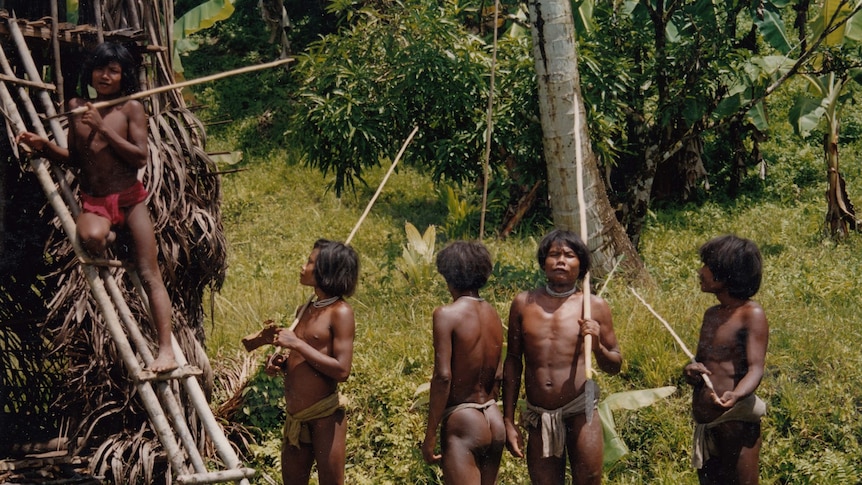
The Shompen language has never been fully translated, with communities choosing to stay away from outsiders. (Survival©)
It says the Nicobarese on the island live in communal houses of between 20 and 30 people, and are better integrated with settler communities.
Very few Shompen have contact with their Nicobarese neighbours or the outside world, with permits required from local island authorities to visit them.
Great Nicobar Island is also home to dozens of endemic species according to UNESCO, and a nesting spot for the endangered leatherback turtle, the largest sea turtle in the world.
Roughly 95 per cent of the 910 square kilometre island is forest, with much of the island’s coast encircled by lagoons and coral reefs.
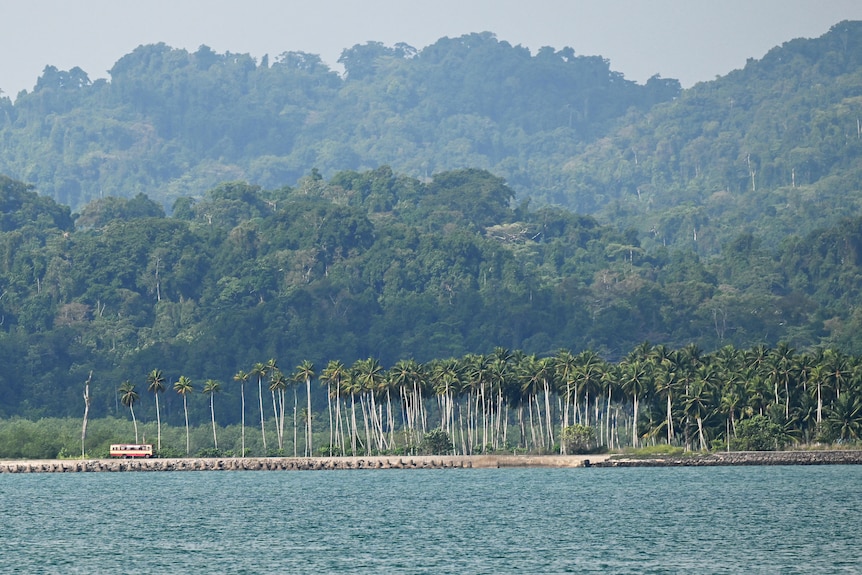
The island’s waters and forests are home to species found nowhere else in the world. (R.Satish Babu/AFP)
What does the Great Nicobar Island Project include?
Nearly one fifth of the island will be cleared for the massive project.
The government estimates some 711,000 trees will be cleared, but some conservationists put the number in the millions.
The first phase will include a $5.5 billion port at Galathea Bay, on the south-eastern coast of the island, and airport at Campbell Bay.
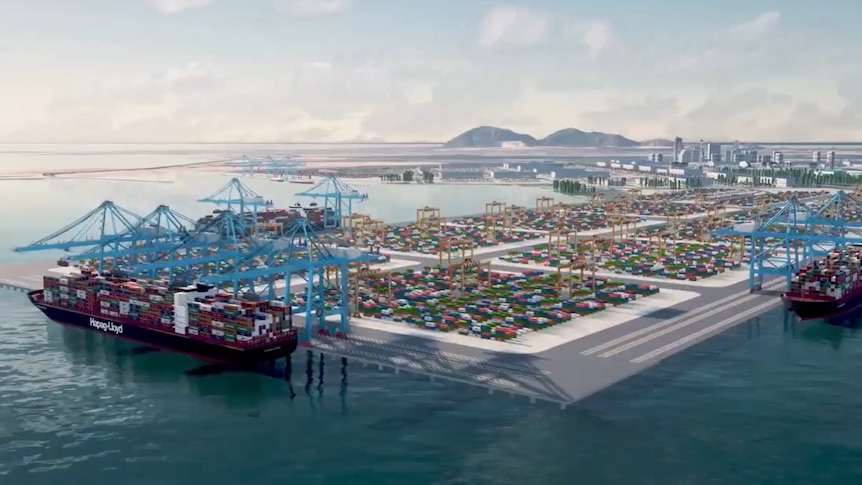
The Indian government has talked up the economic potential of the port, shown here in an artist’s impression. (X: Indian Ministry of Ports)
Once finished, the container port will handle more than 20 million twenty-foot equivalent units, making it one of India’s three largest ports.
The archipelago’s governor, former navy admiral Devendra Kumar Joshi, said it could eventually compete with Singapore and Malaysia’s Port Klang.
The government has already flagged expanding existing defence facilities to turn them into dual military and civilian use.
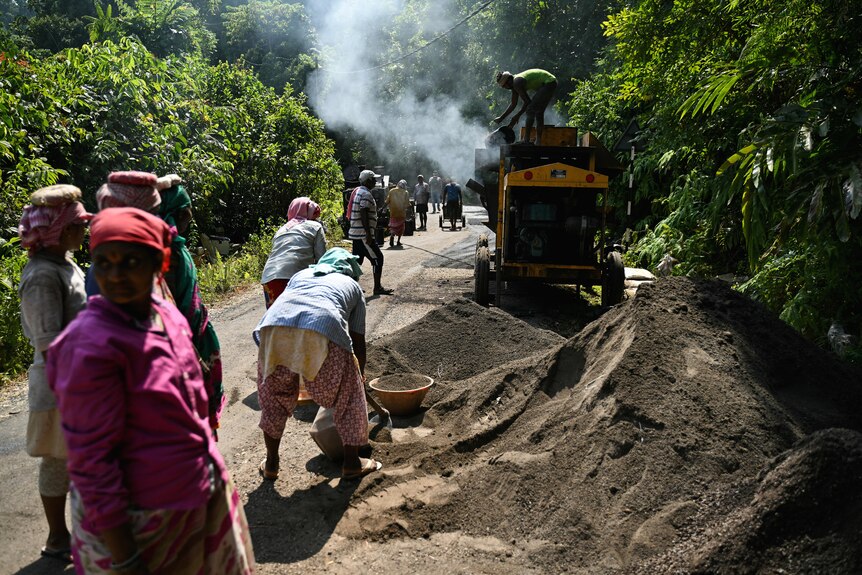
Roads are already being built through the rainforest on the island. (AFP: R. Satish Babu)
Gautam Chikermane, from New Dehli’s Observer Research Foundation think tank, said the project offered India significant defence and economic benefits.
“Located just 40 nautical miles from the Malacca Strait, through which about 30 per cent of global trade and significant oil flows pass, the island offers a strategic ‘unsinkable carrier’ position,” Mr Chikermane told the ABC.
“It enables naval monitoring, deterrence against choke point weaponisation, extends Andaman and Nicobar Command [armed forces] coverage, and secures India’s energy imports and exports in the Indo-Pacific region.
“It could anchor India’s role and position in the Indo-Pacific.”
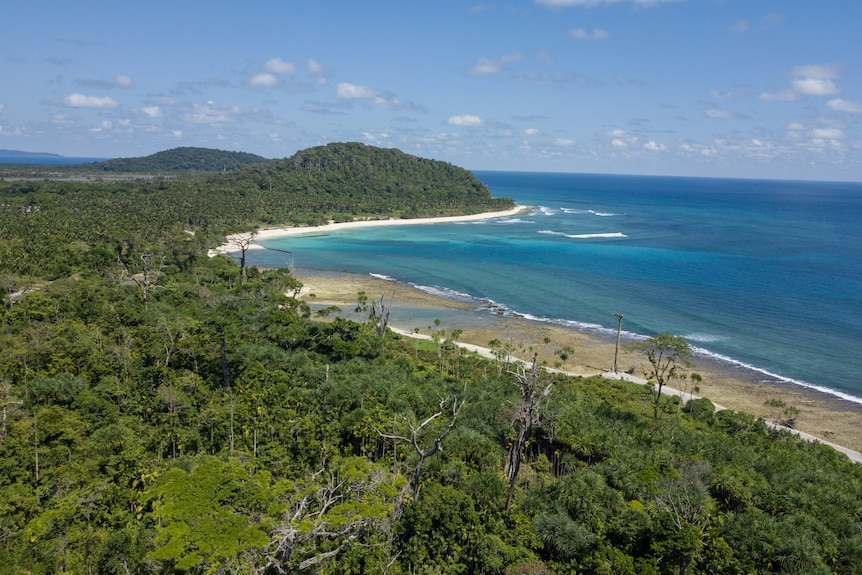
The plans would significantly change Great Nicobar Island. (Supplied: Nabil Naidu)
In addition to the port, a gas-solar power plant, hotels, and a town across 161 square kilometres is set to be built.
The island’s population is projected to grow from 9,000 people today to 336,000 by 2055.
Tourism projections anticipate 98,000 visitors by 2029, and more than 1 million by 2055.
What concerns are there about the project?
Some locals are not convinced about the project’s merits.
“If we lose control of these lands, our culture too will be lost,” the Nicobarese’s most senior leader, 54-year-old Barnabas Manju, told AFP.
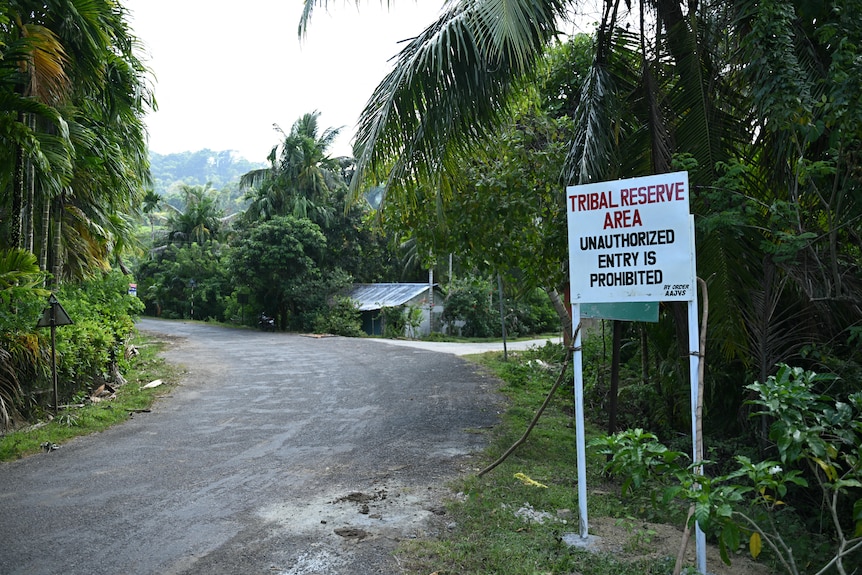
The Indian government insists that indigenous people on the island will be protected from the development. (AFP: R. Satish Babu)
Director of research and advocacy at Survival International, Sophie Grig, told the ABC the project would “be absolutely utterly devastating” for the Shompen people.
“They’re incredibly vulnerable to diseases. Like all uncontacted peoples, they can be wiped out by diseases from outside to which they have no immunity,” Ms Grig said.
She said that the proposed port would impact the river mouth and subsequent waterways which the group relies on to survive, adding the group could not give consent to the project under international law.
“It’s recognised by the UN and international law that it’s impossible to gain free prior and informed consent from uncontacted peoples … they have no experience of anything on this scale, and the scale is astronomical.”
Environmentalists have raised concerns that the port development will prevent leatherback turtles from accessing a nesting beach.
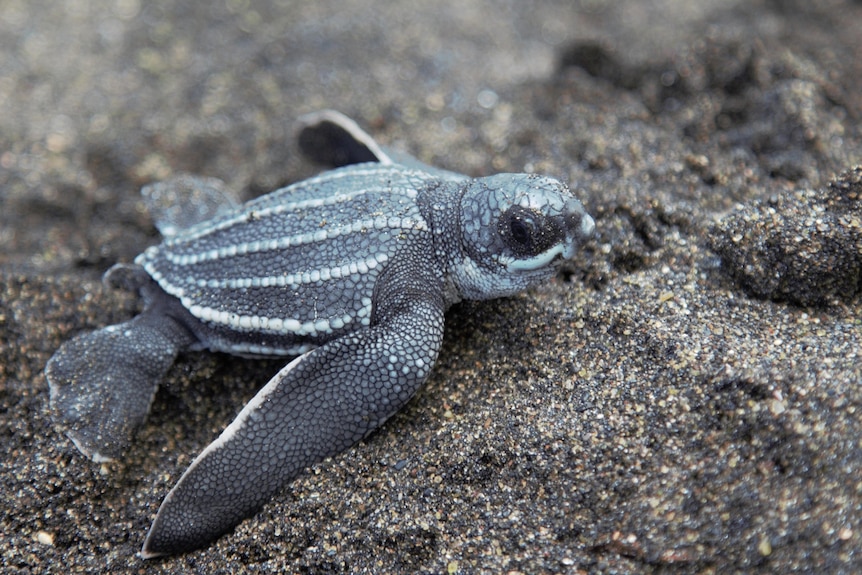
Experts put the number of leatherback turtles in the Indian Ocean region at between 1,000 and 3,000 based on nest counts. (ABC Science: Jordan Fennell, file)
Richard Reina, professor of biological science at Monash University, told the ABC that the turtles lay eggs at the same beach throughout their lives.
“If there is an impact on the nesting beach that happens very quickly and is sustained, then the conditions are right then for rapid population collapse,” Professor Reina said.
“We do know from other projects around the world that turtle populations can be protected, they can still continue to nest in areas. It’s not like that is incompatible with any form of development, but it is a question of the scale of the development and the protection measures that are put in place.”
Environment Minister Bhupender Yadav has said that the project “poses no threat to the island’s tribal groups, does not come in the way of any species, and does not jeopardise the eco-sensitivity of the region”.
The government plans on planting trees in Haryana on India’s mainland to replace those lost in the development, but environmentalists are concerned that the arid landscape is not suitable for replacing ancient forests.
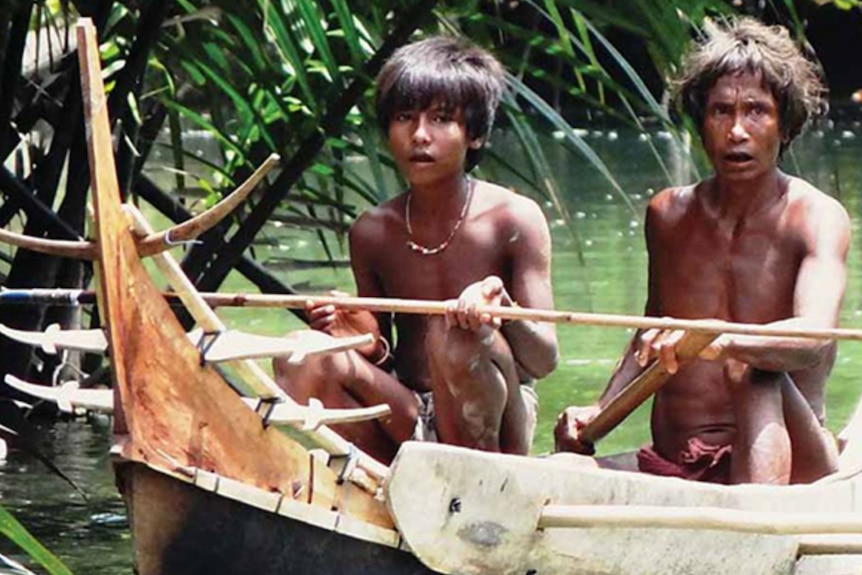
Shompen territories are demarcated by the rivers and streams on Great Nicobar Island. (Anthropological Survey of India)
Some Indians who arrived on the island from the mainland remain sceptical.
Sharda Devi, 55, a settler’s daughter, recalls the first arrivals “toiling in some of the harshest conditions” to carve plantations out of the tangled forests.
She initially welcomed the project, before realising the airport would encroach on her land.
“The government is going to take back 11 acres allotted to my father, without offering us another suitable plot of land or even proper compensation,” she told AFP.
Indian media has reported locals’ concerns about compensation for a number of years. The government did not respond to the ABC’s request for comment.
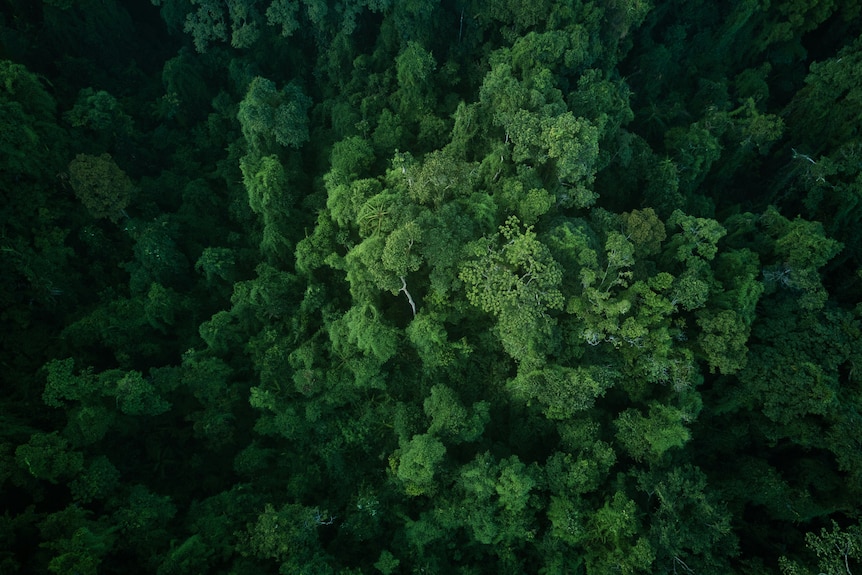
Almost all of Great Nicobar Island is covered in dense forest. (Supplied: Nabil Naidu)
Earlier this year, India’s Opposition Leader Rahul Gandhi described the project as “destruction dressed in development’s language”.
“What is being done in Great Nicobar is one of the biggest scams and gravest crimes against this country’s natural and tribal heritage in our lifetime,” Mr Gandhi said in a video that showed him walking through the island’s forests.
In February India’s environmental court cleared the way for the plans to go ahead, noting it found no “good ground” to interfere.
“We have also noted … the area is located in China’s ‘string of pearls’ strategy which is sought to be countered by Indian authorities under India’s ‘Act East’ policy,” the court stated.
Mr Modi announced the Act East policy in 2014 in a move to refocus the Indian government’s strategic and economic efforts in the Indo-Pacific region.
Beijing has long been accused of developing facilities around the Indian Ocean, a so-called “string of pearls”, to counter India’s rise and secure its own economic interests.
Dalbir Ahlawat, senior lecturer in security studies at Macquarie University, said the project was as much about economics as defence.
He said just like with China’s “string of pearls” facilities, the port and airport would have a dual purpose.
“If China has a strategic advantage at the land border [with India] because the topography is more in favour of China, India can put pressure on in the Indian Ocean,” Dr Ahlawat said.
“Eighty per cent of (China’s) oil passes through the Malacca Strait. India can have some leverage and it may develop the capability to enforce a choke point blockade in the Malacca Strait.”
He said the project had the potential to antagonise India’s neighbours, given the island was close to the coasts of Indonesia, Malaysia and Thailand, however those countries had not yet publicly raised concerns.
ABC/AFP