








Across Queensland, there is a grassroots push and growing frustration over a patchwork approach to dealing with a pest species known as “the cane toad of the sky”.
The Indian myna or common myna is considered one of the world’s 100 most invasive species.
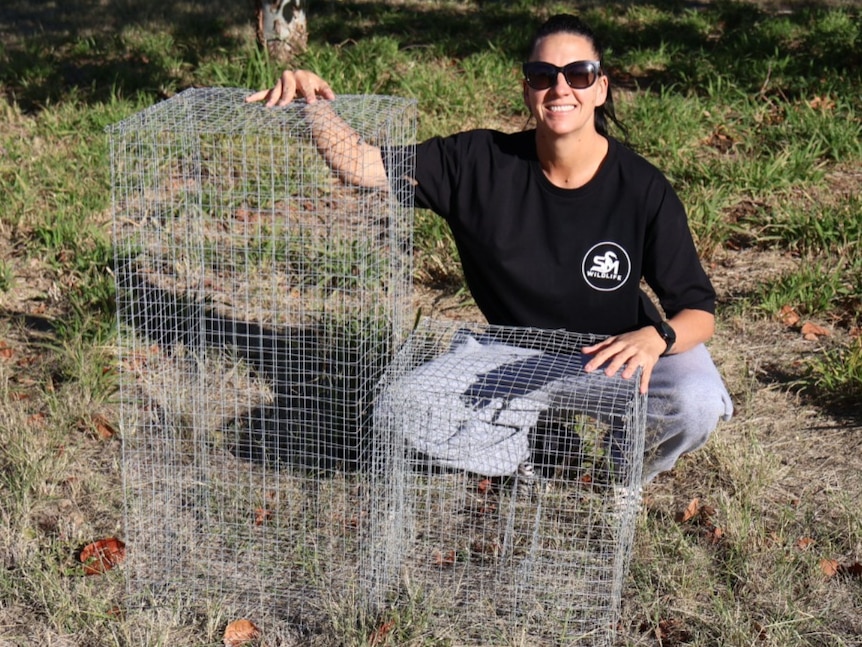
In the state’s south-west, wildlife carer Shannon Mathes is so concerned about its threat to native species, she has self-funded a bounty program that forks out $5 for every bird humanely caught.
“They’re driving out all of our native wildlife from all our local trees in our areas and even small mammals like our gliders, possums, small reptiles,” the Charleville carer said.
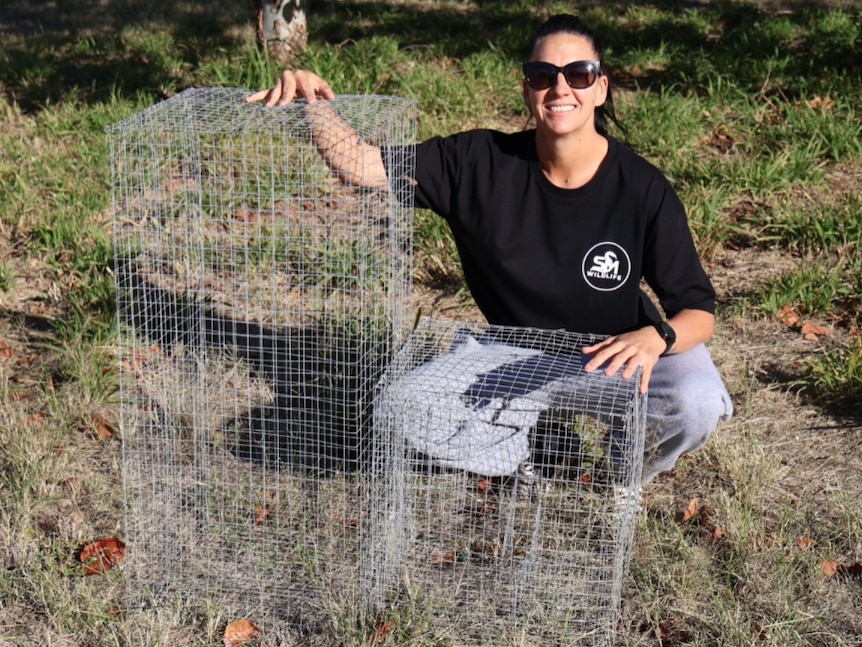
Shannon Mathes runs a wildlife rescue service in Charleville. (Supplied: Shannon Mathes)
About 800 kilometres away on the coast, Sian Swales started a community action group in Mackay to tackle the “out-of-control” pest.
The Mackay Regional Council earlier this year encouraged residents to loan traps through Ms Swales’s Mackay Indian Myna Bird Action Group (MIMBAG) in an effort to eradicate the species.
“It shouldn’t take citizens to alert council and government of the problem … they need a proper program,”
Ms Swales said.
She’d like to see council put a bounty on the bird.
“It just shouldn’t be up to us … something should have been done 20 years ago.”
Mackay Regional Council Mayor Greg Williamson said they were not in a position to offer financial incentives.
“What’s needed is a coordinated approach at the state or national level,” he said.
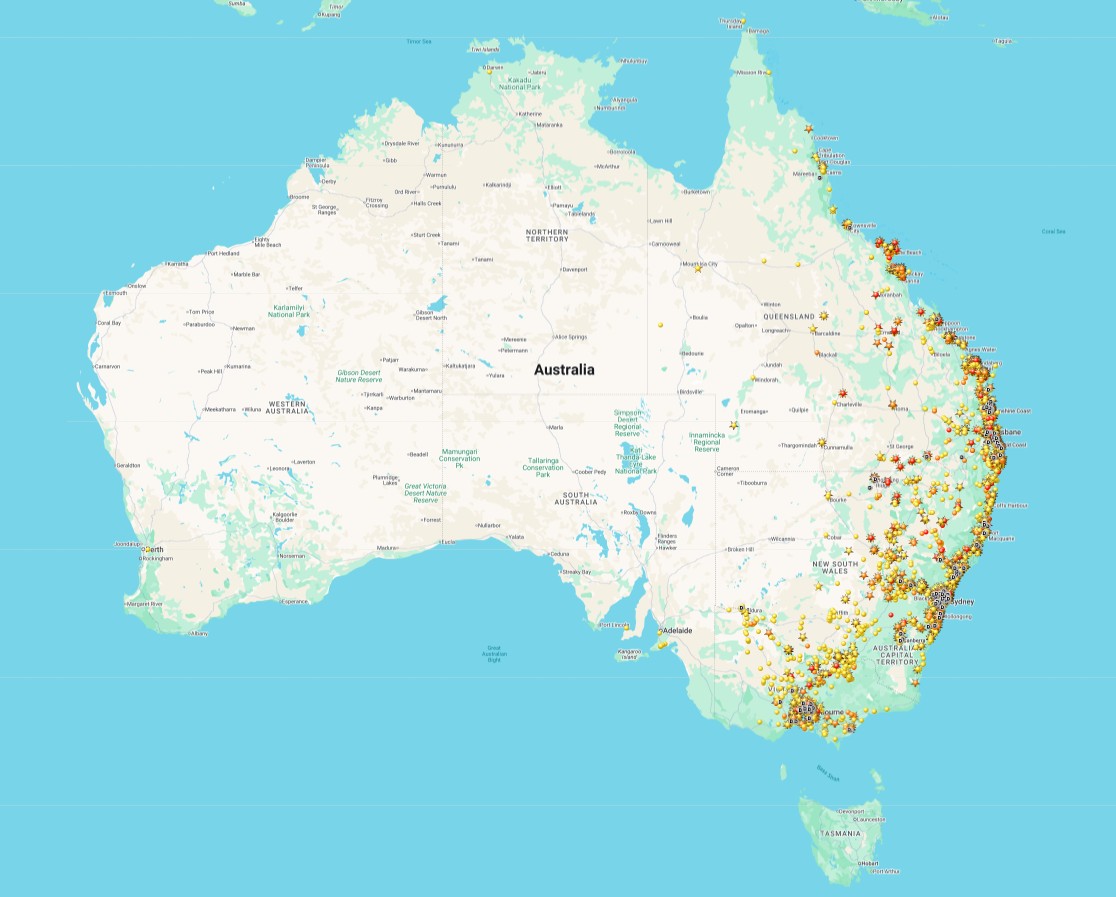
Sightings of the Indian myna reported to MynaScan over the past five years. (Supplied: FeralScan)
The species’ inconsistent pest status throughout the country has left a patchwork approach to dealing with the issue and many communities, like Mackay and Charleville, relying on grassroots groups to eradicate the birds.
Introduced pest
The Indian myna was released in Victoria in the 1860s to eat insects but has become one of the highest-ranking pests on the International Union for Conservation of Nature Red List.
It competes with native birds and wildlife, damages crops, can spread avian malaria and cause dermatitis, allergies and asthma in humans.
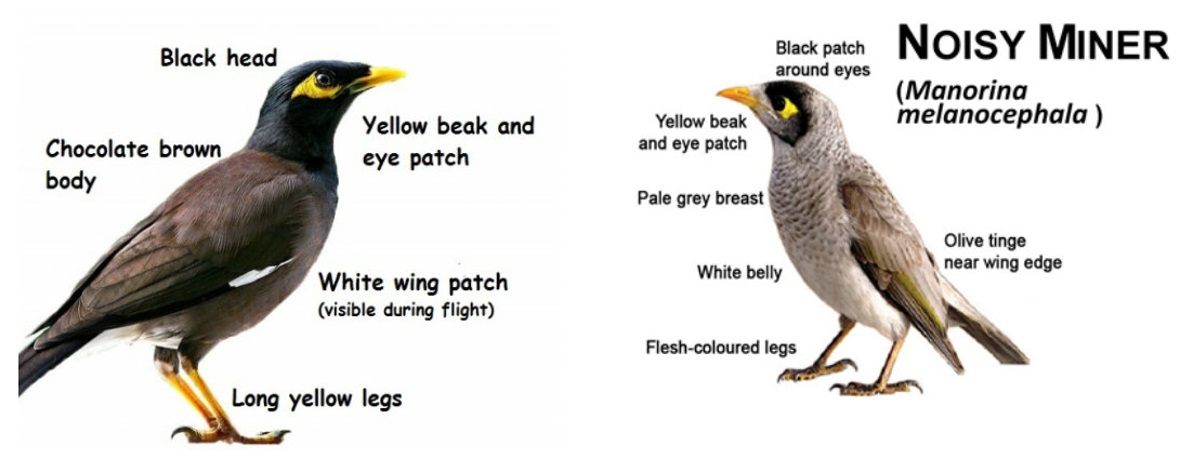
The introduced Indian myna, left, is regularly confused with the native noisy miner. (Supplied: Queensland Murray Darling Committee )
A declared pest in Western Australia and the ACT, the Indian myna doesn’t have the same status in Queensland which leaves councils or community groups to tackle the issue.
“Local governments can declare the Indian myna under local law and apply to have the species recognised as invasive biosecurity matter,”
a Department of Primary Industries (DPI) spokesperson said.
“This provides additional powers and functions to support management and control in areas which are particularly impacted by the species.”
The spokesperson said a coordinated, statewide program would be unlikely to have a significant impact as the Indian mynas were already established across Queensland.
The Australian government’s Environment and Invasives Committee does not identify the Indian myna as a pest animal for which there are national coordination programs underway.
Towns turn to traps and bounties
In Queensland, the bird is a declared pest on Far North Queensland’s Cassowary Coast under that council’s by-laws.
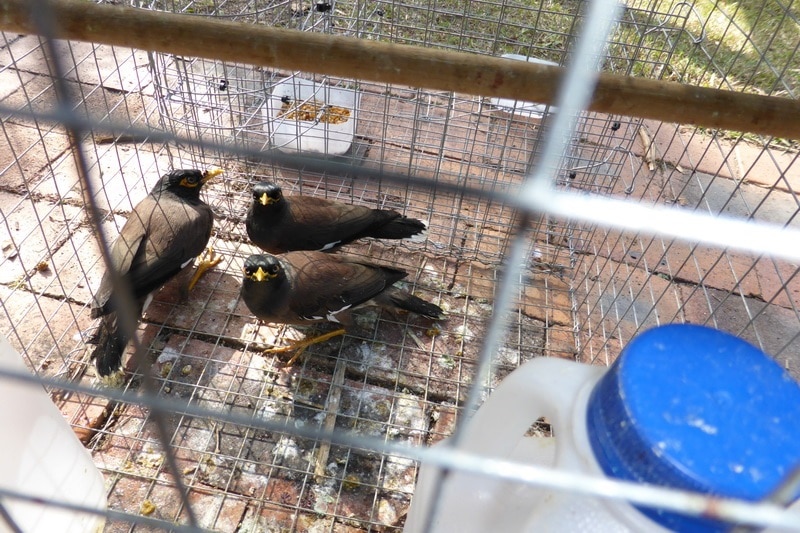
Three myna birds caught in a homemade trap that excludes other species of birds. (ABC: Ed Parker)
The Maranoa Council has previously engaged a contractor to control the birds at Roma, while other councils — including Moreton Bay, Mackay, Sunshine Coast and Logan — encourage residents to proactively engage with national reporting bodies such as MynaScan or community groups which provide traps.
Traps are baited with pet food and volunteers take the birds to local authorities to be humanely euthanised.
The Bundaberg and Gladstone councils are the only two in Queensland that offered a bounty.
“We’ve got to the stage now where we have a $5 bounty offered per bird and part of that process is that council will provide the cage and all the advice that’s needed,”
Gladstone Regional councillor Glenn Churchill said.
The council said it introduced the control program in 2015 after noticing the birds’ increasing impact.
Cr Churchill said about 2,500 Indian myna birds have been removed from the area and not taking action to address the issue was not an option.
“There’s one saying, ‘If you don’t deal with a small problem to start with, it will become a bigger program that you won’t be able to deal with’,” he said.
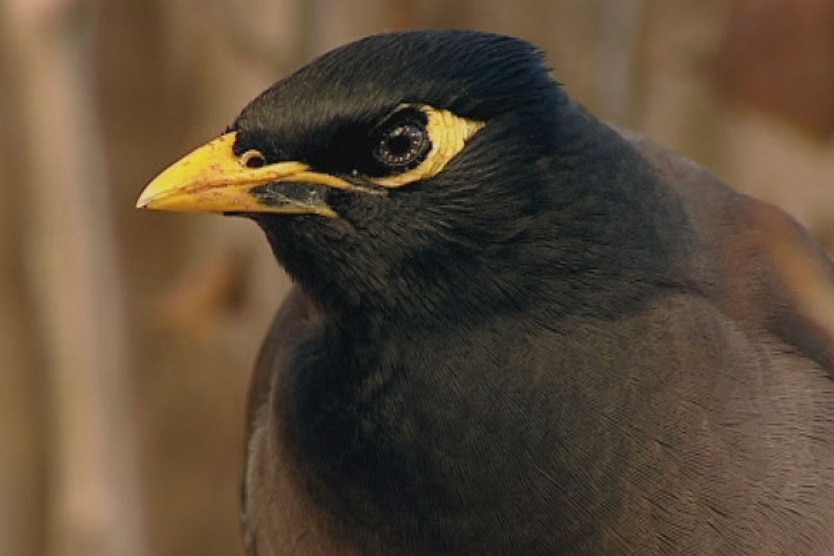
The introduced birds are observed to push out native birdlife from areas by taking nesting spots. (ABC News)
At Charleville, Ms Mathes’s project has so far trapped more than 80 birds, data which she shared with national park and local government authorities.
“I would love this to expand across the west and put the bounty on … they’re popping up everywhere and we have to get onto it because it just gets out of control.”
Is trapping the most effective way?
On its website, RSPCA Australia said it did not encourage Indian myna culling programs.
“Efforts to enhance bird diversity in urbanised areas would be better directed to improving the quality of natural habitat.”
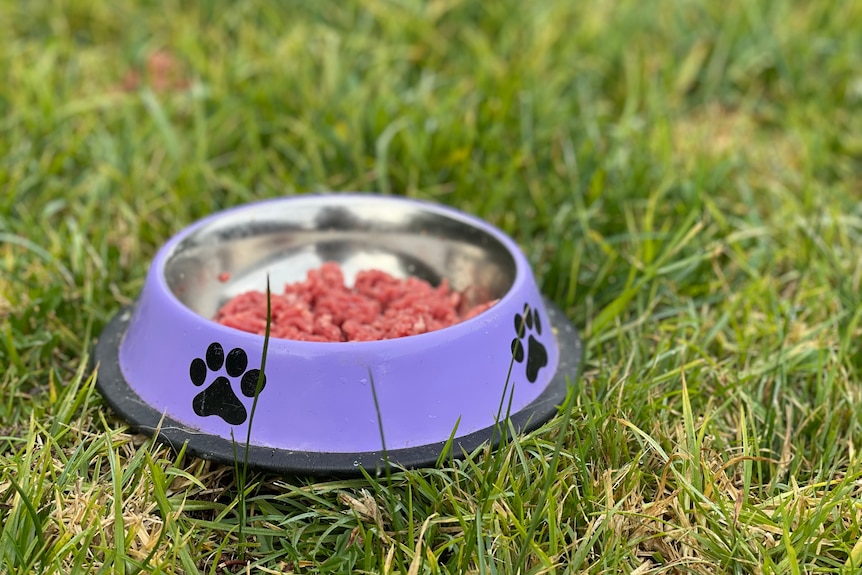
Grassy lawns and leftover pet food sustain Indian myna populations. (ABC Gippsland: Emma Field)
The DPI said effective trapping needed to be well managed, with a humane euthanasia plan, enough volunteers to remove a significant number and data sharing.
The coordinator of BirdLife Australia’s Urban Birds Program agreed, adding the birds could produce up to five chicks per clutch and breed three or four times a year.
“What you could be doing is simply creating a void in an area that’s readily filled by other babies from nearby nests that are coming up the ranks,” Christina Zdenek said.
“Any trapping program should really be paired with bird surveys.“
The conservation biologist said most of the bird’s impact in Australia remained anecdotal due to limited research.
Dr Zdenek said programs were most effective with a “hard and fast” approach as soon as the bird was first spotted in an area.
“That is the time where you get the most bang for buck and you basically stop this species in their track,” Dr Zdenek said.