









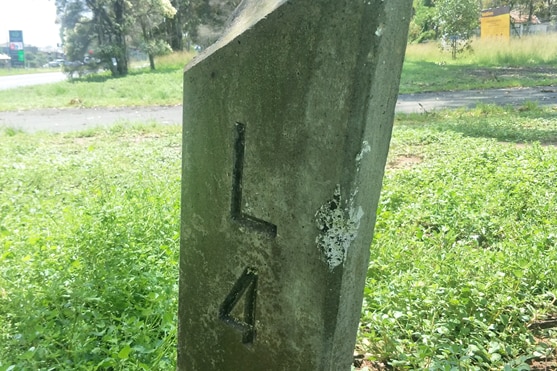
If you passed this slab of concrete in Sydney’s south-west, you likely would not look twice, but its rich history has made it a hot target for thieves.
The L4 Mile Peg, with C13 marked on its back, had sat on the corner of Camden Valley Way in Prestons for 70 years.
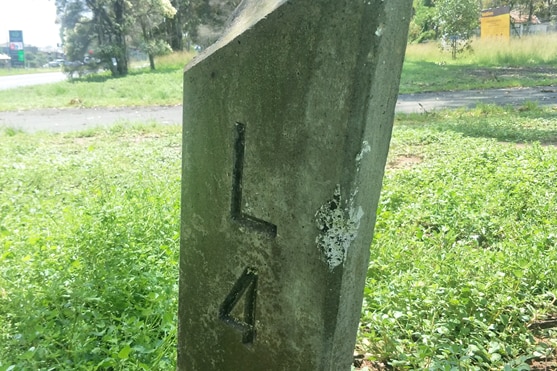
The L4 was one of the last historic mile pegs that measured the distance between Liverpool and Camden. (Supplied)
The L and four on the post signalled that Liverpool was four miles away, while the C and 13 on the back told drivers travelling southbound it was 13 miles to Camden.
As decades passed, the concrete post, that was once heavily relied on by drivers, became the last surviving marker of its kind in the area — that is, until a local historian noticed it had been ripped from the ground.
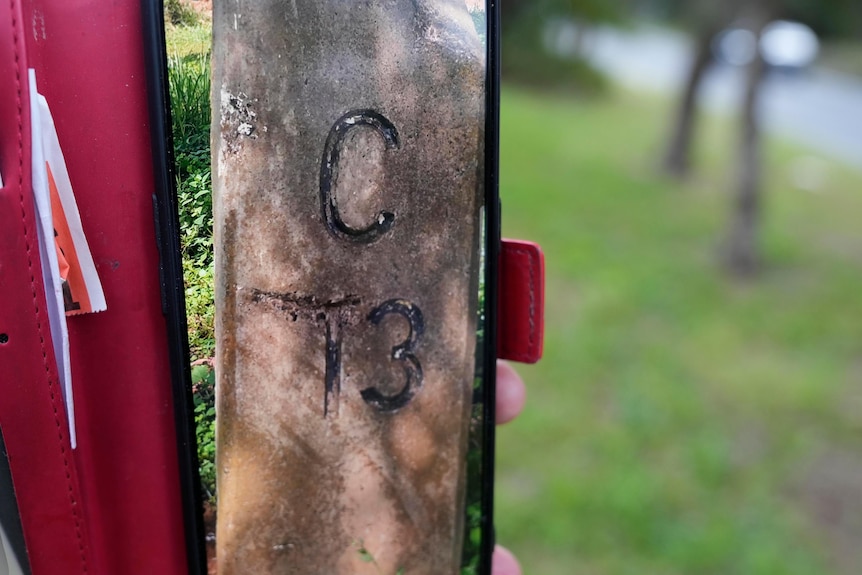
Mr op den Brouw shows a photo of the missing milestone, which has C13 inscribed on the back. (ABC News: Simon Amery)
Glen op den Brouw, president of the City of Liverpool and District Historical Society, told the ABC he had spent years endeavouring to have the post recognised and heritage listed.
“I’m still trying to deal with the fact that it’s gone missing,” he said.
“The fact it may never see the light of day again, and it’s just probably for no good reason, but some idiot who decided to take it.“
During the 1940s, when the stretch of road was known as the Old Hume Highway, drivers relied on milestone markers such as mile pegs to measure the distance from Liverpool to Camden.
After metrication was introduced in 1974 and wider, newer roads were built they slowly disappeared in favour of modern traffic signage. However, they still retained significant heritage value.
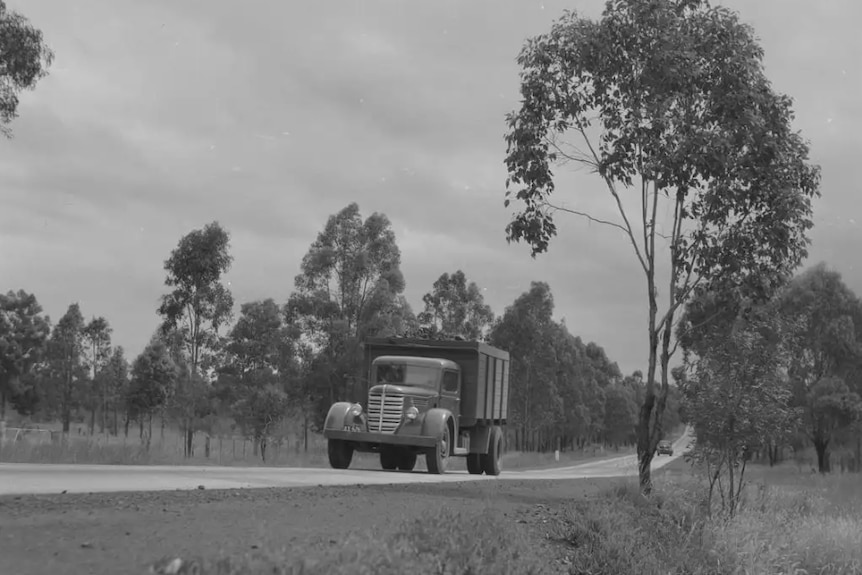
A truck transporting coal travels along the Hume Highway toward Liverpool in 1949. (Supplied: Transport for NSW)
‘No questions asked’: Historian’s plea
Mr op den Brouw said he had heard of previous cases in which mile pegs were stolen to then be found in someone’s backyard.
In other instances, some had been accidentally knocked off the road by heavy vehicles, only for Mr op den Brouw to later discover them rehomed at local museums.
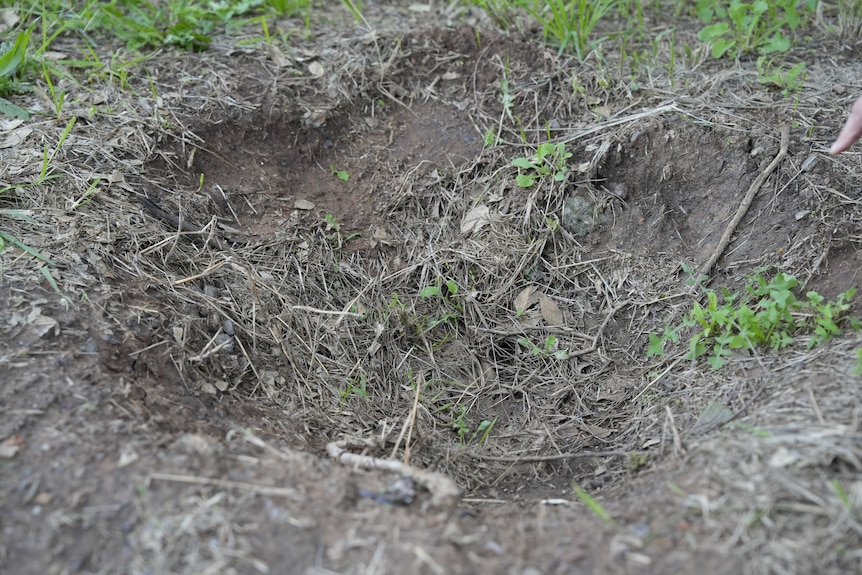
There is now a large hole where the historic mile peg once stood. (ABC News: Simon Amery)
“The first couple out of Liverpool have gone missing …whether somebody stole them or a truck ran into them and they were beyond repair — I don’t know,” he said.
Mr op den Brouw said if the peg was returned, there would be no questions asked and “all would be forgiven”.
“Why be so selfish and greedy? The thing’s been there for 70 years…it was a piece of heritage,”
he said.
A Transport for NSW spokesperson said it had not removed or relocated the historic milestone marker and that it was “currently investigating and checking with our contract partners”.
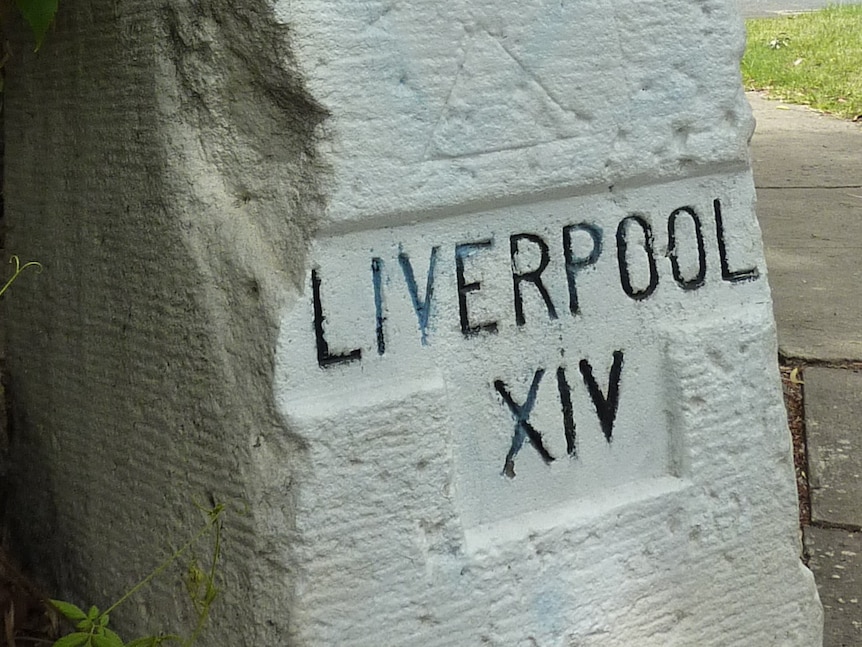
A milestone along the Liverpool Road. (Supplied)
Dating as far back as 1814, milestone markers were used to measure road distances.
Milestones were usually carved out of sandstone and inscribed with either numbers or Roman numerals.
They once could be found on major roads from Sydney to Liverpool and then further to Camden, Campbeltown and the Great Western Highway towards Penrith.
Mile pegs were posts either made of concrete or wood, which measured every mile of each suburb.
“People drive by all these milestones every day and they probably wouldn’t even notice them,” Mr op den Brouw said.
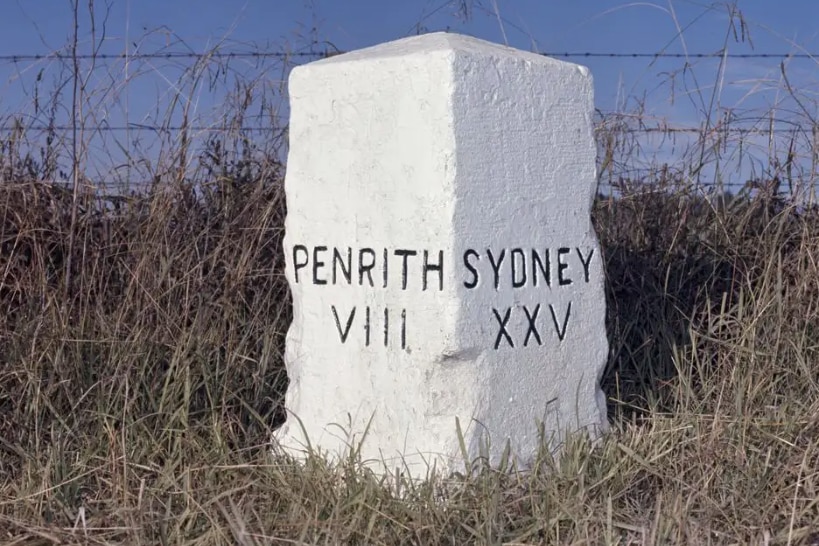
A file photo from the 1970s of a milestone marking the distance to Penrith and Sydney in Roman numerals. (Supplied: Transport for NSW)
‘The obelisk of distances’
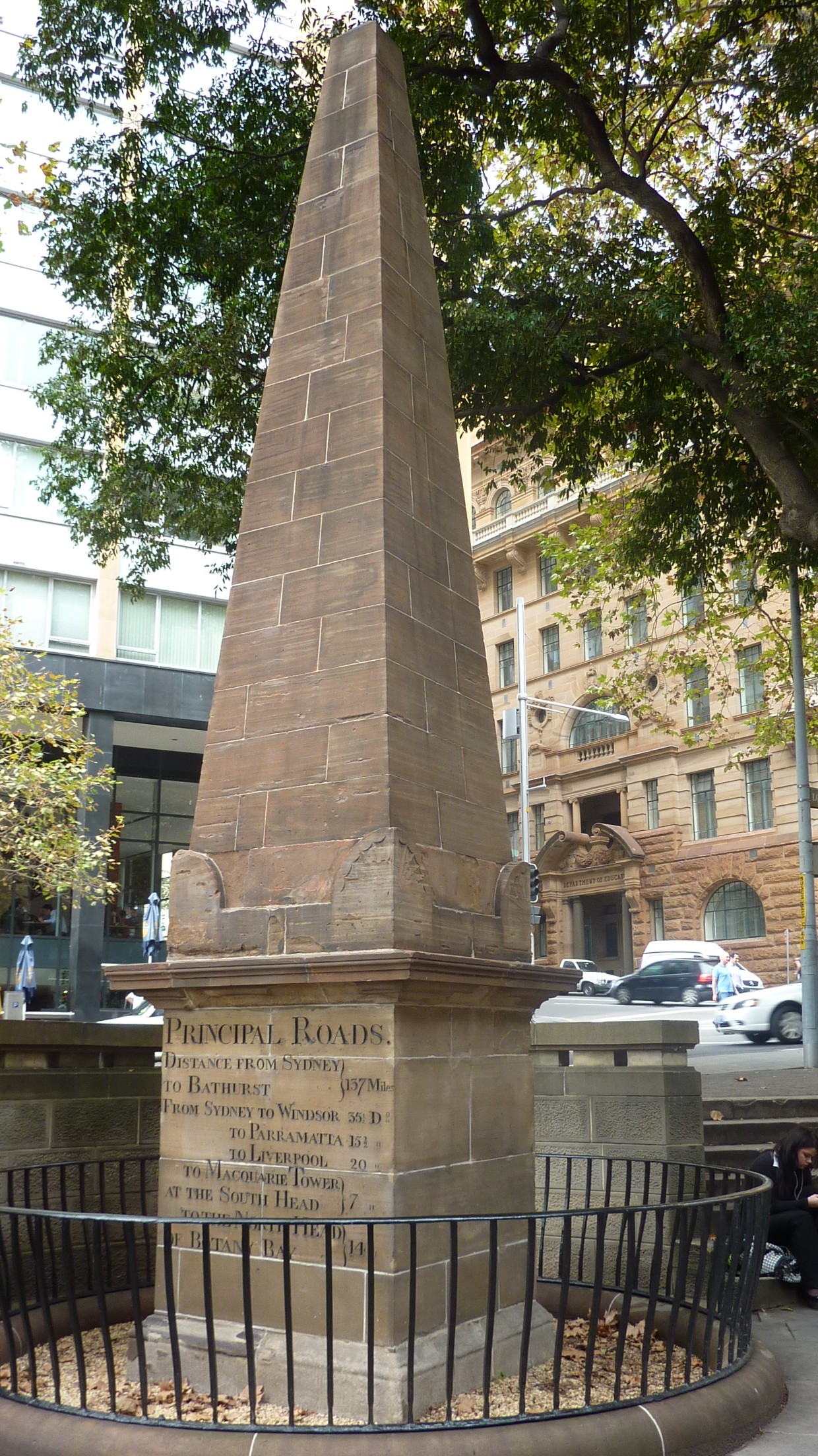
The obelisk in Sydney CBD is the zero point for all NSW roads. (Supplied)
At Macquarie Place in Sydney’s CBD stands the obelisk, a type of milestone built in 1818 to map the city’s geographical centre.
Designed by convict architect Francis Greenway, it was used to measure road distances to settlements in early colonial Australia.
City of Sydney historian, Laila Ellmoos, said milestones and obelisks were a system of measurement imported to Australia from England, intended to create order “in what is considered to be a chaotic world”.
She said while they were superseded, in a sense the obelisk still has a function in defining that location and that milestones should be left in the landscape because they are considered heritage items.
“Ideally, having them in situ is probably the best outcome because that’s sort of like a reminder, I guess, of ways of imagining the land around us and how we go between two different points in space — it’s a bit abstract in a way.“
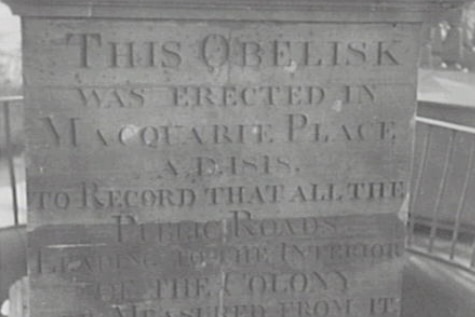
An archive image of the obelisk in 1935. (Supplied: Herbert Small/ The City of Sydney Archives)
Ms Ellmoos said obelisks and milestones also served as a reminder about colonisation “because you’re actually mapping the land of someone else’s and then planning to use it for another purpose”.
“The whole thing about distance and time and measuring those things is quite a colonial construct, in a way that’s imposed on a place that didn’t have that in the same way,” she said.
In a 2018 ABC article, the Director of Aboriginal and Torres Strait Islander Research at Sydney University, Jakelyn Troy, said many of the roads in Sydney were laid in the tracks Aboriginal people used to follow.
Early attempts to create roads in a small convict colony were also chaotic, with new settlers facing heavily forested valley floors and shrubby woodlands on rugged slopes and hilltops, according to the article.
“It’s sort of this of intersection of European sensibilities about distance space and time, and then how that sort of comes together with the land and country that we live on,” Ms Ellmoos said.