






A fuel excise cut designed to temporarily ease the pressure of the oil crisis on Australians is set to expire on June 30.
The federal government halved the fuel excise to buffer the impact of rising oil prices in the wake of the US-Israeli attack on Iran, and subsequent disruption to shipping through the Strait of Hormuz.
But there is no clear end date for the conflict and no agreement on how shipping through the strait will be managed.
It means uncertainty over future fuel supplies remains high and prices are unlikely to ease.
So what will happen on June 30?
Here’s what we know.
What is the fuel excise?
The federal government halved its excise on petrol and diesel for three months after major disruptions to the fuel supply chain and a subsequent shortage.
It reduced the cost of fuel by 26.3 cents per litre.
Once implemented, prices that rose to about $3 per litre for diesel in some capital cities began to fall significantly.
Australian retail diesel prices were down 31 per cent and petrol prices down 29 per cent for the five largest cities as at May 27.
The fuel excise is a sales tax levied by the government on petrol and diesel.
It is paid wholesale by the fuel importer and seller and then passed on to consumers at the pump.
It is indexed twice a year.
The standard fuel excise is 52.6 cents per litre, according to the Australian Automobile Association.
When will the excise cut end?
The fuel excise cut is set to end on June 30.
Federal Treasurer Jim Chalmers ruled out extending the cut, despite its role in lowering inflation, in comments made after the release of the 2026 federal budget.
“We’re not anticipating extending [the excise cut] but we’ll keep it under review from week to week,” he told the ABC last week.
Will prices go up?
Experts say Australians can expect to see prices go up if the conflict continues in the Middle East.
“We shouldn’t see a large jump in price but there will be a small one,” Queensland University of Technology supply chain expert Mahdi Abolghasemi said.
“This depends really heavily on the conflict and if they open the Strait of Hormuz — that will send a positive signal to the market.”
University of Queensland economics professor John Quiggin also said there would not be a dramatic rise in price.
“Even with the return to higher excise, the retail cost of petrol won’t be way out of line with historical levels, at least in inflation-adjusted terms,” he said.
“If some kind of peace agreement is reached in Iran, oil prices will probably fall.
“A renewed outbreak of major fighting is the main risk here.”
He said despite the relief it had provided to consumers, the excise cut should not be extended.
“It’s a bad idea in general to permanently shield consumers from price increases — bad more specifically because we need to transition away from internal combustion engine vehicles,” he said.
“Temporary relief made sense, but three months is time to adjust.”
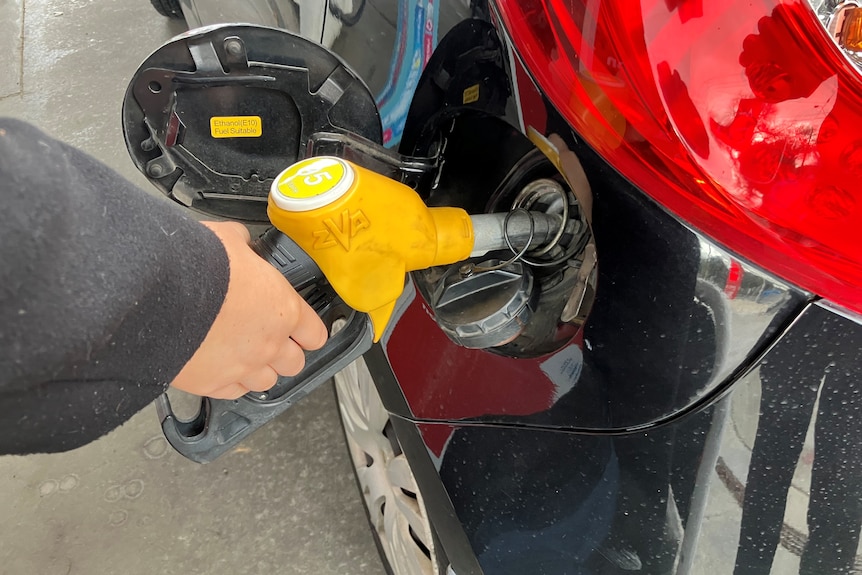
The federal government’s National Fuel Security Plan website includes fuel-saving tips. (ABC News: Gavin McGrath)
What about supply?
Australia is at stage 2 of the National Fuel Security Plan.
The most recent data published by the federal government shows Australia has in reserve:
- 48 days of petrol
- 36 days of diesel
- 30 days of jet fuel
Fuel stocks are above average levels.
The fuel supply task force website says a reported 3.3 billion litres of crude, diesel, jet fuel and petrol are scheduled to arrive from overseas in the next four weeks.
How else is the government responding to fuel prices?
Other measures in place to ease pressure on Australians include a three-month reduction of the Heavy Vehicle User Charge.
The first road transport contractual chain order has also been issued.
It sets rules for fuel cost recovery for workers, businesses and others in a road transport contractual chain.
It will cease applying when the weekly average national terminal gate price for diesel falls below $2 per litre.
Temporary relief for businesses unable to meet their tax obligations because of fuel supply issues is also available.
It includes a tailored payment plan for businesses affected by the high price of fuel.
How do I shop around for fuel?
The Australian Competition and Consumer Commission urges consumers to shop around for fuel and consult with fuel apps and websites in their state:
- New South Wales: NSW Fuel Check website and app
- Australian Capital Territory: NSW Fuel Check website
- Northern Territory: MyFuel NT website
- Tasmania: FuelCheck TAS website and app
- Victoria: Service Victoria app
- Western Australia: WA FuelWatch website and app
- Queensland: Queensland does not have a dedicated government fuel price app but you can search for commercial fuel price websites and apps that are supported by data under the Queensland government’s fuel price reporting arrangements.
- South Australia: Search for commercial fuel price websites and apps supported by data under the South Australian government’s fuel price reporting arrangements.
Loading…