








When a teenage boy lifted his shirt, his mates were horrified by what they saw.
Nearly 40 moles had appeared all over his back.
Confronted, his friends urged the boy to show his parents and a doctor.
When dermatologist Lisa Byrom saw the boy’s “atypical, worrying” moles, she was overcome with emotion.
“I did tear up. I just thought, ‘what has this young person done?'”
she said.
She was deeply worried that the boy’s moles might be early melanomas.
“At such a young age, what does this mean for the future?”
The boy had been injecting an unregulated peptide, Melanotan-II (MT-II), to give himself a tan.
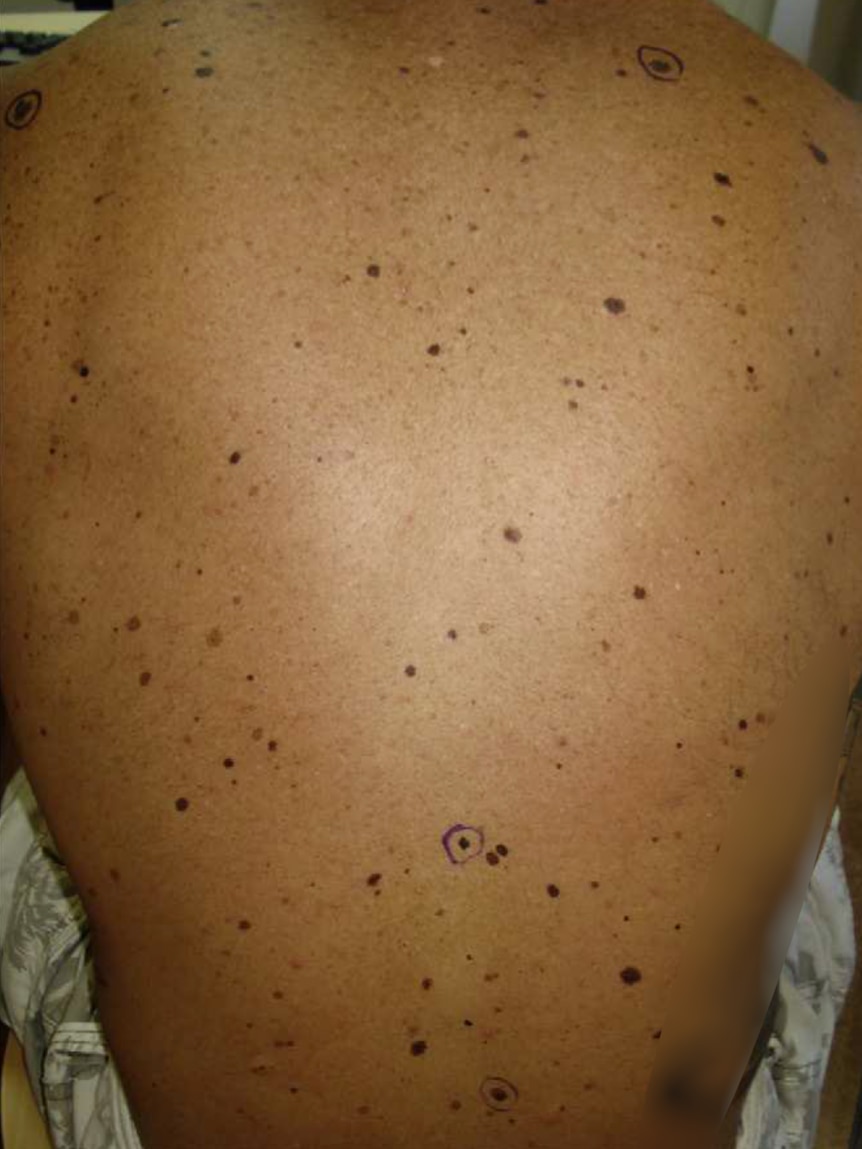
Large moles similar to these appeared on the young person’s back after they used Melanotan-II. (Supplied)
His skin darkened but Dr Byrom said the patient also “developed lots of funny looking moles, all over their back very, very quickly”.
Those “really atypical” moles deeply concerned Dr Byrom and she cut some out immediately.
“It was a very confronting consult.”
The results were negative for melanoma, but the number of abnormal moles on the teenager’s back would be a lifetime worry, Dr Byrom said.
“They are now at an increased risk of melanoma… for the rest of their lives.”
Tanning drug linked to dangerous moles
MT-II is a synthetic peptide, unapproved for human use or sale in Australia.
Some of Australia’s most senior skin doctors told the ABC they had seen a growing number of patients present with worrying side effects — including multiple atypical moles, a known risk factor for melanoma — after using MT-II.
“It’s essentially tricking our skin cells to believing that it needs to produce more pigment, so it fast tracks skin darkening,” dermatologist Leona Yip said.
“It’s not just a wellness or cosmetic product that you use and it’s banal and it’s harmless … it’s not.”
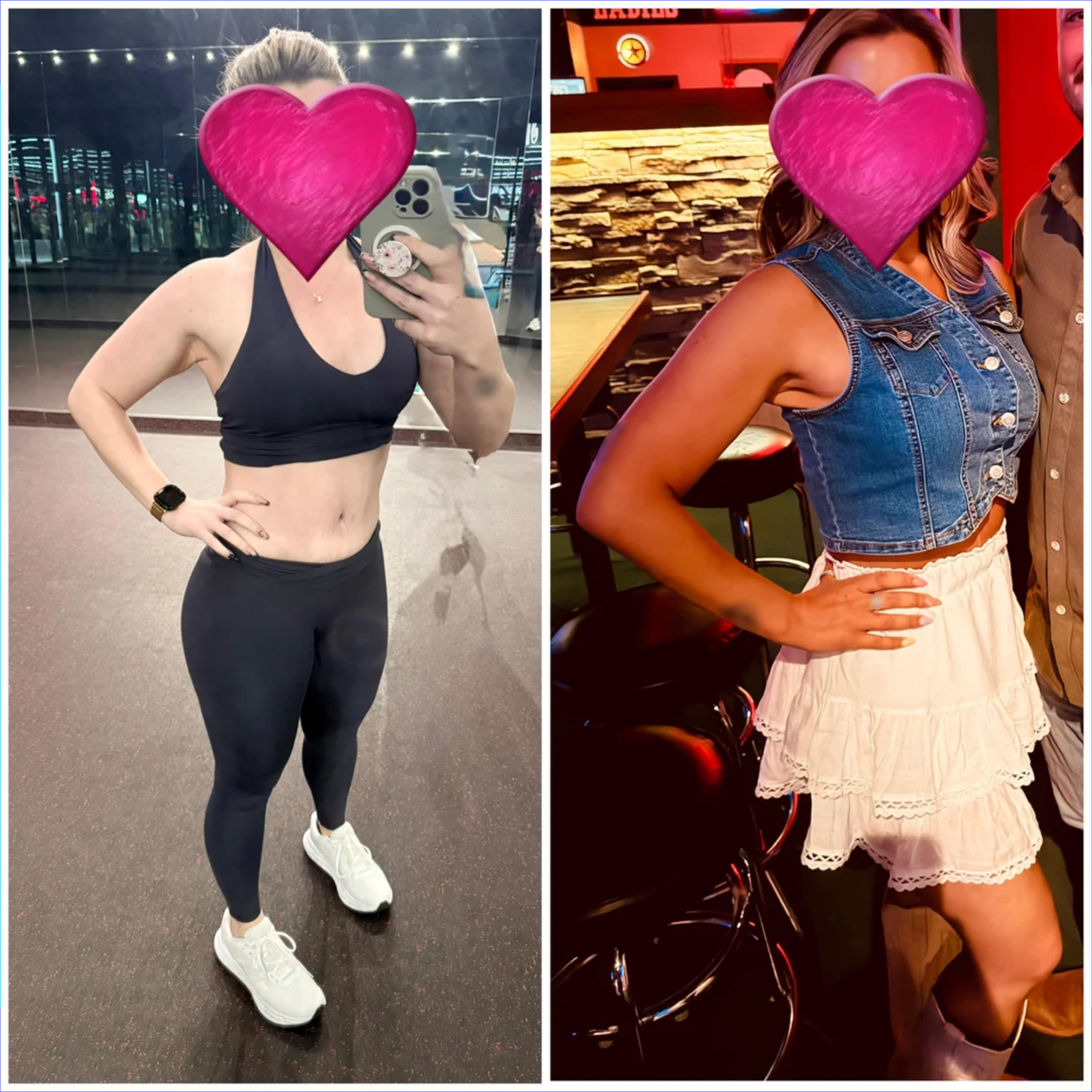
Before and after images of a person using Melanotan-II. (Supplied)
Doctors have been issuing warnings about MT-II for a number of years.
Despite those warnings, there has been an explosion in popularity of unregulated injectable peptides in Australia, driven by social media users promoting their supposed benefits for health and beauty.
“A lot more needs to be done to regulate this space,”
Dr Yip said.
“We need to have multiple agencies and regulatory bodies sitting together with health professionals, as well as tying in big names, celebrities and credible influencers to talk about the dangers of Melanotan, the dangers of … skin cancers, particularly targeting vulnerable young people.”
Australia’s medicines regulator, the Therapeutic Goods Administration (TGA), has warned unregulated peptides pose a “significant” public health risk. Even so, instructions on how to buy and use them are rife on social media.
MT-II is among the most popular peptides being pushed online.
With MT-II coming in the form of an injection or nasal spray, Dr Yip said she was concerned it was experiencing a surge in popularity.
“We have seen Melanotan trends come back and make resurgences from time to time and we’ve seen it definitely in recent months,” she said.

Leona Yip says MT-II is not “banal” or “harmless”. (Supplied)
Dr Yip said there were a number of case reports in medical literature of moles changing quickly, with melanoma developing a lot faster in people who have used MT-II.
She said the tanning drug’s potential adverse effects were not just limited to skin.
“There have also been many other side effects reported, such as nausea, vomiting, headaches, kidney failure, and you can also get brain swelling,” Dr Yip said.
MT-II trend ‘heartbreaking’
Dr Byrom, who is also an associate professor at the University of Queensland’s School of Medicine, said it was “heartbreaking” to see another tanning trend gathering pace.
She said the trend was particularly noticeable among teenagers and those in their early 20s.
“I shudder to think what we’re going to be seeing on the skin of people who have used MT-II in the next five to 10 years,” Dr Byrom said.
Dr Byrom said she was concerned MT-II could end up being as popular as tanning beds.
Solarium tanning has been clearly linked to skin cancer, but hard scientific data on the long-term safety of MT-II is scarce.
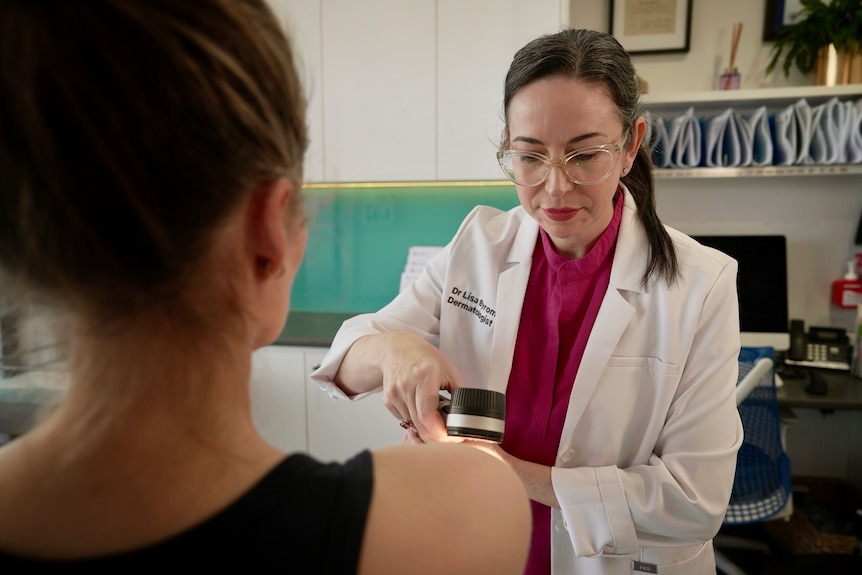
Lisa Byrom is an experienced dermatologist. (ABC News: Mark Leonardi)
The Australasian College of Dermatologists, which represents around 700 specialists across Australia, told the ABC it shared “the concerns of the broader medical community about the use of MT-II”.
“This substance is not approved for sale or use as a tanning agent in Australia and has not been assessed for safety or quality,” it said.
‘I felt horrendous’
Experts also warned that because the drug was not regulated there was a risk that peptides could be contaminated and people could suffer serious reactions.
Bodybuilder Nick said he had used MT-II twice to get an instant tan and both times experienced side effects.
He said at the time there was less awareness of the serious potential risks of using the substance.
“Hot flushing, nausea — I experienced nausea pretty hard that was probably the worst one,” the 39-year-old said.
“When I took it at night, I slept through the side effects but one time I did it in the day and I felt horrendous.”
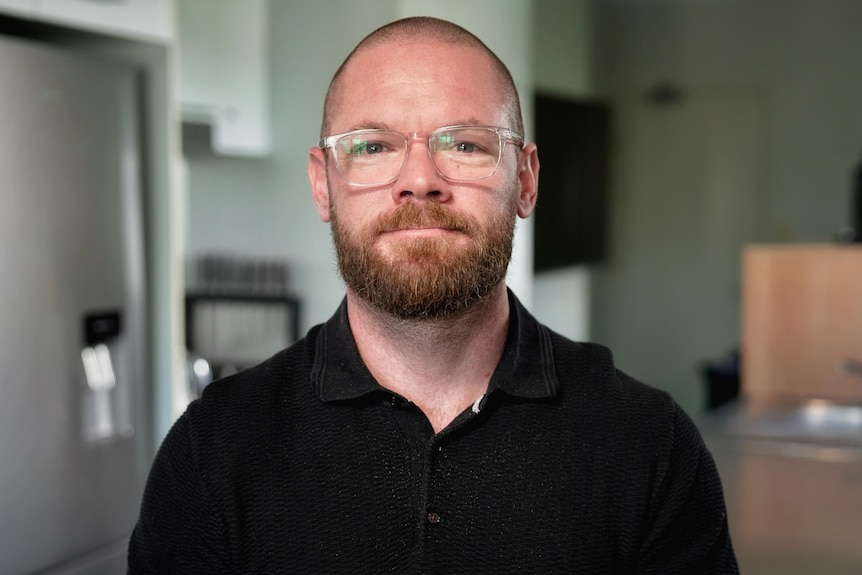
Nick experienced side effects both times he used MT-II. (ABC News: Michale Lloyd)
He said friends who had taken the peptide had prepared him for these side effects and so he was not concerned about them.
Instead, he took it as a sign the product was working.
Nick was also unconcerned when his freckles and moles quickly turned darker.
“I was fine with it because I knew that was going to happen, it was an expectation. So when it happened, I didn’t freak out or anything,” he said.
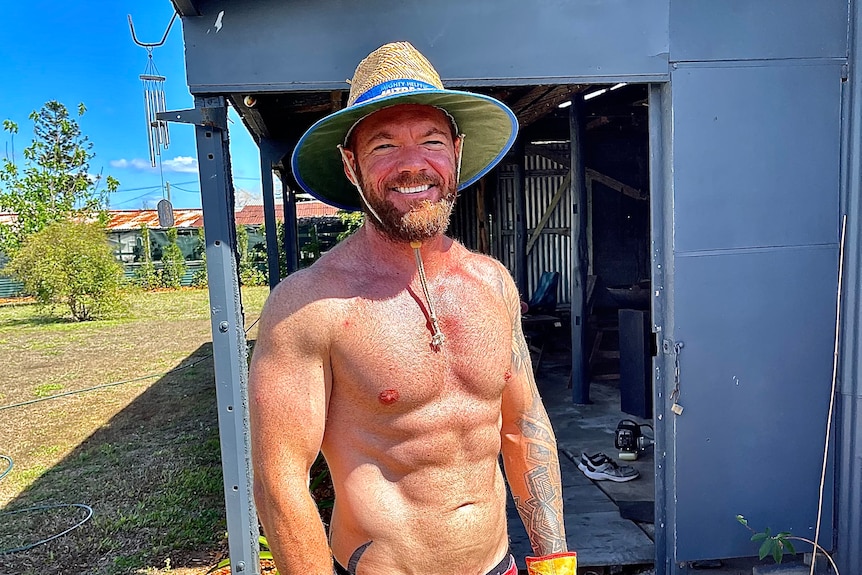
Nick took the side effects as a sign that the MT-II was working. (Supplied: Nick Fudge)
He was also of the belief that it was safer than getting a tan by sunbaking, which is a common misconception amongst MT-II users.
Nick said he now knows much more about the risks of using MT-II and would not recommend it or do it again.
“I would probably just get a spray tan, [because it’s] much safer.“
Doctors ‘fighting the algorithm’
Melbourne dermatologist Katherine Armour has also seen an increase in patients using MT-II
“I get the impression that its resurgence is because people are taking peptides in stacks,” Dr Armour said.
This is when people take a number of health and beauty-promoted peptides alongside each other to try to get the best results.
“Overall, it’s just such a sign of the misinformation that is being propagated, the misinformation problem is getting bigger and bigger,” she said.
Dr Yip said social media was difficult to catch up with.
“Just because something’s gone viral does not mean that it’s credible science,”
she said.
The TGA has warned advertising or promoting unapproved peptides was likely to breach Australian therapeutic good advertising laws.
The latest TGA data shows it requested 3,263 “wellness and beauty industries unapproved high risk therapeutic goods advertising” online and social media advertisements to be removed, which captures unlawful peptide advertising.
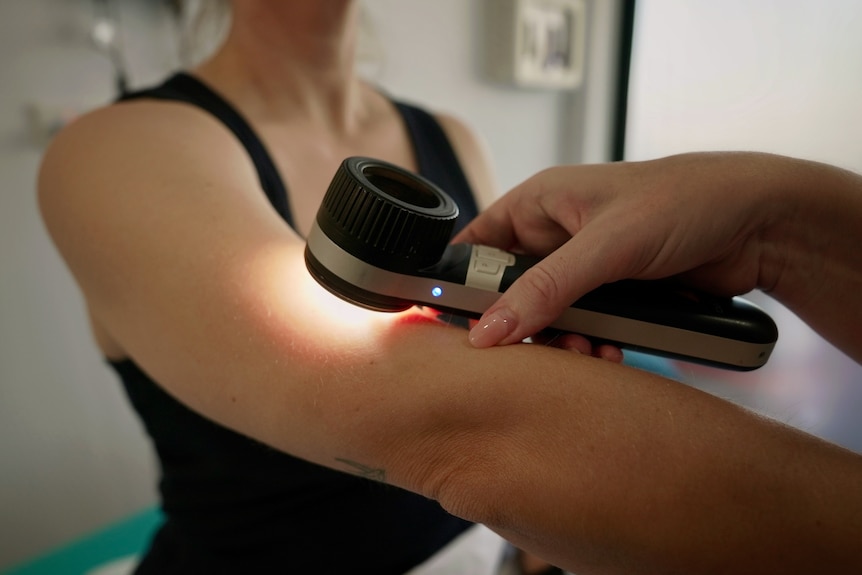
Lisa Byrom says medical misinformation can be hard to fight. (ABC News: Mark Leonardi)
Dr Byrom said social media influencers should be “held accountable” for the “dangerous” proliferation of medical or health advice without having appropriate qualifications.
She said it was disturbing that people promoting peptides such as MT-II on social media were normalising side effects that should be red flags to people using them.
“We’re fighting the algorithm… which is why more medical professionals need to be on social media, so we can start diluting the misinformation.”
Dr Byrom said peptides users worried about their health should see a doctor.
“There isn’t judgement here. It’s better that you just get this checked out, get the right information and then you can move forward from that,”
she said.
Loading…