







When Rebecca Archer’s five-month-old daughter Renae got a temperature, turned pale and struggled to breathe, she called an ambulance.
They were taken to hospital straight away, where Renae was diagnosed with measles. The next day they were discharged and Renae went home with a drip.
They isolated for a week and Renae fully recovered. That was in 2013 and there was a measles outbreak in their neighbourhood near Manchester in England’s north-west.
Vaccine uptake had dropped and cases were spreading fast among infants because they are not usually vaccinated against the virus until they turn one.
Rebecca wanted to vaccinate her child, but she was too young. Now, with some preventable diseases on the rise again in Britain, Australia — where diphtheria has broken out — the United States and other countries, Rebecca has a warning for other parents: your child could die without a jab.

Renae Archer contracted measles when she was too young to be vaccinated. (Supplied)
When Renae got sick, it did not take long for her to recover. Rebecca did not think much more of it.
What she did not know at the time was that measles can cause life-threatening complications, some of which can take years to surface.
For the next decade, Rebecca says Renae developed normally. She said her “kind” and “bubbly” daughter excelled at school and made people laugh.
But the measles virus she had contracted as a baby stayed in her body. It was silently replicating in her brain, with deadly consequences.
“In the July before her 11th birthday, I got a call from the school to say she’d had a seizure,” Rebecca said.
That was the first sign that something was wrong. Doctors thought it was epilepsy and referred her to a specialist clinic.
“She kept complaining of a headache and the kids being too loud around her … then the following week she had another seizure,” Rebecca said.
The seizures continued and her behaviour was changing, becoming increasingly uncharacteristic.
She started snapping at her brothers and sisters, needed help showering and was hallucinating. For two months, Renae was in and out of hospital, but doctors were stumped.
“She was just getting weaker. She was struggling to keep her eyes open; she slowly stopped eating,” Rebecca said.
“She was in ICU for around a week. She had a breathing tube and she was no longer talking.”
An MRI showed swelling on her brain, which worsened within a week. But it was not until days before her death in September 2023, that doctors finally worked out that Renae had subacute sclerosing panencephalitis (SSPE).
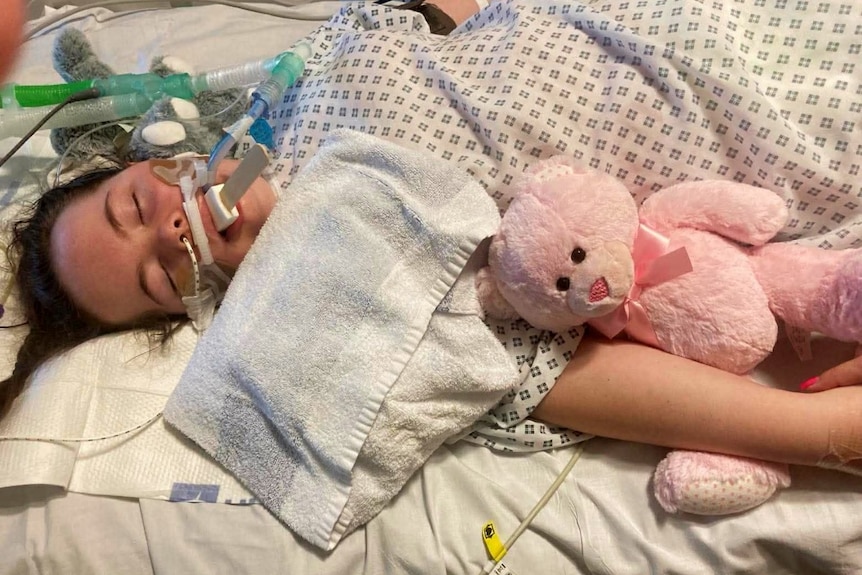
Renae Archer’s final days were spent on life support in hospital. (Supplied)
The disease is a rare but progressive and fatal complication of measles and usually takes seven-to-10 years to produce symptoms.
The answer came after a lumbar puncture and blood tests showed the measles virus was still in her body.
Heavily pregnant with her third child, doctors told Rebecca and the family they had to think about turning off Renae’s life support.
She had a C-section the next day then returned to Renae’s bedside as she slowly slipped away.
“She was struggling and was distressed. I think that was the worst part,” Rebecca said. “I was sat in the room thinking I just want her to be at peace.
“I think that’s the most horrendous part, because no mother should think that. I was just literally begging for her to be at peace.“
While this is a rare complication of measles, many others are much more common and severe in young children.
Of those who contract the virus, a fifth of children will be hospitalised, one in 20 will get pneumonia, which is the leading cause of death, while one in 10 will develop an ear infection that can lead to permanent hearing loss.
‘Vaccines a victim of their own success’
The UK is again in the throes of another measles outbreak with vaccination rates dropping every year since the COVID-19 pandemic.
The World Health Organization (WHO) has taken away Britain’s “elimination status”, which means the virus is now spreading locally.
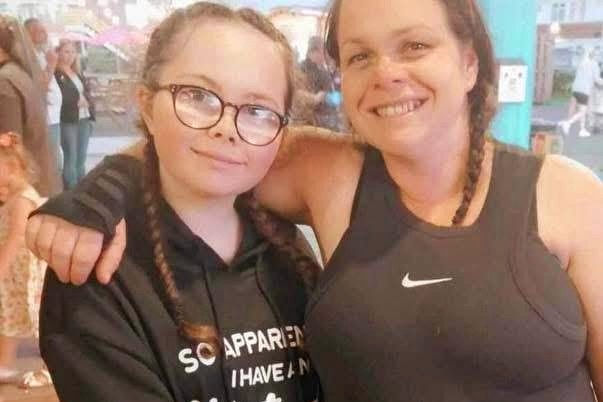
Rebecca Archer says her oldest daughter, Renae, was her best friend. (Supplied)
As a consultant epidemiologist at the UK’s Health Security Agency, Vanessa Saliba has been at the forefront of the measles resurgence in the country.
She said most of the cases were unvaccinated children under the age of 10.
“What we have seen in the UK over the last decade is a year-on-year decline in uptake for our routine childhood immunisation programme,” Dr Saliba said.
“This is not specific to the measles, mumps, rubella vaccine, this is across the board for all the vaccinations.“
She described measles as the “canary in the coal mine” because when vaccination rates fall it returns with a vengeance, given its contagious nature.
“It will show up when your vaccine uptake rates fall, even if it’s a small decline, and it will show you the communities and populations that are not protected by the vaccination,” Dr Saliba said.
“The drivers for the fall in uptake are complex and multiple, and the evidence suggests that one of the most important drivers for that fall and uptake is actually access to health services and access to information about immunisation.”
Turning around the downward trend and regaining Britian’s measles-free status, Ms Saliba said, would take years of public health work rebuilding trust in the community and improving access to vaccines.
The government has now reduced the age for the second dose of the measles, mumps and rubella (MMR) vaccine to 18 months to ramp up protection for young children.
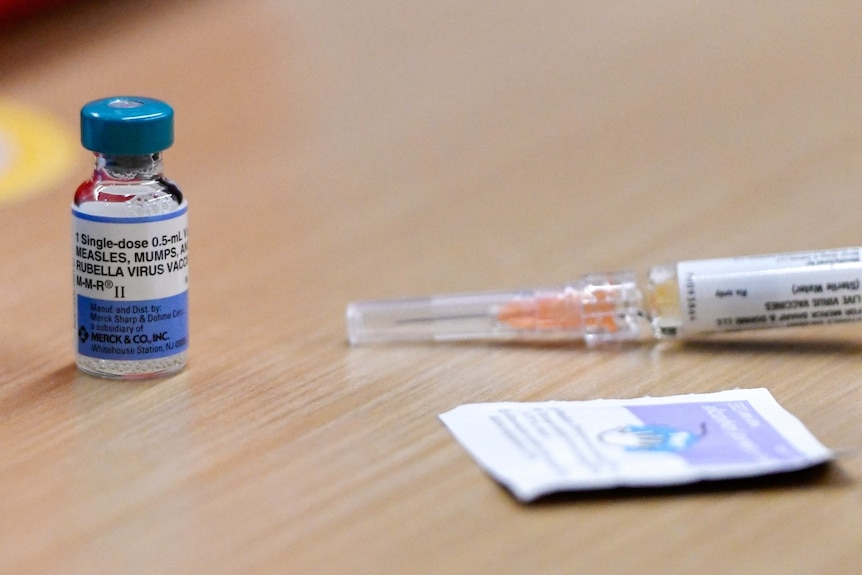
While vaccination rates remain high in Britain, the US and Austraila, coverage is decreasing. (Reuters: Annie Rice)
The United States is on a similar path to the UK, with its worst measles outbreak in decades last year resulting in the deaths of two young, unvaccinated schoolgirls.
Professor Margie Danchin, from Melbourne’s Royal Children’s Hospital, says the same trend is playing out in Australia, which now has the lowest measles vaccination coverage for children in a decade.
“This is now a serious threat in Australia; we don’t want to see a death of a child or adult in Australia like we’ve seen in the US,” she said.
“Unfortunately, our coverage rates for children have declined every year for the last five or six years since COVID.“
Professor Margie Danchin is concerned about vaccine misinformation. (ABC News: Simon Tucci)
The federal government’s Australian Immunisation Register (AIR) shows under-vaccination hot spots in northern NSW, the Gold Coast and parts of WA, with pockets in Melbourne and Sydney. Since the 1970s, Australia has had a nationally funded vaccination program for measles.
Over four decades of public health messaging, the country finally eliminated the virus, gaining measles-free status from the WHO in 2014.
But Professor Danchin said that, with recent research showing vaccine hesitancy and misinformation on the rise, those decades of work were being undone.
“The main barriers were loss of trust in the information that was provided by their doctor or nurse and concerns about vaccine safety,” Professor Danchin said.
“In terms of access last year, it was mainly parents not being able to afford the costs associated with vaccination but also, concerningly in Australia, not being able to get an appointment with a GP,” she said.
Low measles vaccination rates are alarming to paediatricians like Professor Danchin and other public health experts and the AIR shows numbers are down for many diseases.
“Vaccines are really a victim of their own success. We’ve seen and enjoyed such low rates of vaccine-preventable diseases like the measles … and now we’re seeing whooping cough, flu, diphtheria, measles cases coming back,” Professor Danchin said.
“As a paediatrician of 30 years, I had never seen a case of diphtheria and yet now in Australia we have 267 cases of diphtheria already.”
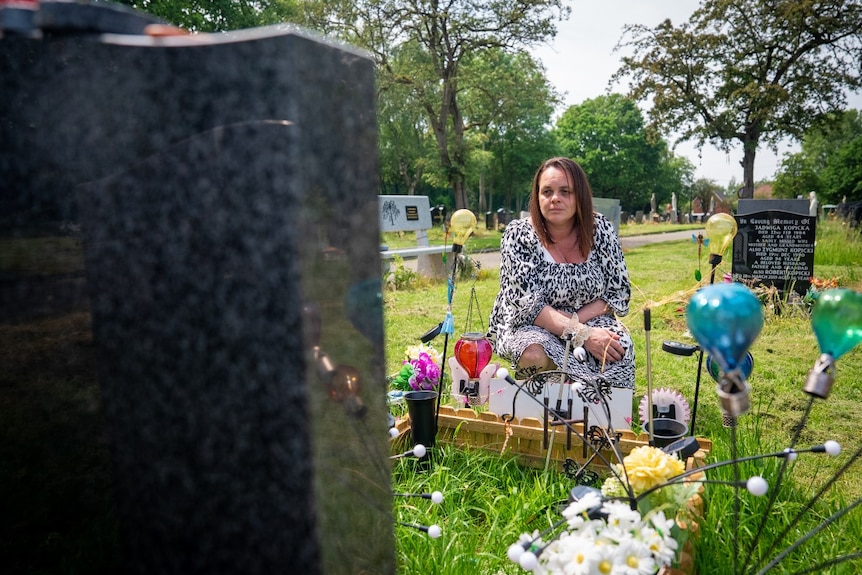
Rebecca Archer remembers her daughter as “bubbly” and “kind”. (ABC News: Alex Parsons)
Australia recorded its first diphtheria death in almost a decade last month as cases climbed to their highest level since a major outbreak in 1991.
Rebecca knows nothing will bring back Renae, but she remains determined to make sure other families don’t suffer the same pain.
“[I’m] just angry, really, and sad that parents don’t understand they’re putting their children in a potential life-threatening situation,” she said.
“She was my best friend. She was my first-born. She just had the most infectious smile. And she made everyone around her happy.”