






Tarraville’s Christ Church, built in 1856, stands as one of the last remaining public monuments to a once-thriving frontier seaport town.
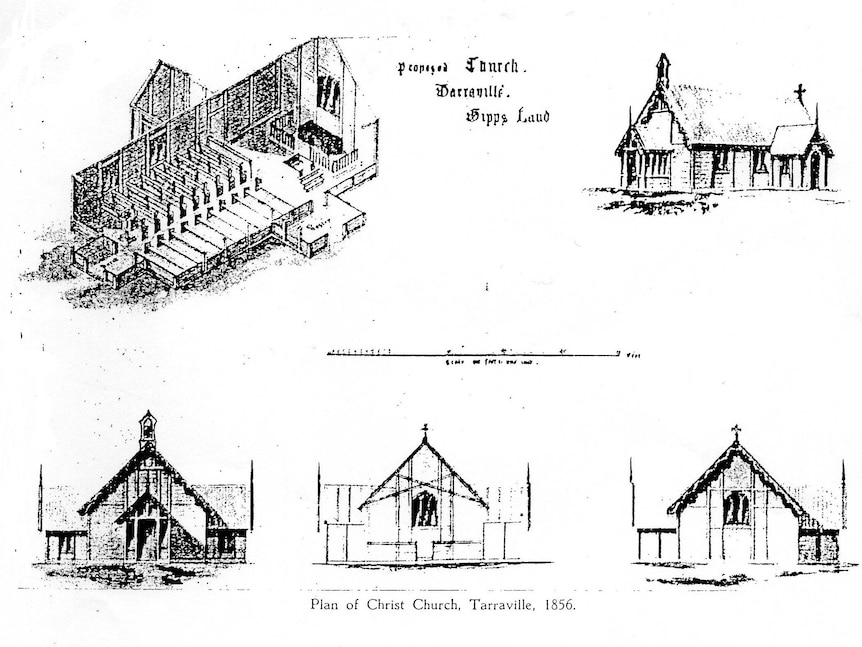
Architecturally unique, the Anglican church features a rectangular timber Victorian gothic revival design and is a rare surviving example of drop-slab construction.
Its congregation is celebrating the church’s 170th anniversary and the work that has gone into ensuring it remains Victoria’s oldest active timber church.
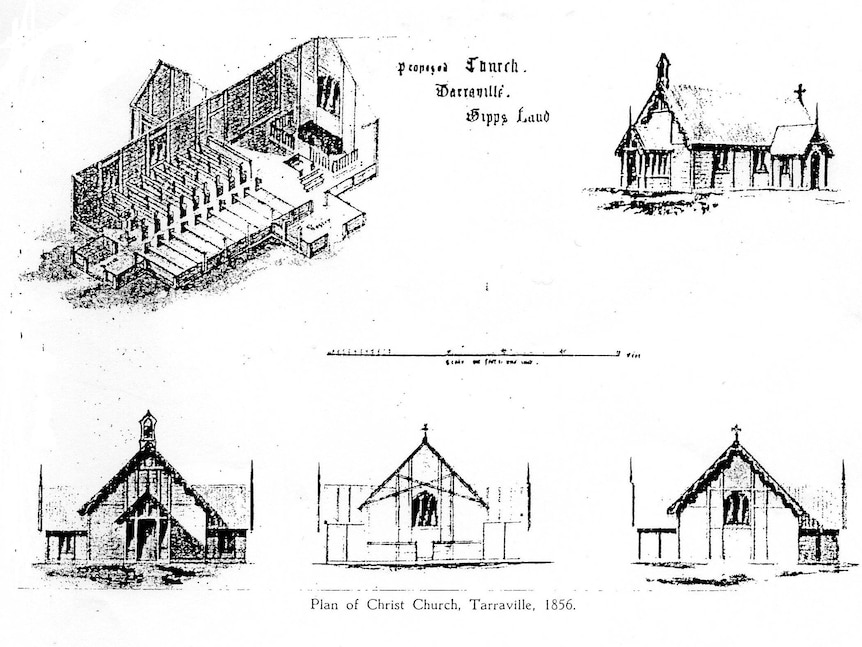
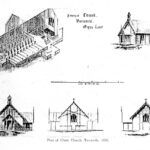
Original sketches of the church show the decorative, evangelical design of JHW Pettit and George Hastings. (Supplied: Yarram Anglican Parish)
No nails, almost
The building’s ability to withstand the test of time is a testament to the skills of builders past.
Yarram Anglican parish member Fred Wright, who has helped maintain the building, said the original construction was based on a Scottish design.
“It’s stated as not having any nails in it, which is partly true,” Mr Wright said.
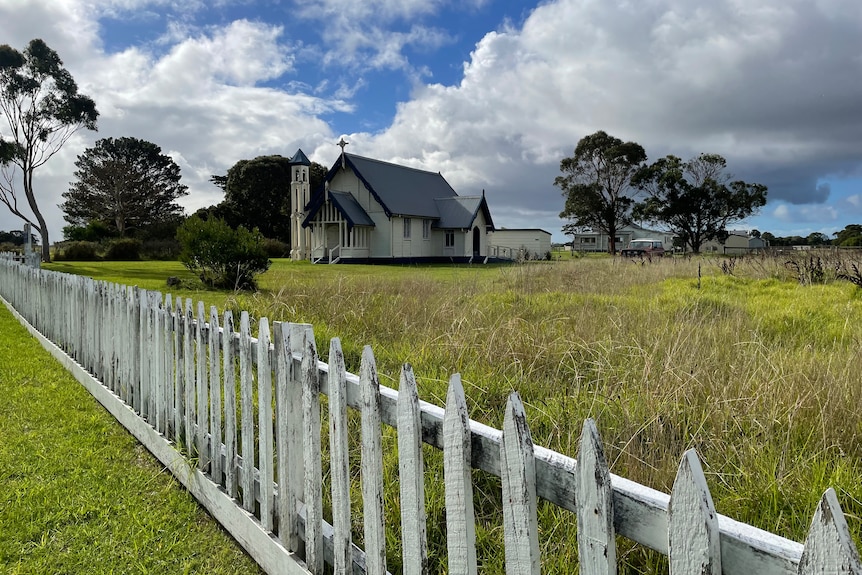
The heritage-listed Christ Church is a popular tourist attraction. (ABC News: Rachael Lucas)
The church’s upright beams are slotted with crossbeams painstakingly cut and assembled so that the yellow bark timber could be tessellated into place without nails.
Nails became a necessary addition when the original shingle roof had to be replaced with galvanised iron in the 1900s.
The original shingles are still visible under the eaves, made from local mountain ash.
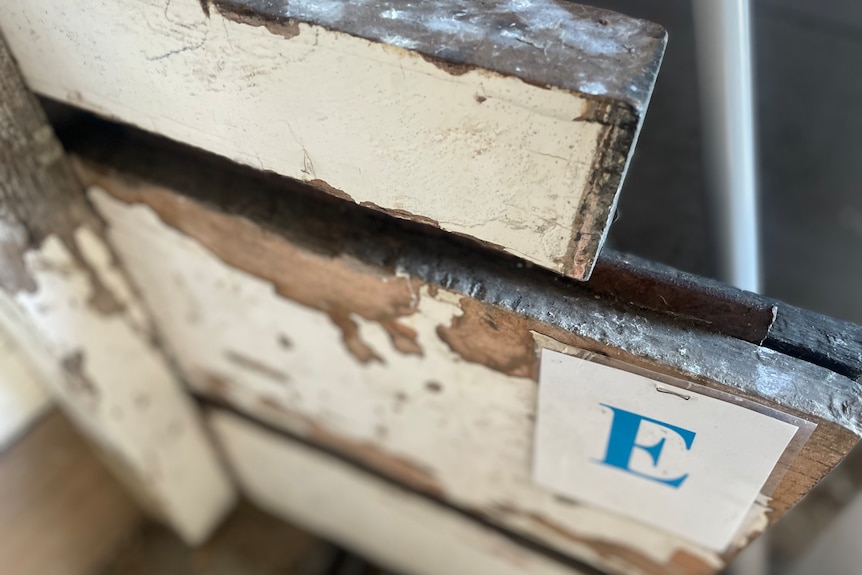
Nails are not required for tongue and grove drop slab construction. (ABC News: Rachael Lucas)
“It’s quite a substantial building and it’s a very important part of our cultural history of our traditions,” Mr Wright said.
“It’s old English, and the majority of people who moved into these areas were from the United Kingdom area, a lot of Scottish, Irish and English. It’s part of Australia’s history.”
Gateway to the goldfields
Tarraville, situated on the Tarra River, is 175 kilometres south-east of Melbourne in South Gippsland.
It was settled by Europeans long before Victoria even became a state.
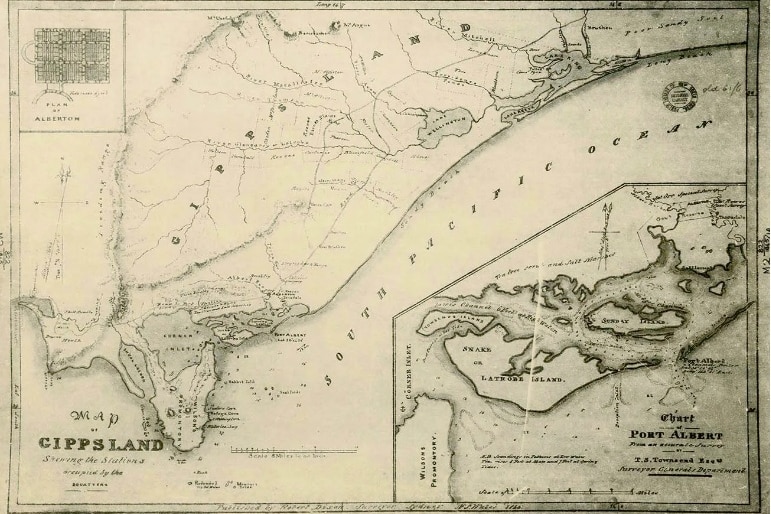
An 1845 map of Port Albert. (Supplied: Yarram Anglican Parish)
Named after Gundungurra Burra Burra man Charley Tarra, an Aboriginal guide and tracker who travelled with explorers, the area is the home of the Brataualung clan of the Kurnai people.
By 1843, land was surveyed for a township to service what would become the bustling supply depot of Port Albert.
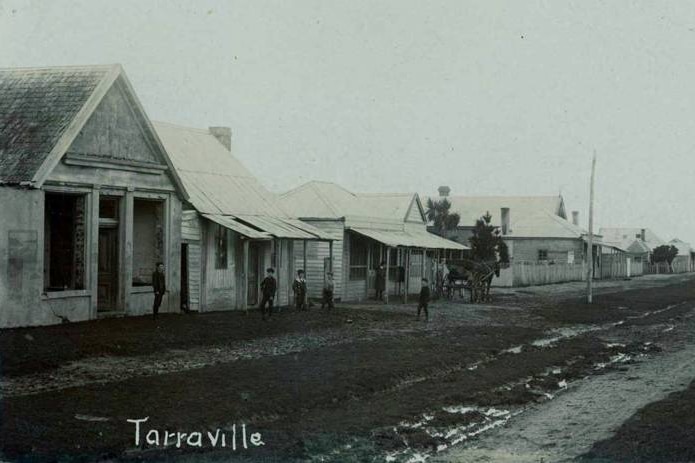
Tarraville went from a bustling gateway town to a ghost town. (Supplied: Yarram Anglican Parish)
By 1844, Tarraville become the largest town in Gippsland, with 50 predominantly brick buildings, including hotels, numerous stores, a police station, courthouse, jail and later schools and a mechanics institute hall.
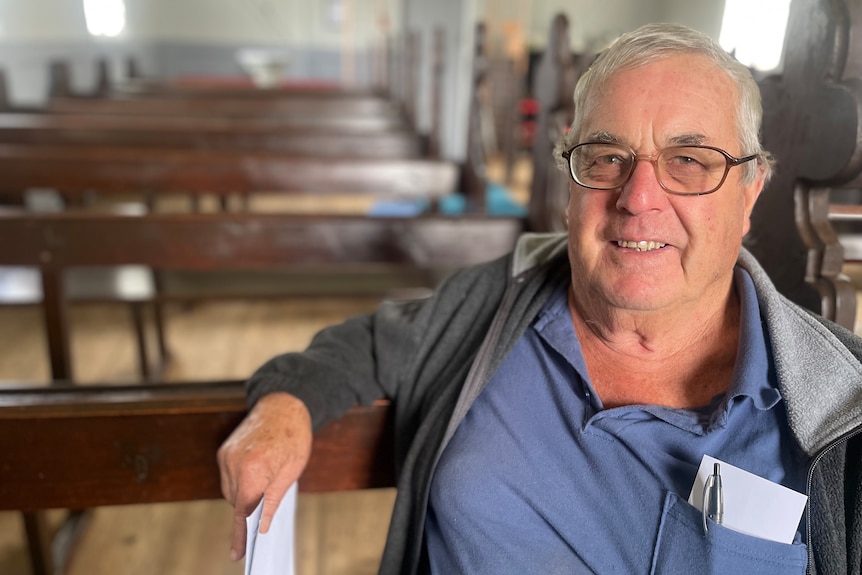
Fred Wright has overseen the restoration of Christ Church at Tarraville. (ABC News: Rachael Lucas)
“This area was only accessible by sea, as from here to Melbourne was all through the Koo Wee Rup swamps and there were no reliable roads through that area,” Mr Wright said.
“Port Albert was the only place they could land from a boat, and then to move inland. They had to go this way to get through to the goldfields of Walhalla and Sale.”
Makeshift ministry
Tarraville’s first priest was the Reverend Willoughby Bean (1801–77), an English free settler who had migrated to Gosford, New South Wales, where he farmed about 800 hectares.
Suffering financial hardship, the aspiring clergyman returned to England to pursue theological studies in 1843 before Bishop of Melbourne Charles Perry posted him to Tarraville as an ordained priest in 1848.
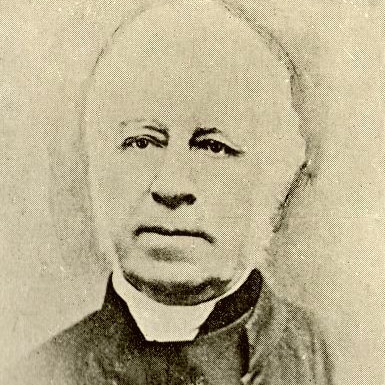
Reverend Willoughby Bean was based in Tarrraville from 1848-1859. (Supplied: Yarram Anglican Parish)
His parish posting encompassed a vast area comprising Warragul in the west, Tarwin in the south and Omeo in the east, nearly a third of what would later become the state of Victoria.
Traversing uncleared forests, bush scrub, marshes and crossing rivers on horseback with a buggy, Reverend Bean facilitated prayers and performed Sunday services in homesteads, courthouses and woolsheds.
Camping, sleeping at farms, pubs and shanties, he met labourers, stockmen, storekeepers and publicans.
He officiated marriages, births and burials, no matter what denomination, recording them diligently in his hand-ruled, hand-sewn registers, which he carried in his saddlebag.
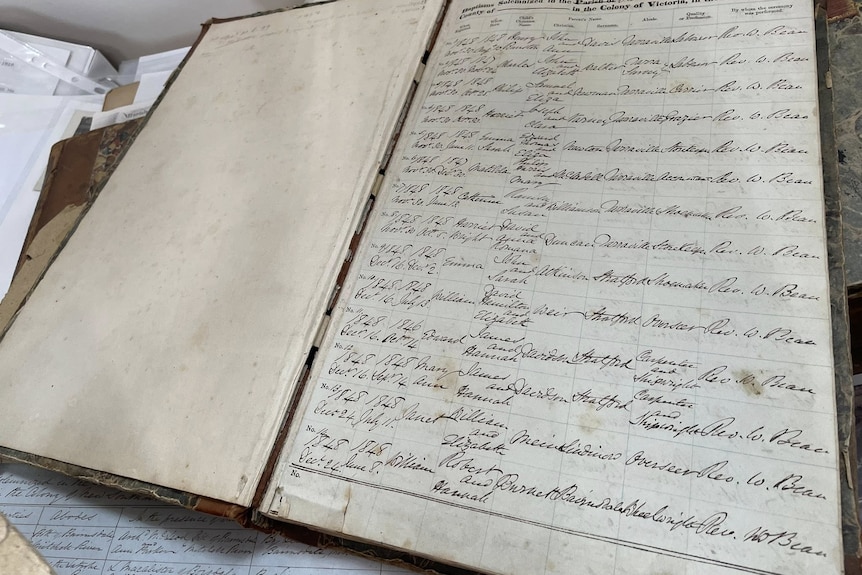
Reverend Willoughby Bean’s original baptism records from 1848. (ABC News: Rachael Lucas)
But after eight years as an itinerant priest, £456 was raised from Church of England authorities in Melbourne, local subscriptions and donations from Rev Bean’s English connections to fund a parish church.
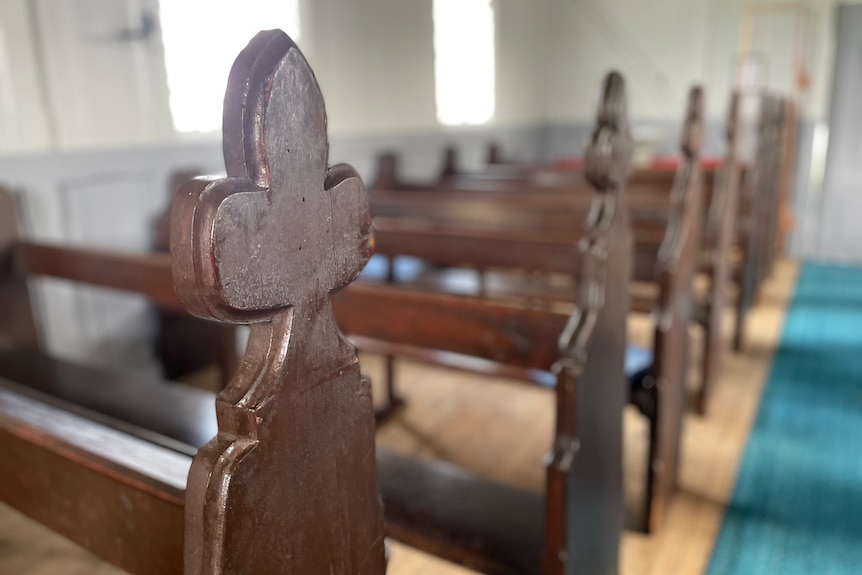
The Christ Church was designed to accommodate 180 people. (ABC News: Rachael Lucas)
A church is born
Constructed on the banks of the Tarra River, the first service at the Christ Church Tarraville was held at 11:30am on Sunday, June 8, 1856, attracting a full house of parishioners from across the district.
“According to the original paperwork, it was designed to accommodate 180 people, but I think they must have been pretty small,” Mr Wright said of the compact original wooden pews still intact.
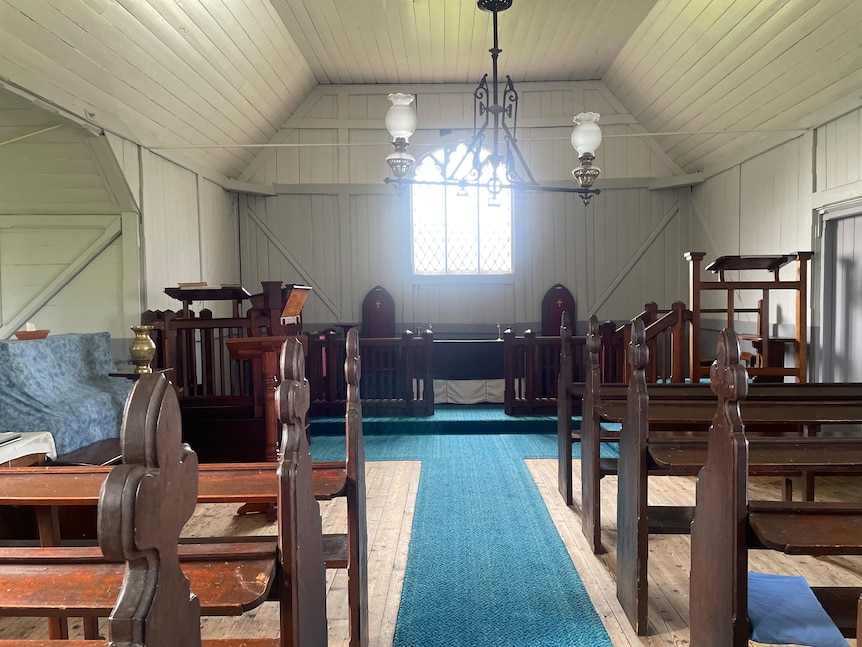
Kerosene lamps were used to light the church. (ABC News: Rachael Lucas)
The bell, made in London, dated 1858, was installed in a bell tower two years later.
A plaque acknowledging Tarraville’s most famous parish member, contralto opera singer Ada Crossley (1874-1929), as a choir leader and organist remains on the wall.
As the building never had power connected, replica recesses for kerosene lamps are fixed to the walls, pulpit post and ceiling, with only one original wall recess remaining.
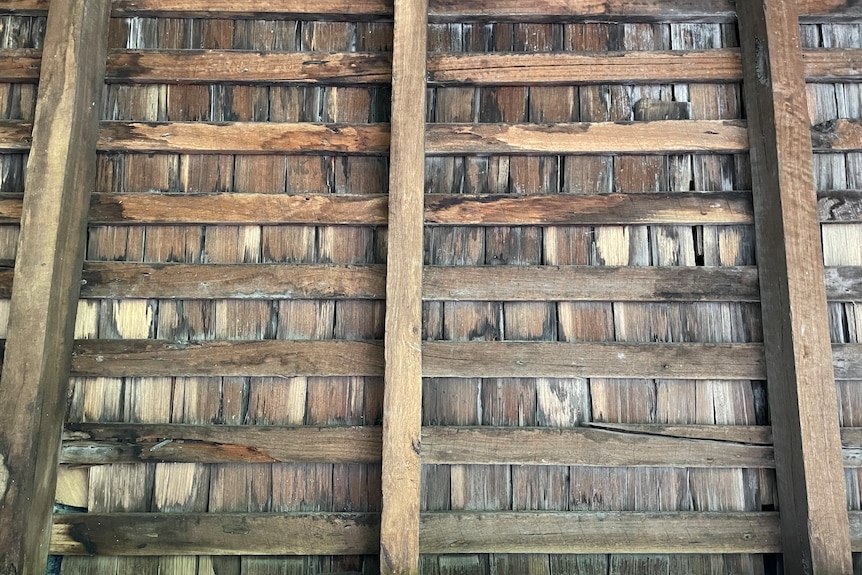
Original mountain ash roof shingles are still visible underneath the steel roof. (ABC News: Rachael Lucas)
From gateway to ghost town
Neighbouring Yarram eclipsed Tarraville as a city centre as Tarraville’s population decreased from the late 1870s, with better roads and the completion of the railway connecting Melbourne to Sale in 1878.
Shipping declined, and by the early 1900s, few buildings remained, rendering Tarraville a virtual ghost town.
By 2000, the church had deteriorated badly due to rust from the corrosive salt air and damage from seabirds.
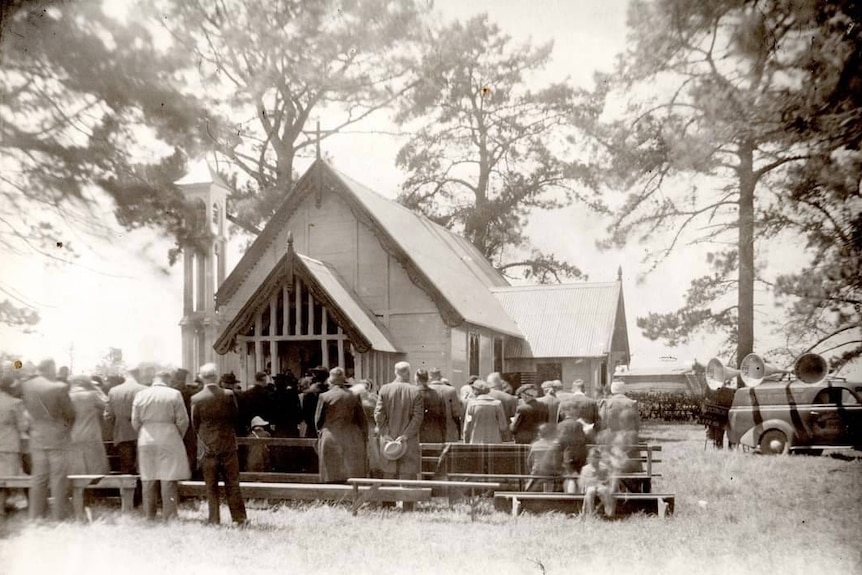
Christ Church at Tarraville, pictured in 1947, has remained active since it was built in 1856. (Supplied: Yarram Anglican Parish)
Volunteers painstakingly numbered, removed, repaired or replaced every single board, restored rusting mesh, wrought iron, damaged windows and bird-proofed the roof during a full restoration between 2000 and 2006 with funding from Heritage Victoria.
“Everything’s original, nothing has really been changed, it’s got the highest rating for a heritage building in Victoria,”
Mr Wright said.
Today, Tarraville has a few homes, and dairy farms, the remnants of its former school built in 1877 and the church, which still operates and attracts an occasional busload of tourists by appointment.
“We basically keep the service for the locals on the fifth Sunday of the month, and have quite a large Good Friday service every year that gets 80 to 100 people,” Mr Wright said.