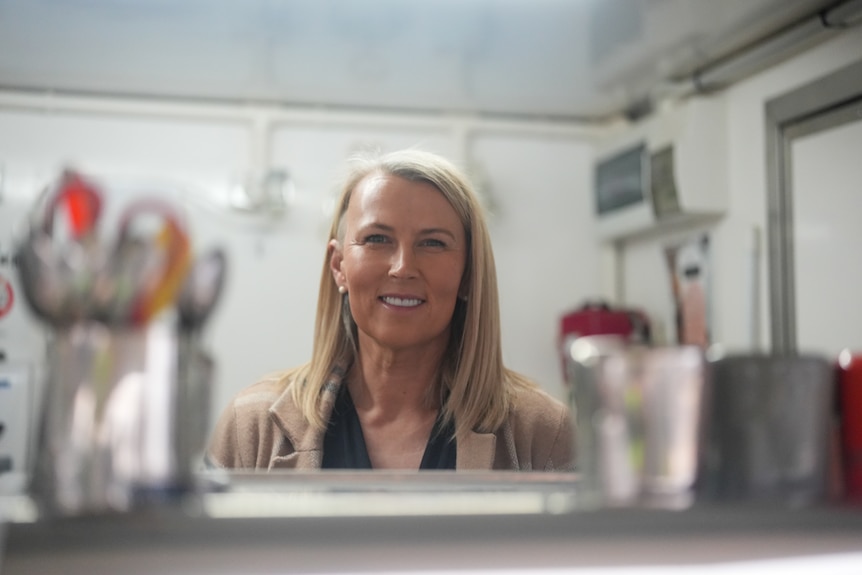









Within nine short weeks, 56-year-old Simone Crerar went from complaining about abdominal pain, to dying in her sleep.
It was a sharp decline her brother Scott Crerar still struggles to come to terms with.
“It just happened so quickly,” Mr Crerar said.
He said his little sister was misdiagnosed multiple times in the months leading up to her death, with her symptoms being repeatedly missed.
Towards the end of her life, Ms Crerar’s stomach visibly swelled, she had no energy and was barely eating.
“It’s just a bit mind-boggling that [Ms Crerar’s case] wasn’t escalated,” he said.
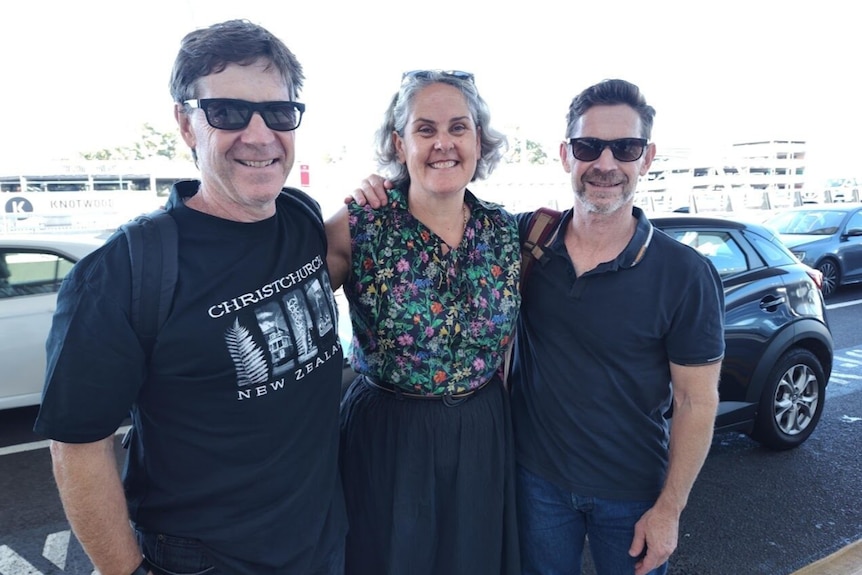
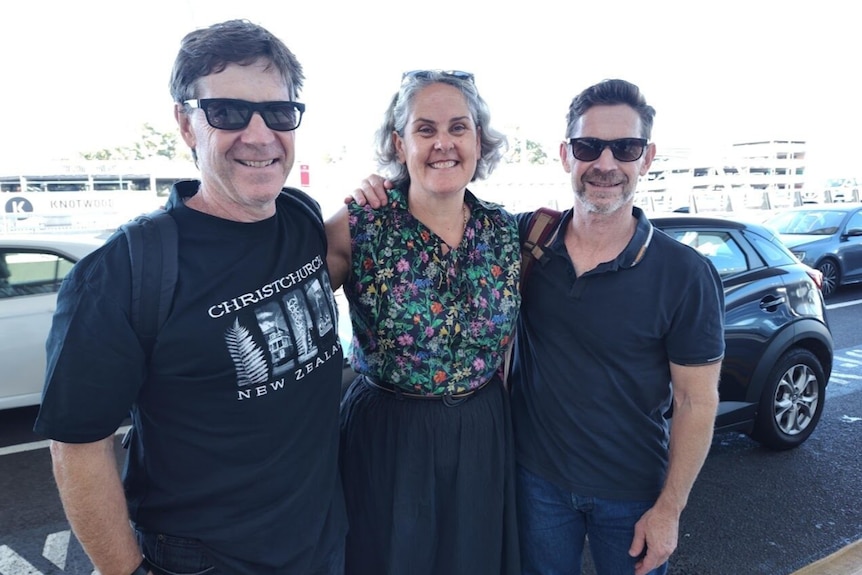
Simone Crerar, pictured with brothers Stephen and Scott Crerar, was a much-loved sister and loyal friend. (Supplied: Crerar family)
A post-mortem examination found Ms Crerar had metastatic uterine leiomyosarcoma, a rare and highly aggressive type of uterine cancer which had already spread to her liver.
A growing number of Australian women are being diagnosed with uterine cancer.
It’s the fastest-rising women’s cancer in Australia, with the incidence doubling over the past 25 years.
But it’s also a disease without a public profile, with about nine in 10 women not knowing uterine cancer exists, let alone about the warning signs and risk factors.
Knowing the risk factors is important because experts say many cases of uterine cancer are preventable.
Uterine cancers symptoms and incidence
The early warning signs for uterine cancer include abnormal vaginal bleeding, unexplained weight loss, abdominal pain and bowel movement changes.
In Australia, about 3,400 women a year are diagnosed with the disease.
Up to 95 per cent of cases are endometrial cancer, in the lining of the uterus, but some rare cases start in the muscle walls.
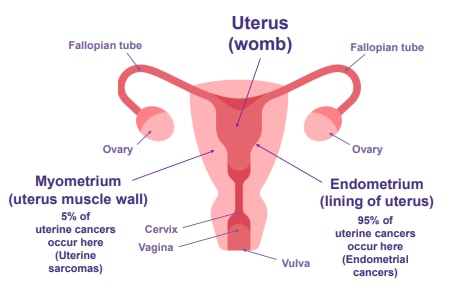
The most common symptom of uterine cancer is unusual vaginal bleeding. (Supplied: ANZGOG)
Most women who get it, like Ms Crerar, are over 50, but there’s an increasing number of younger women being diagnosed, with rates rising fastest in women aged 25–44.
Anthony Richards, gynaecological oncologist at Joan Kirner Women’s and Children’s Hospital in Melbourne, said two of the key drivers behind these growing rates were obesity and diabetes.
Obesity, Dr Richards explained, led to an increased production of “unopposed estrogen” which drove the development of endometrial cancer.
Elevated insulin and insulin resistance associated with type 2 diabetes also played a role in endometrial cancer development.
Dr Richards said endometrial cancer was generally curable with surgery alone, with about 70 per cent of cases diagnosed in stage one.
But low public awareness about the risks and early warning signs of uterine cancer could sometimes lead to a delayed diagnosis and poorer outcomes, Dr Richards said.
These poorer outcomes are reflected in figures from the Australia New Zealand Gynaecological Oncology Group (ANZGOG) which show that the mortality rate of uterine cancer has been steadily increasing.
Researchers searching for risk factors
According to ANZGOG up to 60 per cent of cases of uterine cancer in Australia are potentially preventable with greater public awareness, prompt attention to symptoms and better management of the disease’s main risk factors: obesity and diabetes.
And although obesity is a recognised risk factor, it’s not the whole picture, explained QIMR Berghofer cancer genetic susceptibility laboratory head Tracy O’Mara.
“Not everybody that’s diagnosed has excess weight and not everybody that has been living with obesity develops endometrial cancer,” she said.
“There’s lots of other things that are at play as well.”
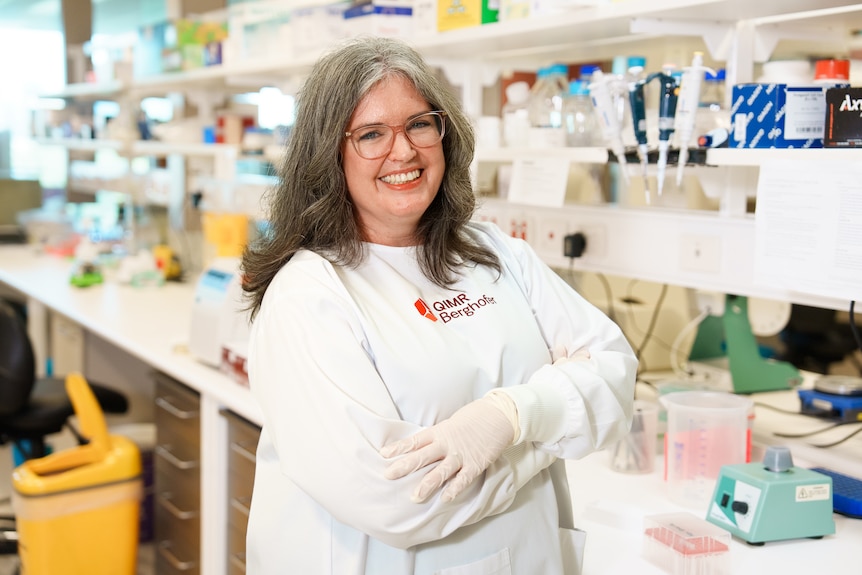
Tracy O’Mara is researching uterine cancer, trying to pinpoint the genetic risk factors. (Supplied: QIMR Berghofer)
Dr O’Mara’s team is trying to pinpoint the genetic profile which make some people more at risk of developing uterine cancer than others.
In a study published in 2023, Dr O’Mara’s team found that women with life-long higher levels of testosterone could be at greater risk of developing endometrial cancer.
Researchers tested this potential high genetic risk profile in a new study, published earlier this year, finding women with the profile but a “healthy” BMI were twice as as likely to develop uterine cancer as the general population.
And women who had the high genetic risk profile and were also obese were five times as likely.
Although more research and testing is needed, Dr O’Mara said their findings proved genetics played an “independent” role in endometrial cancer risk.
Dr O’Mara said pinpointing these genetic risk factors was an important step as it could help scientists develop targeted treatments.
At the moment, the first-line treatment for uterine cancer is a hysterectomy.
Not only was this a highly invasive process, it can present significant issues for younger women who want to preserve their fertility.
Raising awareness needs funding and research
ANZGOG chair and oncologist Clare Scott said between 2003 and 2020, Australia spent about $18 million on uterine cancer research compared to more than $400 million for breast cancer over that same period.
Even taking into consideration the higher incidence of breast cancer, there was still a significant funding gap, Professor Scott said.
“Gynaecological cancers and uterine cancer have been under-resourced for 20 years compared to other types of cancer,”
she said.
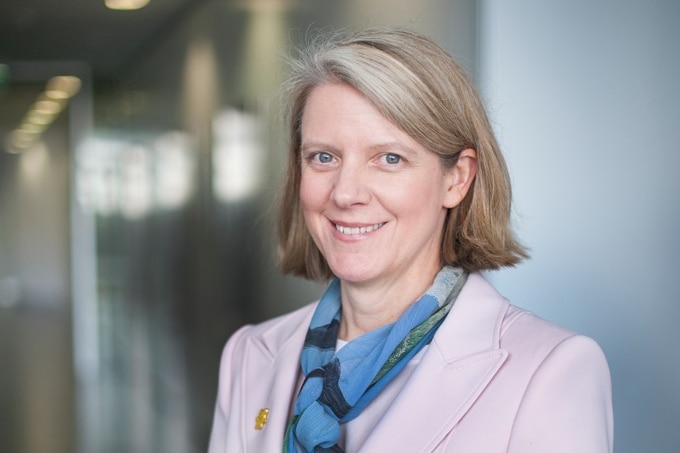
Professor Clare Scott, an internationally recognised expert in gynaecological cancer research. (Supplied: ANZGOG)
This low level of research funding is one of the reasons for the general lack of awareness about uterine cancer in Australia, Professor Scott said.
Another factor at play was shame, Professor Scott explained, with many people still squeamish to talk about diseases below the waist.
The hallmark symptom of most uterine cancers was abnormal vaginal bleeding, she said, which many women found hard to talk about with peers or doctors.
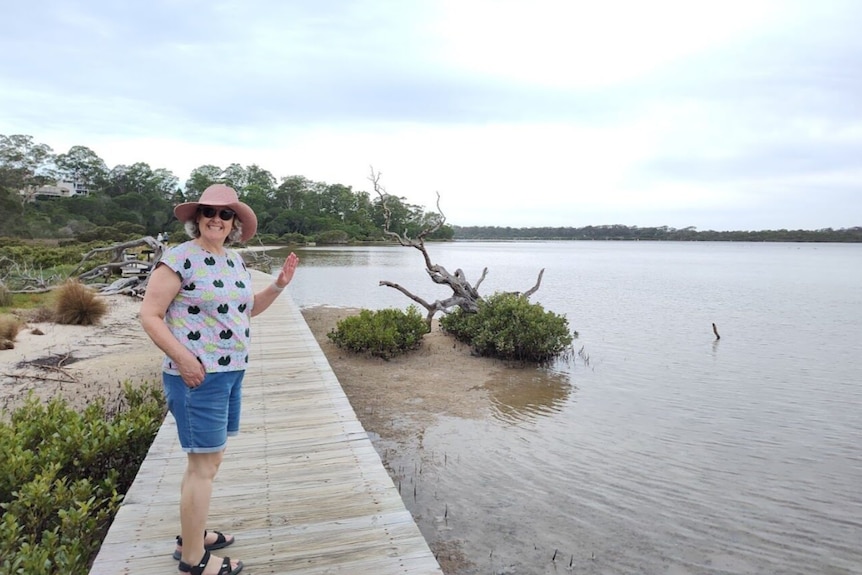
Simone Crerar’s family want their loyal, loving and kind sister to be remembered by the life she lived, not just her illness. (Supplied: Crerar family)
In New South Wales, Ms Crarar’s brothers are still coming to terms with their loss, remembering their little sister as a kind woman with a deep love of animals and the great outdoors.
Ms Crerar’s brothers hope that by sharing their sister’s story, they can help spread awareness and break down any stigma and shame.
They want women in Australia to be aware of the warning signs to look out for, and to reach out for help if they notice anything unusual.
And to push harder for more answers if their symptoms aren’t being taken seriously.
“I hope Simone’s legacy is that more women are aware [of the symptoms], and they have the opportunity to fight the disease,”
Mr Crerar said.
An opportunity, Mr Crerar said, his strong, resilient, loyal, loving little sister was never given.