





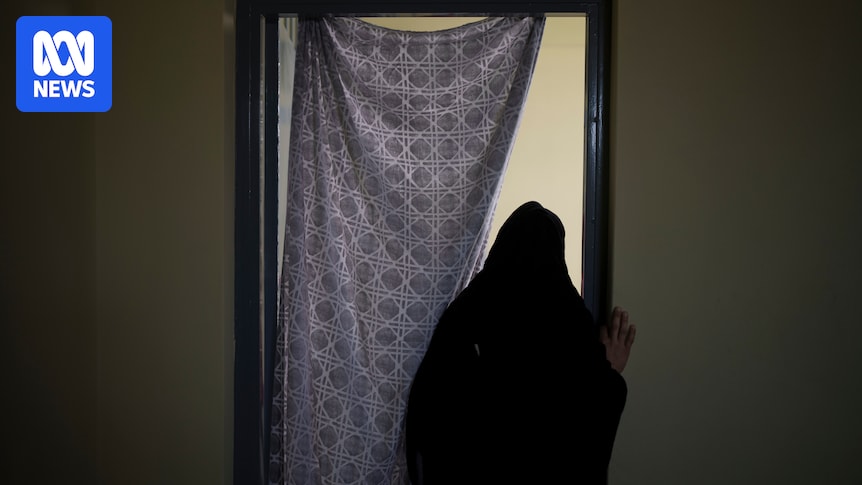
At least two people have been killed during a Taliban crackdown on a protest in Afghanistan against the arrests of women for allegedly violating dress code regulations.
Eyewitnesses said they saw Taliban police open fire during a demonstration attended by about 100 to 150 people against the arrests of women over the weekend in Herat, a city in western Afghanistan.
Herat’s morality police started arresting dozens of women last Saturday for not wearing the body-cloaking chador or burqa, leading to the protest earlier this week.
Police have denied that any weapons were used.
In a statement, 10 independent experts appointed by the UN Human Rights Council said at least two people were killed, including a boy who was shot. More than 20 were wounded, some of whom were beaten with sticks.
“Allegations that women were detained for dress code violations are deeply concerning and may constitute arbitrary and unlawful detention, as it appears to penalise the exercise of their right to freedom of expression and right to be free from gender discrimination,” the experts’ statement said.
“Equality, peaceful assembly, freedom of expression and movement, and protection from arbitrary detention are fundamental rights.”
The Afghan dress code is governed by the Ministry for the Propagation of Virtue and the Prevention of Vice (PVPV), which says women must be almost entirely covered when they leave home.
Many women wear a flowing abaya robe, a headscarf and a face covering, rather than a chador or burqa.
The Afghan dress code says women must be almost entirely covered when they leave home. (AP: Ebrahim Noroozi)
Rare protest
Protests are rare in Afghanistan, which has been run by the Taliban since 2021 in the wake of the chaotic withdrawal of US-led forces.
The government has since imposed rules governed by a strict interpretation of Islamic law, or Shariah.
Dissent is not tolerated and protests against government decisions are illegal.
The regulations include draconian restrictions on women and girls, including bans on education beyond primary school and what women can wear.
The rules stipulate that women can only go out in public when wearing full hijab — which includes a headscarf and a long robe covering the entire body — as well as a face covering that leaves only the eyes visible.
At least 30 women arrested
The United Nations Assistance Mission in Afghanistan (UNAMA) said at last 30 women were arrested in Herat last weekend.
“Dozens more women reportedly received verbal warnings,” it said in a statement.
“While the women were released on June 8, the impact of such arbitrary arrests and detentions on women and their families is profound.”
UNAMA called on authorities to rescind policies that restrict the rights of women and girls in Afghanistan, and stressed that law enforcement “must comply with international legal standards”.
“Individuals have the right to express dissent peacefully without fear of violence, intimidation or reprisals,” it said.
Herat police command spokesperson Sayed Masoud Hosseini said in a statement that the authority “takes a serious, Shariah, and principled approach to any action that disrupts public security”.
He said “rioters” had gathered on Tuesday “under the pretext of protesting issues related to the observance of the hijab and opposition to the Islamic hijab, and acted to disrupt public order”.
The presence of security forces “brought the situation under control in the shortest possible time”, Mr Hossein said.
“The Herat Provincial Security Command once again emphasises that individual and social freedoms must be implemented within the framework of Shariah law and social values, and any behaviour or action that disrupts public security, creates tension, and disrupts public order is unacceptable,” he said.
On Monday, the day before the protest, the vice and virtue ministry dismissed the reports of arrests and detentions of women.
“The issues being spread about women being arrested in Herat are all rumours,” it said in a statement, adding that wearing the “hijab is a divine command, a law that we are obliged to implement”.
The UN Assistance Mission in Afghanistan said 30 women were arrested in Herat for dress code violations. (AP: Felipe Dana)
Georgette Gagnon, the UN’s deputy special representative of the secretary-general and officer in charge of UNAMA, said the detention of women in Afghanistan “carries enormous stigma, which can put women at risk of further violence and isolation in their families and communities even after they are released”.
She said authorities were “obliged under international law to uphold the rights of all Afghans to freedom of expression, peaceful assembly, liberty and security of person, and freedom from arbitrary detention”.
Children’s health worker detained
The women detained in Herat included a medical worker employed by Médecins Sans Frontières (MSF).
She was heading to work at Herat Regional Hospital’s paediatric ward when she was stopped by the morality police on Saturday and accused of failing to comply with the dress code, the organisation said.
The woman was held for two days and released after having to sign, along with her husband and relatives, a written commitment to wear clothing mandated by the PVPV.
MSF said it was “outraged by the arrest and detention of one of its employees as part of the enforcement of dress code requirements in the city”.
“This incident is not isolated. Women in Afghanistan already face very severe restrictions on movement and access to public life,” it said.
The PVPV has not commented on the detention of women in Herat over dress code violations, despite requests for comment.
But the ministry’s department in Herat said new regulations had recently come into force and warned that violations could lead to detention or imprisonment.
A list of rules published by Herat’s PVPV wing included a ban on wearing make-up or having any hair visible and an order to wear socks.
AFP/AP