





Tourism operators in coastal South Australia say more information on what to look for in sick birds should be provided in the wake of Australia’s H5N1 bird flu outbreak.
Only one case of the H5 variant has been detected so far in SA, on the Fleureiu Peninsula.
Calypso Star Charters owner Andrew Wright, who runs daily shark cage diving tours out of Port Lincoln, frequently sees migratory seabirds around the Neptune Islands.
Andrew Wright has been frustrated by what he says is poor communication from PIRSA. (ABC Eyre Peninsula: Jack Ward)
Mr Wright noticed some sick giant petrels on the islands about six weeks ago but did not know he was supposed to report it to authorities.
“We probably have seen a few petrels that in hindsight, looked a little bit unwell,” Mr Wright said.
“In isolation, we didn’t pay much attention to it … but looking back now, you wonder [if] it might have been an early sign.”
Some ‘unusual’ signs
While Mr Wright sees all kinds of bird and marine life on the water, but more recently he has noticed strange activity.
“We did have a week there out at Neptune’s where we saw a really large number of albatross,” he said.
“Seeing albatross is not unusual for us, but normally only ones and twos or three on a good day while we’re steaming along.
The Neptune Islands are at the entrance of South Australia’s Spencer Gulf, approximately 55 kilometres from Port Lincoln. (ABC News: Che Chorley)
“But we had a week where we probably had 20 or more individual albatross sitting out on the water by Neptune’s and that was unusual.”
Mr Wright said, as a tourism operator on the frontline, he felt there was a missed opportunity from the government to better prepare operators in the wake of South Australia’s first bird flu case.
“Remote area operators, tourism operators, land-based, sea-based, fishermen that venture out into the deep blue yonder; no-one’s really heard anything,” Mr Wright said.
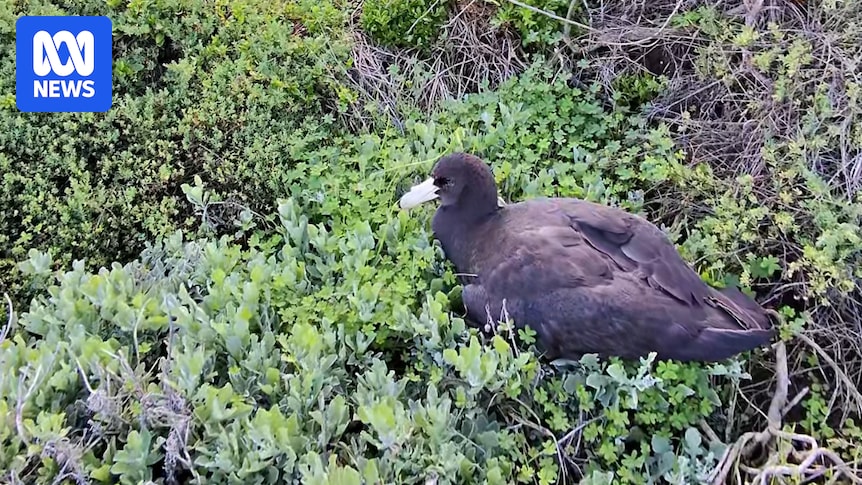
The northern giant petrel was the second bird in WA to test positive in a preliminary test for avian influenza. (Supplied: Lori-Ann Shibish/Esperance Wildlife Hospital and Sanctuary)
“It might have been an opportunity to come to us, three, six, nine months ago and say … ‘This is a problem at these subantarctic islands.’
“Unfortunately, the silence has been deafening.“
Remote rangers have a role to play
On SA’s west coast, ranger and manager of the Far West Coast Aboriginal Corporation Greg Crammond said rangers could play a role in bird flu detection.
“We haven’t been approached by PIRSA yet but I’d very much like them to do so,” he said.
Greg Crammond says rangers can play a role in bird flu detection if properly trained. (Supplied: Greg Crammond)
“A lot of these beaches are very remote, our rangers are out probably more than anybody on these beaches; particularly to the west of Ceduna.
“It would be good for us to be trained to deal with sick or dead birds, particularly; I can see instances where we might be approached by members of the public.”
Striking a balance
Chief veterinary officer at the Department of Primary Industries and Regions SA (PIRSA) Skye Fruean said it was important to target messaging to high-risk periods.
“I guess we need to strike a balance here because if we’re banging on about this consistently and nothing happens, people lose interest anyway,” Dr Fruean said.
Skye Fruean says PIRSA has been telling people to report “sick and dead wildlife for a very long time”. (Supplied: PIRSA)
“We have been telling people to report sick and dead wildlife for a very long time, and particularly with a focus on the coastal regions over the last year or so due to the algal bloom.”
She said time would tell what role tourism operators played at this stage.
“It’s really just giving us that intelligence, if you are out and about and seeing things, to let us know, please.”
Dead or sick birds can be reported to PIRSA’s Animal Disease Hotline on 1800 675 888.
Loading…