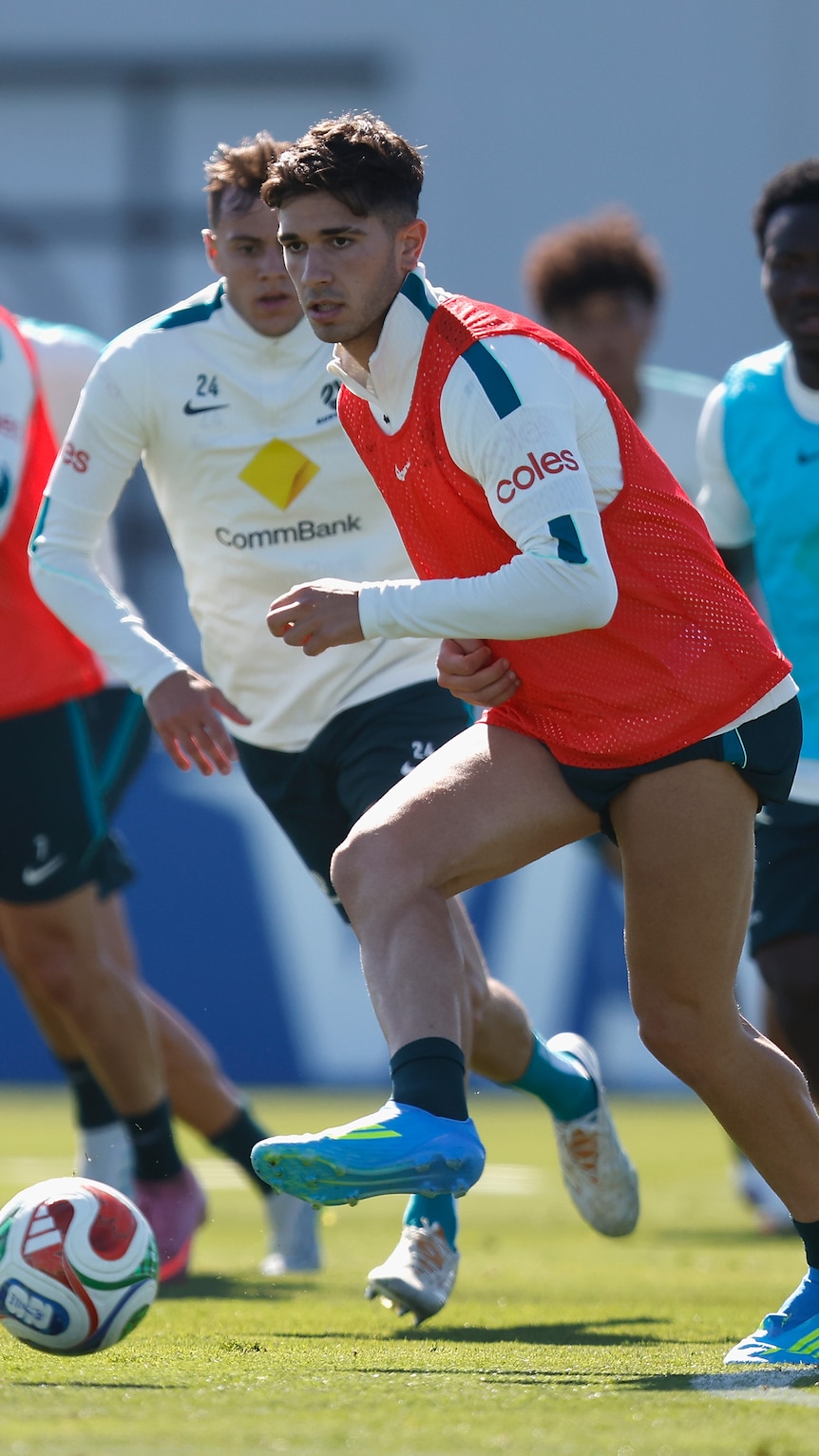










Last week, on a brisk Canberra afternoon, ACT Brumbies fans gathered to watch the Super Rugby match against Moana Pasifika.
On their way into the stadium, one fan summed up his views on the gambling industry.
“The house always wins,”
he said.
Pervasive, omnipresent, and (crucially) effective, gambling advertising and Australian sport have a symbiotic relationship.
But recent polling commissioned by the Australia Institute and conducted by YouGov showed 77 per cent of respondents supported a total ban on the ads.
And a Deakin University survey of children in New South Wales and Victoria about sport’s reliance on gambling ad revenue backed up that national polling.
“People are going to … think of you as paid off. They’re not gonna want to watch anymore because you seem too fake,” a 15-year-old boy told researchers.
“You’re influencing people from a young age, like, corrupting their mind … I’m 13, I shouldn’t need to be worrying about gambling,” a 13-year-old girl told the researchers.
Led by public health expert Samantha Thomas, the survey spoke with 64 children between the ages of 12 and 17.

Samantha Thomas says young people are particularly aware of gambling advertisement harm. (Supplied: Samatha Thomas)
“Young people, in particular, are really switched on about this,”
Professor Thomas said.
“They understand sporting codes and the broadcasters [are] influencing the government to make decisions, which are not in the best interests of young people.
“I think the public is fed up … this is why we see such a huge number of parents and young people who are now saying ‘it’s enough'”.
Gambling ‘sometimes kills people’
The federal government has said it is “proud” of its proposed changes to regulations for the multi-billion-dollar gambling industry.
According to its own analysis, Australians are exposed to billions of gambling ads online each year.
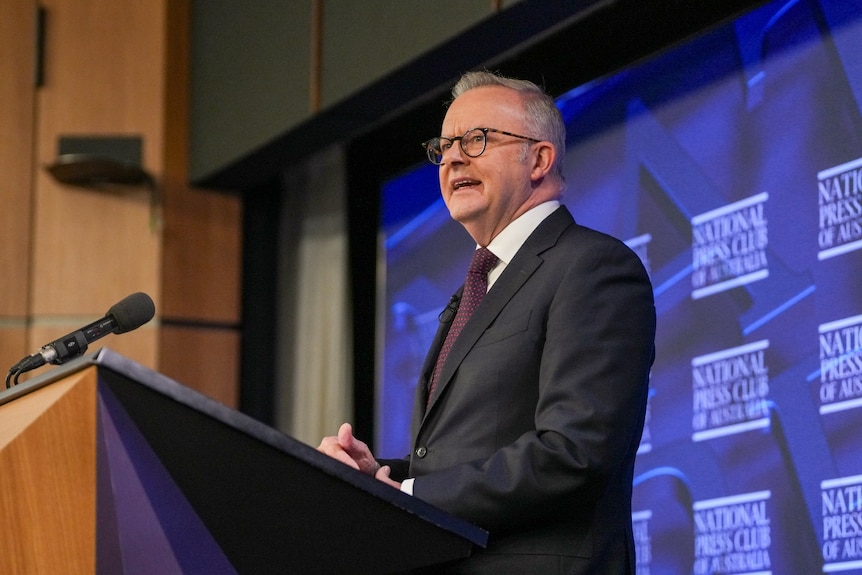
Anthony Albanese announced the new gambling ad reforms at the National Press Club in early April. (ABC News: Dan Sweetapple)
“We’re taking action when it comes to problem gambling, more than any government in Australian history has,” Prime Minister Anthony Albanese said in Question Time this week.
But the government’s proposed changes have faced widespread criticism, most notably because they do not include a total ban on gambling advertising.
Instead, the changes would introduce time-of-day restrictions (some of which are already in place), limits to the number of ads per hour, and the phasing out of shirt and in-stadium sponsors.
The bill would also ban online ads for users aged under 18 and require social media platforms to develop an “opt-out” system for adults.
“This is a decision in the interest of very powerful industries that are making money from a product that harms and sometimes kills people,” Professor Thomas said.
Recommendations of landmark review not among changes
The federal government is lobbied by sporting codes, broadcasters and gambling companies when it comes to changing, or not changing, the law.
Gambling companies are large donors to the Labor Party, while gambling lobbyists and the NRL’s bosses have enjoyed direct access to the prime minister.
Marisa Paterson is the Minister for Gaming Reform in the ACT Labor government.
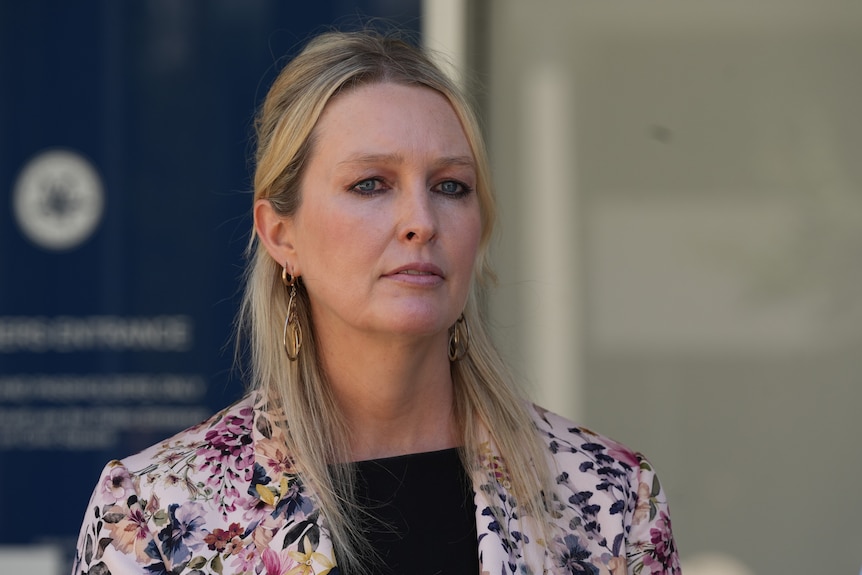
Marisa Paterson says some lobby groups attempt to influence policy decisions. (ABC News: Ian Cutmore)
Before entering politics, Dr Paterson spent 15 years researching gambling harm and advocating for reform.
“I think the gambling industry is a very powerful industry in Australia,”
she said.
“We see this in other industries as well, like mining, for example, of specific lobby groups that attempt to influence.”
In 2023, research from Melbourne University and Transparency International indicated the gambling industry had access to 280 individual lobbyists operating in federal parliament, including former government ministers.
This was far more than any other industry, though how much this lobbying has influenced policy design is hard to quantify, but what they are lobbying for is clear.
In their submissions to the 2023 Murphy review, Australia’s biggest footy codes, the NRL and AFL, argued against broad reform on gambling advertising.
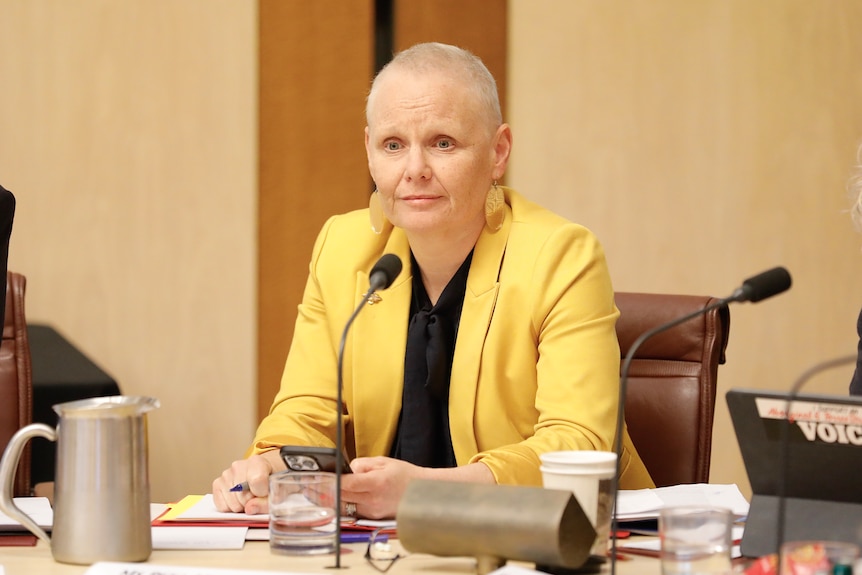
Former Labor MP Peta Murphy chaired the parliamentary inquiry into online gambling before her death. (ABC News)
The landmark report, entitled ‘You Win Some, You Lose More’, set out 31 recommendations, including a total advertising ban, establishing a national regulator, and the prohibition of inducements “without delay”.
The government defines inducements, considered to be the most harmful form of gambling, as an “offer to persuade engaging in gambling activity, to bet more frequently, or in a riskier manner”.
The federal government has not adopted these recommendations.
Professor Thomas said that amounted to “regulatory capture”.
“That’s where we have all of the evidence that shows that banning gambling ads is the right thing to do in terms of preventing gambling harm,”
she said.
“But the government has been so lobbied by the gambling industry and its allies, the broadcasters and the sporting codes, that it has actually weakened the regulations.”
Profit versus harm
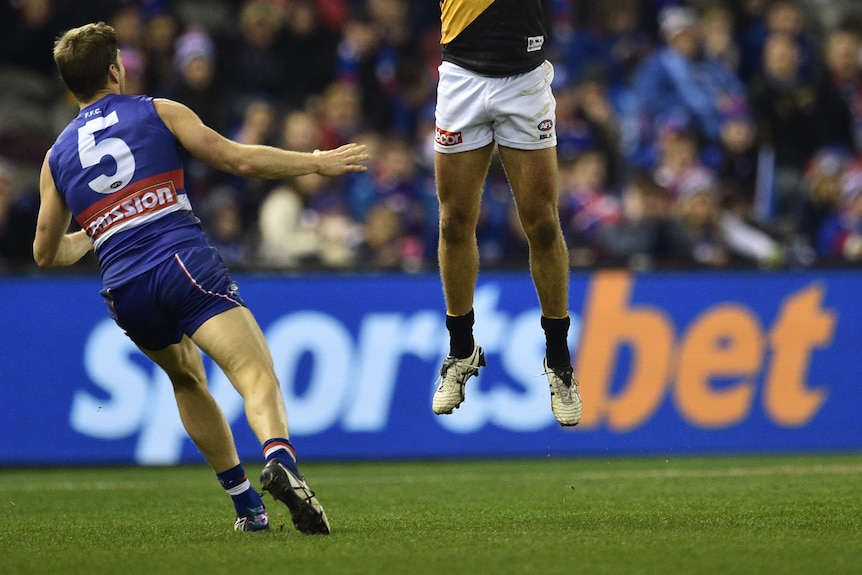
The Murphy report called for a full ban on gambling advertising, but the government chose to implement a package of reforms instead. (AAP: Julian Smith)
In forming its response to the Murphy review, the Albanese government asked the Department of Infrastructure, Transport, Regional Development, Communications, Sport and the Arts to conduct an impact analysis.
The department was told to consider three options: option one — keep the status quo, option two — “a comprehensive package of reforms”, and option three — “a full ban on all wagering advertising”.
The government has chosen option two, the preferred choice as recommended by the department.
But Catherine Ordway, an internationally recognised expert on sports integrity, said that choice meant the extensive analysis undertaken as part of the Murphy review was largely ignored.
“The Murphy report was a very well-considered, well and broadly consulted report that carefully went through a whole range of different recommendations from national regulation right through to the types of detailed information that should be in advertising,” Dr Ordway said.
“It would appear that the government was unwilling to accept all the recommendations, so it sought a mechanism for how to best water them down.”

Catherine Ordway says the government largely ignored the extensive analysis undertaken as part of the Murphy review. (ABC News: Donal Sheil)
Currently with the UNSW School of Business in Canberra, Dr Ordway has worked with sports organisations around the world, including the racing industry.
“Rather than putting the community needs highest and making sure that the care is towards the community and the impact that it has on families and children, they’ve put commercial needs at level pegging, which is shocking to me.”
In dollar terms, the government’s chosen option two is estimated to deliver as much as $182 billion in socio-economic benefits for the country across health, relationships, employment and financial harm.
However, option three would add $332 billion in benefits for Australians in the same areas. It wasn’t clear in the government analysis over what period these benefits would happen.
Broadcasters, sporting codes and gambling companies would lose a significant amount of revenue under both plans — $66 million a year in revenue under option two, and $139 million under option three.
While the AFL and NRL are major beneficiaries of gambling, including receiving a proportion of each bet placed, they aren’t the only sporting leagues connected to the industry.
Cricket Australia, Rugby Australia, and the NBL also have gaming partnerships.
Add to this the dozens of individual sponsorships of clubs across codes, and either option will be significant change.
Gambling ‘now a rite of passage’

Samantha Thomas of Deakin University believes the government not banning all gambling advertisements will become an issue for it in the future. (ABC News: Jessica Hayes)
Professor Thomas said the option two changes would be “completely ineffective” and that the government should see the political upside of an advertising ban.
“This [would be] a really good positive story for the government that would outweigh any of the negative backlash that they would get from these industries and their allies,” she said.
“There’s a reputational issue here when you have the vast majority of the population saying we want action … I think that’s going to be an issue for them going forward.”
Any new laws are yet to be shaped by the legislative rigours of parliament; negotiations in the Senate with the Greens and staunch gambling opponent Independent David Pocock may still shape the outcome.
Whatever happens going forward, the saturation of gambling in sport has fundamentally altered a key part of Australian identity and culture.
Dr Paterson said the past decade of advertising had been “incredibly effective”.
“It has succeeded in its objective of sucking in young people, particularly young men, and normalising this activity,”
she said.
“I think the federal government’s moves over the past couple of months, and their announcement of this reform, are so needed and so welcome, and it is exactly where we need to be going.”

Aino Soumi says gambling has become a rite of passage for men who are newly turned 18. (Supplied: ANU/Tracey Nearmy)
The ANU Centre for Gambling Research has looked at the psychological and behavioural impacts of gambling over time; Dr Paterson is a former director.
“Young men who just turn 18, gambling [has] become this rite of passage,” associate professor and centre director Aino Suomi said.
“You used to go to a pub and have a drink, now it’s really to open your online gambling account.”
Dr Suomi said the government’s proposed reforms were positive though complicated, and reversing the embedded social changes would take time.
“[For] kids who are now turning 18, gambling is synonymous to sport,”
she said.
“It’s not even the game that’s the focus; it’s the gambling and the outcome and the money that you put in.
“It’s really quite sad.”