





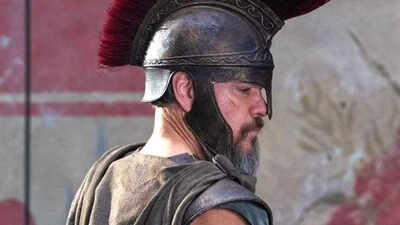
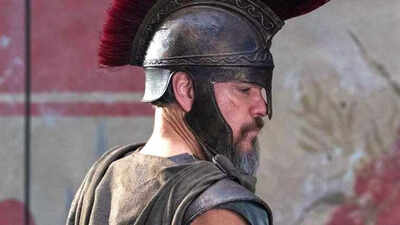
Can a Black woman play Helen of Troy? Was there any justification for Daenerys Targaryen burning King’s Landing? Did Daemon Targaryen get a reductive trope in House of the Dragon? The answers may vary. But there’s a common thread to all of these debates that have taken lives of their own. In the contemporary media landscape, the relationship between stories and their audiences has undergone a fundamental transformation. Historically, debates surrounding artistic representation, historical accuracy, and creative license were confined to academic journals, literary circles, or professional reviews. Today, the rise of digital platforms and social media has transformed every viewer into an active critic, an instant fact-checker, and an ideological gatekeeper. There is a war over creative liberties and it’s heating up more frequently than ever.When a trailer is released, it is dissected frame by frame months before the film or television series reaches the public. The recent being Christopher Nolan’s The Odyssey, adapted from Homer’s Greek epic. The story is mythological. But a large part of social media has called it “historical inaccuracies.” These thoughts in the age of social media are rapidly transformed into viral hashtags. Sometimes, organized groups mobilize to demand boycotts or narrative changes. This systematic policing of creative expression raises a critical question: has creative liberty become socially unacceptable unless a narrative conforms entirely to the collective interpretation of its audience?To understand this phenomenon, it is necessary to examine how storytelling has evolved from its fluid, oral origins to the rigid, highly protected structures of modern “canon” and intellectual property. For nearly three thousand years, humanity has survived on stories that were never told the same way twice. Every age has taken old myths, histories and legends and reshaped them according to its own anxieties, values and imagination. The Odyssey that audiences will encounter in a twenty-first century Hollywood adaptation is not the same Odyssey that travelled across ancient Greece through oral poets. Romeo and Juliet was not invented by Shakespeare but borrowed and transformed from earlier Italian tales before it became an eternal story of young love born in families that were enemies. Bollywood has and Hollywood has rewritten this script several times. By directors Jerome Robbins, Robert Wise in 1961 in the Oscar-winning The West Side Story. Baz Luhrmann 1996 Romeo + Juliet. And in India Sanjay Leela Bhansali’s 2013 adaption Goliyon Ki Raasleela Ram-Leela. Stories have never been static. They have always evolved because every storyteller believed they had the right to interpret rather than merely reproduce.In fact, there was a landmark research in the 20th century that revealed that the foundational epics of Western literature, the Iliad and the Odyssey, were products of oral-formulaic composition. In oral cultures, performers do not memorize fixed scripts; instead, they draw upon a shared store of traditional phrases and recurring themes, which allow them to compose poetry at the speed of speech. Because each performance was tailored to the moment, the story of the Trojan War existed as a vast, interconnected, and highly variable web of legends rather than a singular, locked text. The written versions of these epics that survive today are merely transcriptions of specific performances that eventually achieved a privileged status over other, lost variations.Yet the debate rages on. Something fundamental has changed in the age of social media, streaming platforms and digital outrage. The phrase “creative liberty,” once regarded as an accepted principle of artistic expression, has become one of the most contentious ideas in contemporary culture. Whether it is House of the Dragon, Nolan’s The Odyssey, Dhurandhar, Napoleon, The Crown, Raazi, Padmaavat or Adipurush – almost every major adaptation, biopic or historical drama now finds itself defending not merely its artistic choices but its very right to imagine differently. The debate is no longer about whether a film is good or bad. It is about whether artists should be allowed to reinterpret stories at all.What we are seeing is not simply another culture war over cinema. It is a deeper struggle over ownership, authenticity and truth in an age when audiences increasingly expect fiction to behave like history.
We no longer watch stories. We audit them.
Until relatively recently, audiences approached films and television with a simple question: “Did it move me?” Today, that question has been replaced by an entirely different set of concerns. Was that event historically accurate? Did the filmmaker invent this conversation? Was that costume authentic? Did the real person actually say those words? Has the original novel been faithfully adapted? Is the mythology being distorted? Entertainment has become a public audit.Ridley Scott’s Napoleon immediately drew criticism from historians who objected to its portrayal of the French emperor and the compression of historical events. Netflix’s The Crown repeatedly found itself accused of blurring the line between fact and fiction, forcing many viewers to ask where documented history ended and dramatic licence began. Andrew Dominik’s Blonde, based on Joyce Carol Oates’ fictional novel about Marilyn Monroe, was criticised by many who believed it presented imagined trauma as historical reality. Padmaavat sparked violent protests even before its release over fears that history had been misrepresented, while Adipurush triggered widespread outrage over its visual treatment and dialogue despite drawing from mythology that has itself existed in countless interpretations.Nolan’s The Odyssey has not yet been seen, but audiences are already arguing over whether Homer’s epic should be retold in a particular way. The discussion has moved far beyond cinema. It has become a referendum on who gets to retell cultural memory.
The Wikipedia generation
One reason creative liberty has become so contested is that we now inhabit an age of unprecedented access to information. Every historical figure has a digital archive. Every battle has multiple documentaries. Every mythology has scholars explaining its symbolism on YouTube. Every adaptation is instantly compared against source material available online. Viewers no longer experience stories in isolation; they consume them alongside fact-checks, explainers and Reddit discussions.Ironically, this abundance of information has made audiences less tolerant of artistic interpretation. The expectation that fiction should closely resemble documented reality has steadily grown stronger because audiences possess more factual knowledge than ever before.Yet this expectation ignores how storytelling has always functioned. It’s by re-interpretation. Most may agree that the essence must not be lost. The details though can differ. But not in the age of post-truth it seems. That’s the paradox of the information age. Our fact-checking abilities have expanded, but our tolerance for interpretation has narrowed.
Fans are the new custodians
Perhaps the most remarkable cultural transformation of the digital era is the rise of fandom as a form of ownership. Fans no longer see themselves merely as consumers of stories. They increasingly view themselves as custodians responsible for protecting fictional universes from creators who may, in their opinion, misunderstand them. While social media may have exacerbated this process, fans’ ownership of stories isn’t new. Here’s an interesting anecdote. When Arther Conan Doyle grew tired of his creation, and killed Sherlock Holmes off at the Reichenbach Falls in his 1893 story The Final Problem, the public response was unprecedented.Angry readers cancelled their subscriptions to The Strand Magazine, flooded Doyle with protest letters, and wore black mourning bands in public, effectively forcing the author to eventually resurrect the detective. This backlash represented the birth of modern fandom, marked by a psychological shift where the audience felt a sense of collective ownership over a fictional character.The current debates surrounding House of the Dragon illustrate this shift perfectly. But the voices are louder and inescapable in our digital world. Every deviation from George RR Martin’s Fire & Blood has been analysed in exhaustive detail. Changes in character motivations, altered timelines and expanded relationships have produced fierce arguments over whether the adaptation has remained faithful to the source. Similar debates have accompanied franchises ranging from Harry Potter and The Lord of the Rings to Star Wars, Snow White and recent superhero reboots.
Fandom toxicity vs. democratic expression
The modern war over creative liberty is not a simple, one-sided conflict between noble artists and reactive mobs though. Instead, it represents a complex, bilateral struggle facilitated by the nature of social media and participatory culture. On one hand, the digitization of the public sphere has democratized criticism, allowing historically marginalized or excluded groups to exert real consumer power. Audiences are no longer passive consumers of media produced by massive, top-down entertainment corporations; they are active participants who can challenge historical whitewashing, demand ethical accountability, and organize communities around shared values.In pop culture fandoms, the movement towards inclusive representation has allowed diverse audiences to voice their experiences and demand that historical or mythological epics reflect the demographic reality of today’s globalized world. In this context, audience feedback acts as a necessary corrective force against lazy creative choices, commercial exploitation, and historical distortion.
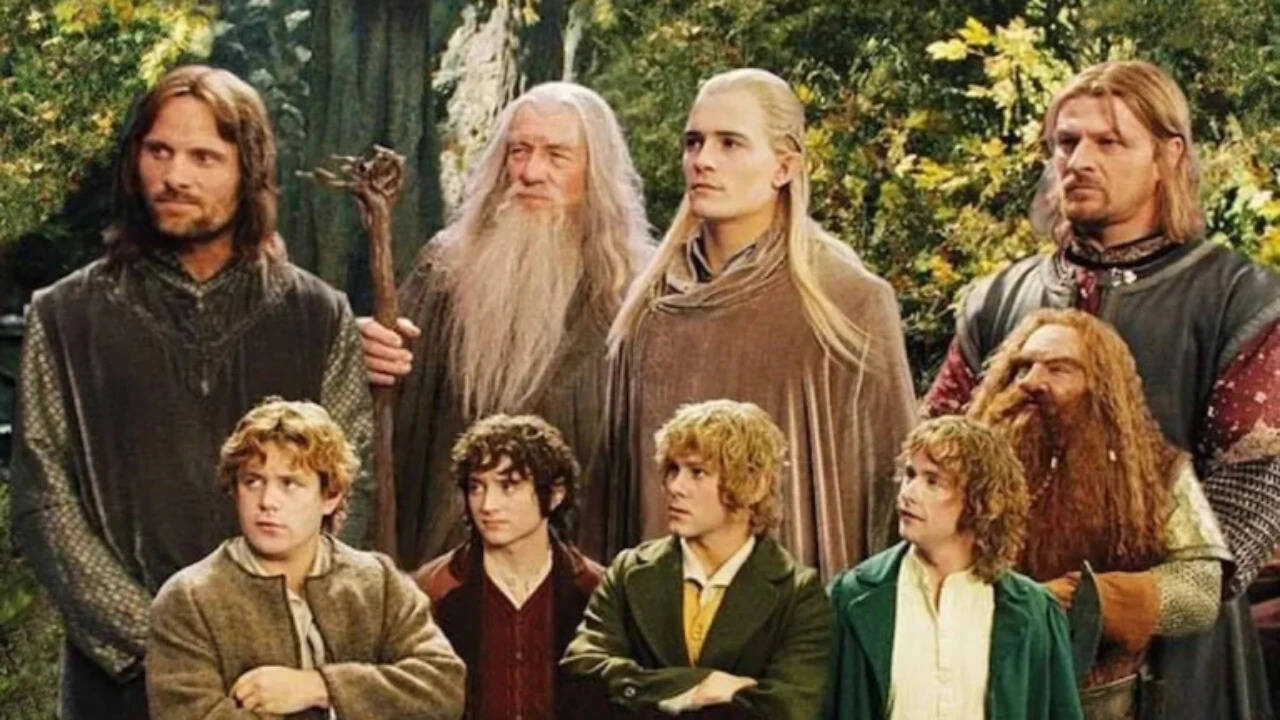
The modern war over creative liberty is represents a complex, bilateral struggle facilitated by the nature of social media and participatory culture.
On the other hand, this empowerment has a highly volatile, toxic dimension. When an audience’s identity becomes entirely centered around a specific fictional universe, any deviation from their expectations is often treated as a personal attack or a betrayal of their “ownership” of the narrative. Fandoms frequently transform into hostile, exclusionary spaces characterized by gatekeeping, coordinated harassment campaigns, doxxing, and death threats directed at creators, writers, and actors.This hostility is often amplified by digital media outlets and search engine algorithms that capitalize on outrage, generating ad revenue by legitimizing extreme viewpoints and presenting vocal internet minorities as standard representatives of the public. Consequently, creators are increasingly forced to operate under constant public surveillance, where any attempt at artistic risk-taking, subversive character development, or structural reinterpretation can result in coordinated online campaigns that threaten their careers and mental well-beingThe irony, of course, is that many beloved adaptations departed significantly from their originals. Peter Jackson omitted major sections of Tolkien’s novels in Lord of the Rings. Stanley Kubrick’s The Shining differed dramatically from Stephen King’s book. Francis Ford Coppola transformed Joseph Conrad’s Heart of Darkness into Apocalypse Now. These works are celebrated precisely because they were interpreted during scriptwriting rather than copied. But today’s audiences often approach adaptation with the mindset of preservation. As if they have a personal stake in it.
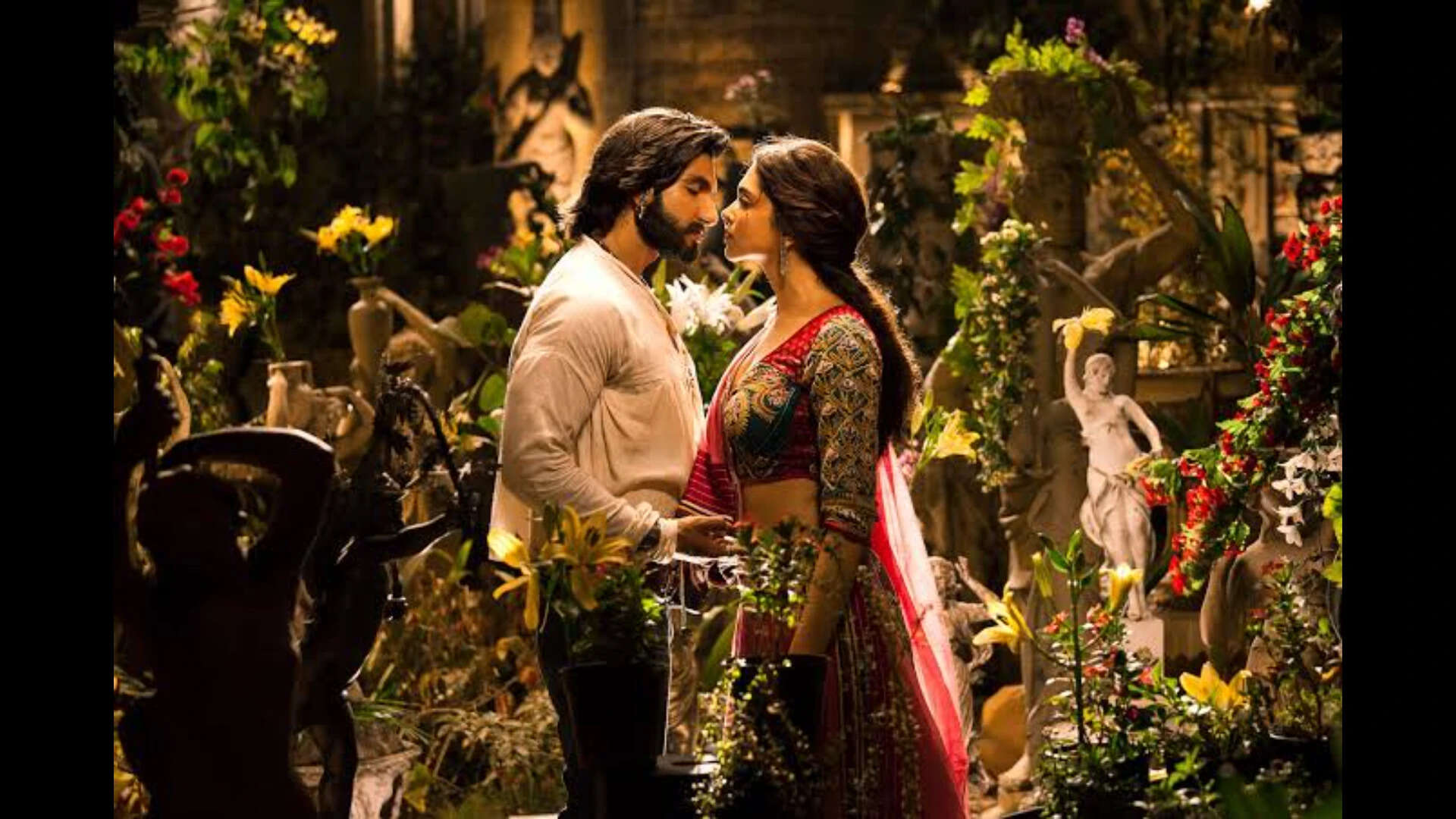
Goliyon Ki Raasleela Ram-Leela was an adaptation of Shakespeare’s play Romeo and Juliet, by Sanjay Leela Bhansali.
The real battle is about authority
At its heart, the contemporary debate over creative liberty is not really about cinema. It is about authority. Who owns a story once it enters public consciousness? Does that right belong to the original author, historians, descendants, governments, fan communities or audiences?There is no clear answer to these questions. But this trend reveals a society negotiating the uneasy relationship between historical truth and artistic truth. Between factual accuracy and emotional resonance. And between preservation and reinvention. We have entered an age where stories are consumed under the relentless gaze of social media, fandom and instant fact-checking. The space for imagination has undoubtedly narrowed. Yet if history teaches us anything, it is that stories survive not because they remain unchanged but because artists continue to reinterpret them for new generations.So, this current cultural crisis does not represent the “death” of creative liberty really. Rather its transition into a highly contested, negotiated state. Filmmakers, screenwriters, and novelists possibly can no longer operate in a unilateral vacuum, assuming their audiences will passively accept whatever interpretation they put on screen. Because ultimately, the war over creative liberty is a reflection of a deeply divided world, where the stories people tell—and the ways those stories are interpreted—remain the primary battlegrounds for defining who we are.