







Environmentalists and First Nations groups say a new agreement between the South Australian government and BHP, set to be passed by state parliament this week, does not do enough to end water extraction from the Great Artesian Basin.
They also say their concerns have not been taken seriously and that they have been shut out of the consultation process.
The government announced last month it would introduce a bill to “modernise” the Olympic Dam indenture — a legislated contract with BHP that governs mining operations.
The updated indenture broadens BHP’s mining lease and removes caps on copper production, paving the way for a potential major expansion. (Supplied: BHP Billiton)
The updated indenture broadens BHP’s mining lease and removes caps on copper production, paving the way for a potential major expansion.
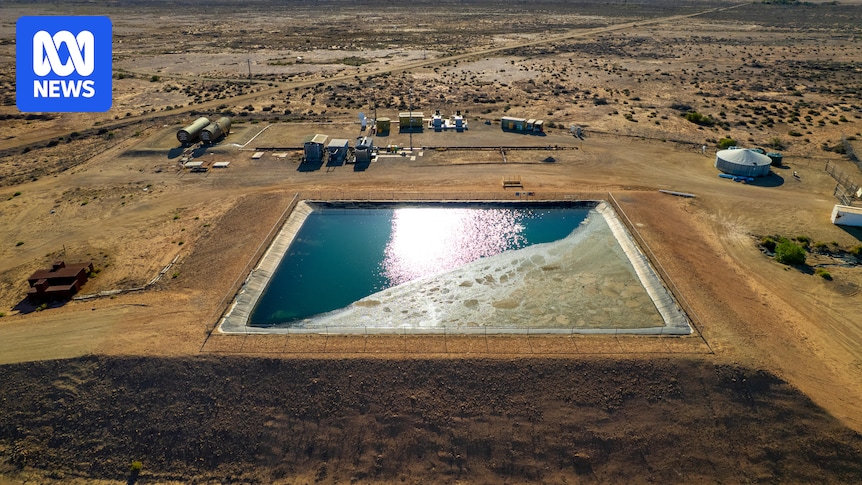
It also addresses water access, stipulating that BHP must stop drawing water from its Great Artesian Basin Wellfield A by 2036.
But it allows continued access to BHP’s other wellfield, despite the concerns of traditional owners and environmentalists that extraction is damaging the local mound springs.
The Arabana people say mound springs at the Great Artesian Basin are culturally significant. (ABC News: Lincoln Rothall)
BHP extracts more than 4 million litres of water a day from Wellfield A and 29 million litres a day from Wellfield B.
The second wellfield has less impact on the pressure of the mound springs, according to officials from the Department for Environment and Water and BHP.
Bill could be ‘locking in’ BHP’s extraction rights, environmentalist says
To reduce reliance on the basin in the future, the state government has proposed the $5 billion Northern Water project — a desalination plant on the Spencer Gulf that would connect to a pipeline stretching into the mining region.
A concept map shows the Northern Water project pipeline from the desalination plant site near Mullaquana Station to Olympic Dam. (northernwater.sa.gov.au)
The project is currently subject to a $200 million feasibility study.
If it goes ahead, BHP says it will “significantly reduce” extraction from Wellfield B and instead use desalinated water for its mining operations.
If Northern Water is scrapped, Wellfield B can remain a water source for BHP, although the government says this would be under stricter environmental conditions and require the company to build in water efficiencies over time.
Environmentalist David Noonan said he was concerned by the long-term implications of the bill.
“It’s locking in rights to BHP to extract water from the Great Artesian Basin, that’s having impact on the unique and fragile mound springs,”
he said.
“Wellfield A … it should be closed down as soon as possible, and the bill is allowing BHP to continue that water extraction for another decade.
“Even if South Australia does provide commercial water to BHP, BHP are still allowed to extract water from the far larger Wellfield B potentially for decades to come, and that would be locking in a long-term adverse impact on the survival of the springs.”
David Noonan says the bill could allow BHP to extract water from the Great Artesian Basin for a longer term. (ABC News: Daniel Taylor)
Arabana woman Janette Milera said she was concerned about the bill’s impact on the culturally significant mound springs.
“For us as Arabana people, they hold stories, they hold ancestors,”
she said.
“We are very concerned about what is happening with the water and country and where this [bill] might lead to with our mound springs.”
She said she was not against the bill but would like to see “a better consultation process about how they manage extraction from the Artesian Basin”.
Arabana woman Janette Milera is concerned about how the BHP agreement would impact the mound springs. (ABC News: Ashlin Blieschke)
Energy and Mining Minister Tom Koutsantonis said that under the new indenture, the Department for Environment and Water and the Environment Protection Authority would need to sign off on BHP’s water licence renewals.
“BHP will be subject to the environmental health of the wellsprings … that is a fundamental difference to what was in there previously,” he said.
Mr Koutsantonis also said closing Wellfield A by 2036 would lead to recovery of mound springs and, if Northern Water goes ahead, Wellfield B would only be a “backup” for BHP.
“I am very confident this is a good environmental outcome, not only for Indigenous groups but the basin itself,” he said.
BHP said it remained committed to “constructive engagement” with traditional owners and has provided regular updates on the indenture.
The company also highlighted that it was not seeking to renew Wellfield A, and said future growth at Olympic Dam will require additional water sources beyond the basin.
Committee process criticised
The bill was introduced to parliament last month and a committee of MPs was appointed to undertake an inquiry, but the process has drawn criticism from some individuals and groups who tried to voice their concerns.
The committee, chaired by Mr Koutsantonis, allowed a 10-day window for public submissions and received more than 20.
Submitters included Mr Noonan and several environmental groups, as well as the First Nations Voice to Parliament and traditional owners of the Great Artesian Basin and Olympic Dam mine site.
Among the issues raised were the long-term impact of the new indenture, protection of the environment, native title concerns and consultation that was viewed as inadequate.
But none of the concerns were directly addressed in the committee’s final report, which was tabled in parliament the morning after the public deadline.
Melanie Selwood has criticised the committee process. (ABC News)
“I think this committee’s a bit of a sham to be honest,” said Greens MLC Melanie Selwood, who was not a member of the committee.
“People rushed to get submissions in the two-week period that was given to them, but they weren’t given time to come before the committee and really have their questions answered and have their concerns raised.”
Mr Koutsantonis said the submissions received by the committee were considered but not included in the final report because “they weren’t relevant”.
“We get to a point, in this saga of BHP, where there are some people who will not be satisfied until all mining ends,”
he said.
“The concerns that they were making, for example, about native title and agreements for Indigenous groups, weren’t part of the indenture.
“Native title is assigned by the Commonwealth parliament, not by the state parliament.”
Tom Koutsantonis rejected the suggestion that the bill had been rushed through parliament. (ABC News: Ashlin Blieschke)
He said native title holders had already given their approval for expansion of the mining lease, and the government expects BHP to do a “full negotiation” with native title holders “before any further steps go forward under the indenture”.
BHP said many of the matters raised in the submissions were already being addressed, or would be addressed, through agreement-making processes.
Mr Koutsantonis rejected that the bill had been rushed through parliament but acknowledged the government had treated it with urgency.
“We’re heading into the winter [parliamentary] recess and we are in a contest for capital,” he said.
BHP has fast-tracked early works on an Argentinian copper project, while a decision on Olympic Dam — and consequently the Northern Water project — has been delayed until the second half of 2027.