






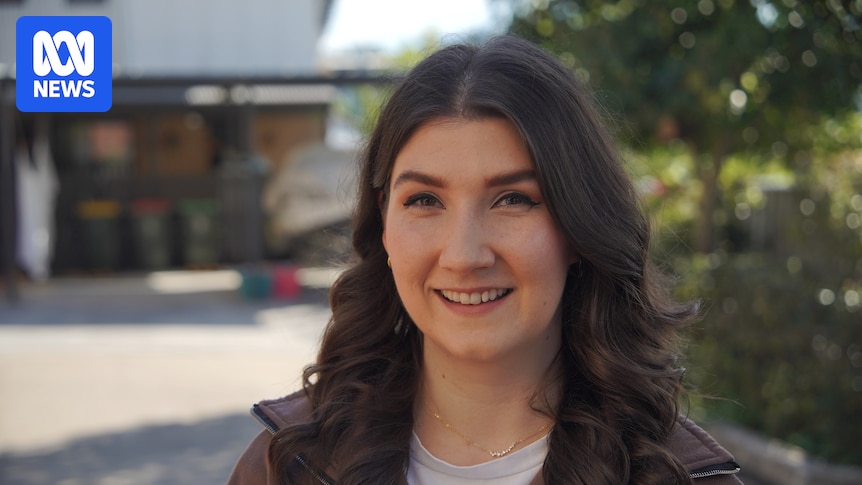
Two years ago, Nicole Pengilly’s hope of buying a home in Brisbane receded with every inspection she attended.
“You could see the house prices going up as I was looking,” she said. “The amount I could borrow hadn’t changed, so it just felt like it was slipping away.”
After a decades-long real estate boom, with average prices nationally rising by more than 400 per cent since 2000, experts say the balance of power is finally shifting to buyers.
Across the country, June saw the biggest monthly drop in home values in more than three years, according to Cotality, and auction clearance rates are also down.
Sydney led the decline, followed by Melbourne. In Brisbane, where values have risen by more than 75 per cent in five years, growth slowed.
Ms Pengilly decided to give buying another crack after hearing there could be favourable changes in the federal budget.
Within two months of the budget’s release, which included a shake-up to negative gearing and the capital gains tax discounts, she bought a two-bedroom unit on Brisbane’s south side.
Nicole Pengilly has bought a two-bedroom unit on Brisbane’s south side. (ABC News: Charlie McLean)
“It’s always been in the back of my mind that I have wanted to get back in the market and look at buying,” she said.
“The real estate agents were more pursuing you this time around. It just felt like you had more time to think about whether you want to make offers.”
Cotality Research Director Tim Lawless said the tax change, paired with interest rate rises, had given buyers choice.
Tim Lawless says buyers are reluctant to buy into a marketplace when they fear prices might be going backwards. (ABC News: Nickoles Coleman)
“Buyers have much less urgency in their decision-making, and they can negotiate,” he said.
“Most buyers are now back in the driver’s seat and really trying to find good value for money.“
The number of properties listed for sale in Brisbane in the past four weeks is up almost 25 per cent on this time last year, according to Cotality.
This includes 3,696 new listings, which is just a 0.8 per cent rise on the same time last year.
Mr Lawless said the increase in properties on the market was not because more people were selling but rather because they were taking longer to change hands.
Confidence knock leads to ‘holding pattern’
Brisbane’s auction clearance rate — the percentage of auctions ending with a successful bid — was 43 per cent last week, up from 23.5 per cent the previous week. But that’s still 20 per cent less than the clearance rate this time last year, which was at almost 63 per cent
Those passed in at auction last week included a four-bedroom house at Mount Gravatt, which attracted a dozen bidders on Saturday. The property was later sold that day by negotiation for $2.15 million.
Earlier this month, Brisbane had the lowest auction clearance rate of all Australia’s capital cities. (ABC News: Charlie Mclean)
Mr Lawless said the lower clearance rate reflected a “fairly significant disconnect” between the price sellers are hoping for and what buyers are willing to pay.
“A lot of buyers are reluctant to buy into a marketplace when they’re fearful that prices might be going backwards,” he said.
“I think for now the market does seem to be in a bit of a holding pattern.”
Ipswich real estate business owner Steve Athanates said changes to investor tax breaks in the federal budget had spooked property investors, with sellers opting against auctions due to concern they will not get a result on the day.
Mr Athanates has helped sell properties in Ipswich since the 1990s. (ABC News: Charlie Mclean)
Under the changed rules, new investment properties can only be used to reduce an investor’s tax bill if it is a new build, and from July next year, investors will likely pay more tax on any capital gains they make from selling a property.
“We’ve lost almost 50 per cent of our buyers because investors, no longer able to get negative gearing concessions or any capital gains tax concessions, have … largely abandoned the market,” Mr Athanates said.
In the Moreton Bay suburb of Ferny Hills, Edwina May’s three-bedroom family home has been on the market for two months.
Edwina May’s family home at Ferny Hills has been on the market for two months as they wait for the right price. (Supplied: Edwina May)
The best price they’ve been offered is $150,000 short of the $1.25 million the property had been valued at, she said.
“They will come for the inspection all interested, and they won’t put offers in, which I think is reflective of the market because people are hesitant,” she said.
“We’re not in a rush to sell it, so we will happily wait for the right price.”
Looking beyond the south-east
Mr Lawless said markets on the Gold Coast and the Sunshine Coast, which have each boomed in recent years, have also slowed down.
In regional Queensland, the Darling Downs has seen the highest growth in value in 12 months at 24 per cent, followed by the Central Highlands and Toowoomba.
In June, the growth in regional Queensland overall slowed to 1.5 per cent, just 0.2 per cent higher than Brisbane.
“Toowoomba has bucked the trend a little bit. Because that has been a much more affordable market, it has been much more resilient in its slowdown,” Mr Lawless said.
“But even there, we are seeing the market losing momentum. I think sellers need to recognise the market is fundamentally different now.”
Bundaberg real estate agent Kirralea Whittle said homes in her patch were continuing to sell for similar prices to the start of the year, but the time it takes to sell had blown out.
Kirralea Whittle says interstate migration is still fuelling the housing market in the coastal suburbs of Bundaberg (ABC News: Johanna Marie)
Ms Whittle credited the continuing interstate migration from Sydney and Melbourne — with 95 per cent of her buyers new to Queensland, for the limited impact so far to the regional market.
“When you’re selling in that market and buying into the regions, we don’t have that same fear level,” she said.
Real Estate Institute of Queensland chief executive Antonia Mercorella said the pull from other states was one of the reasons she believed Queensland would buck the national trend.
“The demand for property is still very, very strong,” she said. “In terms of new construction, that’s nowhere near what it needs to be to satisfy that demand.”
Antonia Mercorella says the next quarterly data will provide a clearer picture of the impact of the budget on the property market. (ABC News: Lucas Hill)
But Ms Mercorella said the industry was eagerly awaiting the next quarterly data, the first since the federal budget was handed down, for a clearer picture of the impact.
The market, which is highly cyclical, is likely just starting to enter a down phase, Mr Lawless said.
“I think we will probably seeing housing values either drifting lower or holding fairly steady at least until interest rates start to come down again,” he said.
“Even though buying conditions are starting to improve, we probably have some further downside ahead of the Brisbane and south-east Queensland housing market.”
After buying her first unit, Ms Pengilly says she is looking forward to never having to move again. (ABC News: Charlie Mclean)
After having to move five times in seven years due to landlords wanting to sell and rent rises, Ms Pengilly is most looking forward to never having to move again.
“I’m just so excited to get into a place that I own, and I can just settle and stay and not have that fear looming over me that I am going to be kicked out at any point,” she said.