








Annie was living alone in the coastal Tasmanian community of George Town when strange things started to happen in her yard.
“I found my Christmas lights were cut … there were things that were going missing,”
she said.
She was concerned about a man who had moved in with her next-door neighbour, so she started noting everything down.
The behaviour started to escalate; grass in her backyard had been poisoned and her dog became unwell.
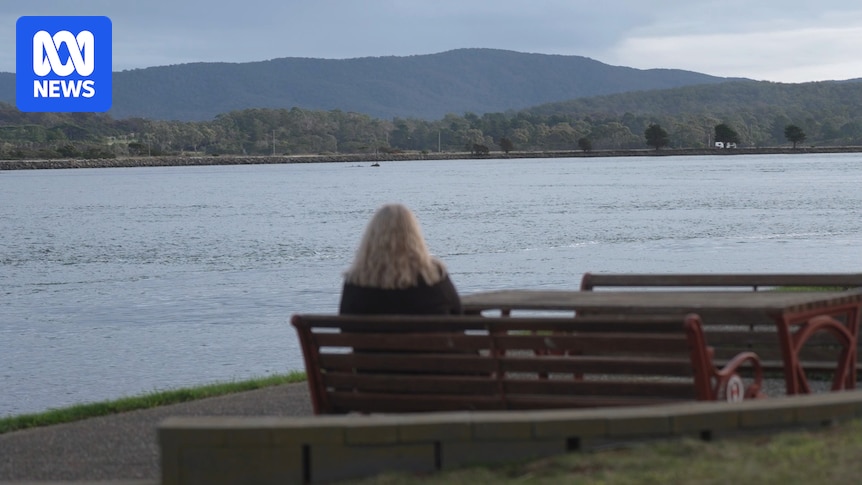
Annie enjoys playing the piano at home, but her peace and safety were threatened by a new male neighbour. (ABC News: Morgan Timms)
She put cameras in her windows and contacted police, but nothing changed; she would have to travel 45 minutes to Launceston to pay for a restraining order, but feared this would aggravate the situation.
“He started doing some really obscene things and stalking me through the window,” Annie said.
“I was there by myself and there was nothing I could do.“
On one afternoon, her notes read: “he gestured to grasp his crutch and shook it … and laughed”.
Another reads: “[he] made a gyrating hip movement with his hands on either side of his hips”.
Annie decided she had to leave.
When Annie attempted to leave her rental property for safety reasons, she was told she’d have to keep paying rent. (ABC News: Morgan Timms)
Victim assaulted, but still paying rent
She contacted her real estate agent, who managed both properties, telling them:
“This is no longer a neighbour trying to intimidate or harass me with petty things. I fear for my safety and am stressed worrying what he will do next.”
Annie also went to the police, who she said advised her to leave; she did not have the means to travel to Launceston for a restraining order, and feared it could aggravate the situation.
She told her property agent:
“I need to leave so can I talk to you about that please.”
As part of their response, they said:
“For you to vacate the property, you will be breaking the lease. You are liable to keep paying rent until a new tenant is found and cover the costs of advertising which is $165.”
Four days later, while trying to remove her belongings, Annie was sexually assaulted by the man, which she reported to the police.
“Too scared and embarrassed to tell anyone. Just wanted it to go away,” her notes read.
Annie says she felt alone and unsupported after being sexually assaulted by a neighbour. (ABC News: Morgan Timms)
After moving out, she had to continue paying almost five weeks’ rent, totalling more than $1,900.
While searching for a new tenant, the property was advertised at $15 per week more; Annie’s attempts to find someone on social media to take on the tenancy were unsuccessful, despite there being interest.
“I cannot continue paying ongoing rent indefinitely while the property is being advertised above the amount the owners were previously willing to accept,” she wrote to the real estate agent.
Loading…
Annie was homeless and traumatised, living with friends before she was finally able to find a housesit for a few months.
She was not critical of the real estate agent — saying they were bound by the owners’ advice — but that the laws in Tasmania should provide greater protection for women in similar situations.
“Number one, to help me get out of my lease so that I had that financial capacity to actually go somewhere else,”
Annie said.
She is now homeless, having to rely on housesits to keep a roof over her head. (ABC News: Morgan Timms)
Support service wants laws revisited
Advocates say Annie’s situation shows the gaps in Tasmanian law, which only provides specific protection to victims of family violence if the perpetrator is a co-tenant.
There is also government funding — through Safe at Home — to cover rent for family violence victims to leave rental properties.
Annie did not fit these criteria.
Laurel House chief executive officer Kathyrn Fordyce says the requirement to keep paying rent was a barrier to Annie seeking help. (ABC News: Georgia Hogge)
Kathryn Fordyce — chief executive officer of Launceston sexual assault support service, Laurel House — said the inability to break a lease was a barrier to Annie getting help.
She said there should be protections to help people break a lease if they are being stalked or harassed, including online.
“It comes down to the goodwill of a landlord to allow for that to happen,”
she said.
“We need this enshrined in legislation that allows a victim survivor, having disclosed to a sexual violence service … to be able to break a lease.
“Relocation is not just a preference, it’s about them creating safety for themselves and being protected from future harm.”
Tenancy laws being reviewed
The last review of Tasmania’s tenancy laws started in 2009, and reforms were finalised in 2014.
Since then, there have been minimal changes.
The laws are being reviewed again.
Tenants’ Union of Tasmania acting principal solicitor Alex Bomford said other states have hardship provisions, where tenants and landlords can apply to courts to terminate a lease, including on safety grounds.
He said even with a restraining order, the current laws would not have allowed Annie to stop paying rent.
“Someone in Annie’s situation has no remedy except just breaking lease,”
Mr Bomford said.
“We only have explicit protections if the perpetrator is also a tenant.”
A hardship provision is being considered as part of the review; a similar provision was brought in to cover COVID-19-related tenancy terminations.
There could also be a cap on the amount of rent to be paid by a tenant after breaking a lease, in line with a Commonwealth proposal, but this is facing opposition.
Annie wrote to Attorney-General Guy Barnett, who responded by asking if her experiences could help inform the new laws; he also provided her with information for Safe at Home funding support — for which she is not eligible.