






As questions around the logistics of separation loom ahead of the Oct. 19 Alberta referendum on whether or not to kickstart the legal process of exiting Canada, the question of citizenship remains a murky one.
While several separatists claim an independent Alberta would mean citizens would continue to carry Canadian passports, experts in constitutional law say that isn’t a guarantee.
“The answer is that Albertan residents and citizens in a new theoretical Republic of Alberta would have no entitlement to Canadian citizenship in the absence of Canada’s consent,” said Gerard Kennedy, an associate professor in the faculty of law at the University of Alberta.
And Errol Mendes, University of Ottawa law professor and editor-in-chief of the National Journal of Constitutional Law, said the issue of citizenship won’t be as simple as some may present it.
“This issue will become highly controversial during the referendum debate, especially as basic constitutional facts can be misused by those arguing for separation,” he said in an emailed statement to CBC News.
‘More options, not less,’ separatists claim
The Alberta Prosperity Project, one of the province’s leading separatist groups, believes once a Canadian citizen, “always a citizen,” according to its website.
It tells readers that “unless the laws are changed, you will probably keep your Canadian citizenship and passport in an independent Alberta.
“Not only that, but you will have a new Alberta citizenship and passport — you will have more options, not less.”
Pragmatically, Kennedy explained, it might be difficult for Canada to deny people with extremely strong connections to Canada citizenship, especially given that Ottawa has a generous policy toward citizenship.
Presently, people can become Canadian citizens in three main ways: by being born on Canadian soil, being naturalized and by descent.
A recent change to federal law also allows people living in other countries who can trace their lineage from Canadian ancestors to qualify for Canadian citizenship — even if their Canadian ancestor left the country several generations back.
Canada gets the final say
Still, neither under international law or constitutional law is it a requirement for Canada to grant Canadian citizenship to the hypothetical citizens of an independent Alberta, Kennedy said.
While a recent poll from Abacus Data suggests the majority of Albertans support staying in Canada, the legal process for leaving the country was spelled out in federal law nearly three decades ago following the 1995 Quebec referendum and the 1998 Supreme Court ruling on separation.
The 2000 Clarity Act states that a province could negotiate terms of separation — including citizenship — if voters were presented with a “clear question” on separation and a “clear majority” vote in favour of leaving Canada.
Last month, Prime Minister Mark Carney confirmed that the Clarity Act will not apply to the referendum question Albertans will answer in October, “because it is a question about a question.” However, the act would apply to a potential future binding referendum on separation.
While the legislation doesn’t explicitly guarantee or deny whether the citizens of a seceding province would lose or keep their Canadian citizenship, it includes language in its preamble that indicates secession “could consequently entail the termination of citizenship and other rights that Canadian citizens resident in the province enjoy as full participants in Canada.”
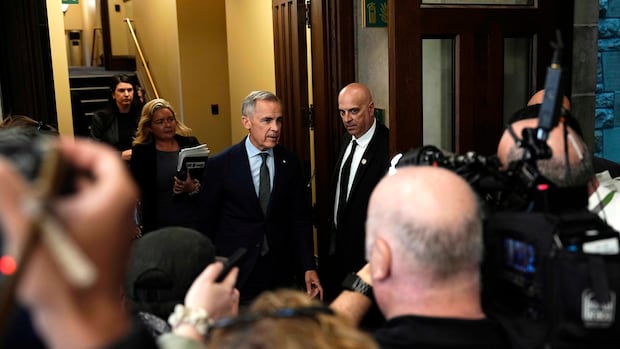
On Tuesday, Prime Minister Mark Carney confirmed that the Clarity Act — which allows Parliament to weigh in on a province’s proposed separation question — won’t apply to Alberta’s referendum question on whether to hold a future vote on separation, ‘because it is a question about a question’ and ‘it is explicit in the question that it’s not a binding referendum.’
The act leaves the ultimate decision to the federal government and would require the consent of other provinces, as everyone would be affected by one province’s secession.
“It would have to be Canada’s decision,” Kennedy said, adding that the country “would have to look at the practical realities of denying people’s citizenship or denying people access across the border.
“And that might be challenging, but they don’t have to consent. It would be a political and moral decision to consent rather than a legal obligation.”
Challenges include dual citizenship, international recognition
In another argument made on the Alberta Prosperity Project’s website, the group said, “dual citizenship is already precedent in Canada, with many Canadians holding both American and Canadian passports.
“There is no reason to assume this would be any different in an independent Alberta.”
While Canada does allow citizens to hold dual citizenship, a province separating from the country would be precedent-setting. That matter would be subject to long, drawn-out post-separation negotiations, according to Mendes.
If the negotiations go badly, Canada could reject dual citizenship, which would put Albertans at a disadvantage when traveling until any new Alberta passport is recognized by foreign nations, he said.
But in both cases, Mendes said, there is no guarantee for an easy transition.
“Even if [Canada does] allow people to be grandfathered in because they were born in what was then the constitutional Canada doesn’t mean their children will be,” Kennedy said.
Dual citizens may also be subject to paying taxes in both of their countries of citizenship. For example, because the U.S. taxes citizens regardless of where they reside, dual citizens living in Canada have to file tax returns in both countries every year.
In this particular case, dual citizens avoid paying double the taxes because both countries have agreed to a U.S.-Canada income tax treaty.
Then there’s the matter of whether or not other countries will recognize independent Albertan passports.
“Citizenship is kind of only as good as other countries are willing to recognize it,” Kennedy said.
“If Alberta were to declare itself independent in the absence of Canada’s consent, I suspect that many other countries around the world wouldn’t recognize it, and they may or may not accept an Albertan passport. ”