







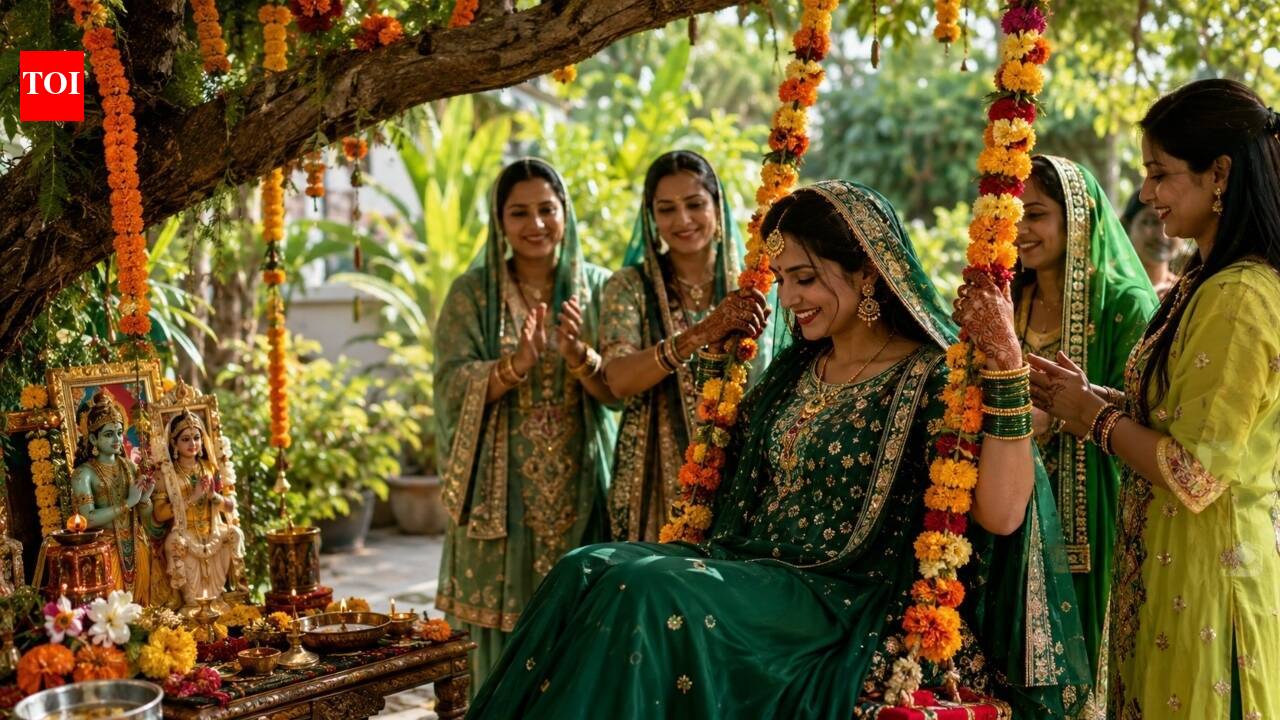
The smell arrives before the rain does: wet मिट्टी, or earth after the first touch of the monsoon. And with it comes a whole North Indian mood, green glass bangles clinking, swings tied to neem branches, mehendi darkening on palms, and songs for Parvati rising from courtyards and apartment balconies alike. Hariyali Teej belongs to that season. It is not just a date on a calendar. It is a day when Shravan, the sacred monsoon month, feels personal.
Quick details for readers
This year, the festival carries an extra point of attention because the calendar lists Hariyali Teej on August 15, 2026. That means the monsoon vrat, or sacred fast, coincides with Independence Day, a rare overlap that will make many families notice the festival even if they do not observe it every year.For readers planning the day, the key fact is simple: in North Indian reckoning, Hariyali Teej falls on Shravana Shukla Tritiya, the third lunar day of the bright fortnight of Shravan. For New Delhi, that observance is marked on Saturday, August 15, 2026.
Why this Shravan observance carries such affection
Hariyali Teej is one of those festivals where bhakti, or devotion, and the season melt into each other. The word hariyali means greenery. By this time, the harsh summer has broken, fields begin to revive, and the landscape itself looks as if it has exhaled.The festival celebrates that renewal through the beloved image of Shiva and Parvati, whose union stands for tapas, or spiritual discipline, fidelity, and grace after long waiting.In much of North India, especially Rajasthan, Uttar Pradesh, Madhya Pradesh, Bihar, Jharkhand, Haryana, and parts of Delhi, the day has long been led by women. Married women often keep the fast for akhanda saubhagya, or enduring marital well-being, while unmarried girls may observe it with prayers for a worthy husband, often with Parvati as an ideal of patience and strength.Yet even in homes where no formal vrat is kept, Hariyali Teej still lives through songs, sindhara or sinjara gifts from the maternal home, green attire, sweets, and the feeling that Shravan has truly arrived.
Why it falls on Independence Day in 2026
There is no hidden national connection in the festival itself. The overlap happens because Hindu observances follow the lunar tithi, or lunar day, rather than the fixed Gregorian calendar. Hariyali Teej comes each year on Shukla Tritiya in Shravan.In 2026, that tithi aligns with August 15 in the India-based panchang, or traditional Hindu almanac, used by many published festival calendars. Several 2026 listings place Hariyali Teej on Saturday, August 15.Some calendar sources also note Tritiya running from the evening of August 14 into the late afternoon or evening of August 15, which is why local panchang consultation matters, especially if you are outside India.The article brief’s date remains the one most readers need: August 15, 2026, for New Delhi. If you are in the diaspora, sunrise timings and tithi prevalence in your city may shift your family’s observance window.
The story devotees remember when they fast
Hariyali Teej is tied in popular Puranic and regional tradition to Parvati’s long tapas for Shiva.The remembered story is tender, but it is also severe. Parvati, born as Himavan’s daughter, set her heart on Shiva and undertook deep austerities over many births and long stretches of time so that she might be accepted by him. Her devotion did not waver. At last, Shiva recognized the force of that single-minded prayer and accepted her as his consort.That is why the day is not only about marital happiness in a narrow sense. It honors steadfastness, self-control, and the power of sankalpa, or sacred resolve.For many women, especially those who grew up seeing mothers, aunts, and grandmothers observe it, the fast holds memory as much as theology. It is a day of asking Parvati for strength in relationships, yes, but also for patience, dignity, and inner steadiness.In some regions, the festival is also called Shravani Teej, Chhoti Teej, or Sindhara Teej. The names shift; the emotional register does not.
What most households actually do on the day
The vrat is often observed as a nirjala fast, or a fast without food or water, by some traditional devotees, though many families now follow a phalahar fast, meaning fruits, milk, and simple fasting foods. Customs differ sharply by region, age, health, and family practice, so no one should copy the strictest version without appropriate guidance. Pregnant women, older adults, and those with health conditions generally adapt the fast according to their needs.The puja itself need not be elaborate. A clean space is prepared, often with images or murtis, or sacred icons, of Shiva and Parvati. Women may bathe early, wear green clothes or green bangles if possible, and apply mehendi.Offerings may include flowers, bel patra or bael leaves for Shiva, fruits, and sweets such as ghevar in Rajasthan and nearby regions. Items associated with suhag, or auspicious married adornment, may also be offered, including bangles, bindi, sindoor, and chunari.Many devotees recite or listen to the Teej vrat katha, the sacred festival narrative, and offer prayers to Gauri, another name for Parvati.Swings, or jhulas, are not merely decorative extras here. They are part of the monsoon feeling of the festival, especially in folk tradition, where Teej songs carry longing, joy, and the playful intimacy of the rainy season.If you are keeping the day in a simpler way, a small Shiva-Parvati puja at home, a sincere sankalpa, and a satvik, or pure vegetarian, fast are enough. Festivals like this have always had both public and intimate forms.
Fasting, parana, and the timing caveat readers should know
For service-minded planning, this is the part that matters most. Hariyali Teej vrat is generally observed on the day when Shukla Tritiya is in effect according to local panchang rules.In 2026, widely circulated festival sources place the observance on August 15, and some also list Tritiya beginning on August 14 evening and ending on August 15 evening or late afternoon, depending on the calendar calculation.That affects parana, or the ritual breaking of the fast. Unlike a festival with a single national clock, Teej observance can vary by locality and family sampradaya, or inherited tradition.Some devotees complete the fast after the puja on the same day if their custom allows. Others wait until the tithi has passed or follow guidance from a family priest. If you are outside India, do not assume the Indian date transfers neatly to your city. Check a local panchang before fixing puja and parana timings.
What the women-led customs still hold together
It is easy to reduce Hariyali Teej to “a women’s festival,” but that can flatten what the day really does. In many homes, it renews ties between a married daughter and her maayka, or maternal home.Gifts of clothes, bangles, sweets, and shringar items are sent with affection. Songs are sung not in a polished performance style, but in the half-remembered, full-hearted way families carry tradition. A young bride may be welcomed home. Older women may tell the katha while children drift in and out of the room.Ritual moves through relationships.That is one reason the August 15 overlap will catch attention this year. A national holiday may make it easier for dispersed families to gather, visit a temple, or at least keep the observance with more care than a rushed weekday allows.For some, the day will begin with a flag-hoisting and end with Teej puja. For others, the order will be reversed. India has room for both.
If you’re observing in 2026, keep it simple and sincere
You do not need an elaborate setup to honor Hariyali Teej well. If this is your first time, begin with what the day asks at its heart: cleanliness, devotion to Shiva and Parvati, a fast that suits your health, and attention to the tithi.Wear something green if you like. Offer flowers. Read or hear the vrat katha. If your family has a Teej recipe, make it. If not, even a small plate of fruit and homemade prasad, or blessed offering, will do.And before going to bed on August 14, set aside the puja thali, the prayer tray. In the morning, when the house is still quiet and the monsoon light is soft at the window, you’ll know the festival has arrived.