





For years, West Australian Kurt McIntosh spent more time in airport terminals than he cared to remember.
The Wajarri man worked fly-in, fly-out mining shifts, which provided well but came at the cost of missing out on special family events.
“I was making lots of money, but it didn’t feel right,” Mr McIntosh said.
Kurt McIntosh worked as a FIFO worker for several years and says he missed out on many special family moments. (Supplied: Kurt McIntosh)
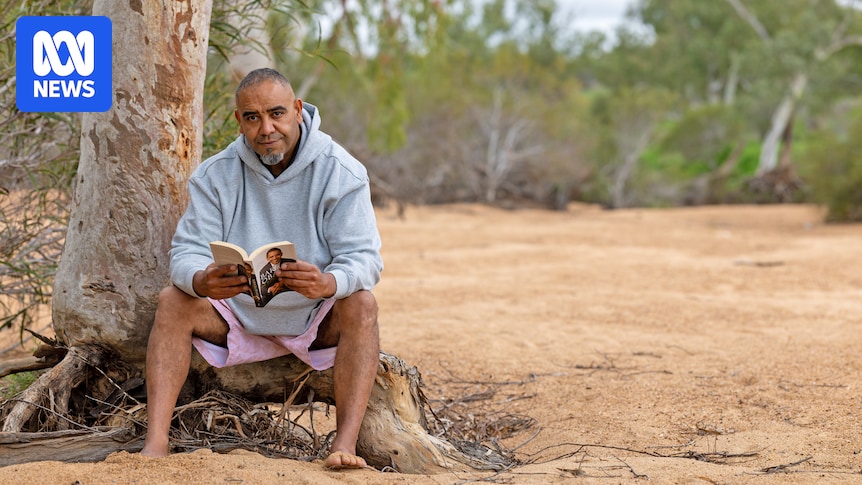
It was during one of those seemingly endless airport trips that Mr McIntosh wandered into a bookstore and stumbled upon former US president Barack Obama’s The Audacity of Hope.
The book would soon change his trajectory, and that of the Wajarri Corporation, one of the biggest Indigenous corporations by both size and membership in Australia.
“In the past, I’d shy away from anything to do with Country or land because of all the arguments and disagreements that happened around land meetings,” Mr McIntosh said.
Obama’s book, however, changed his mind.
Barack Obama’s book made Kurt McIntosh stop and reflect on his life and purpose. (ABC Midwest and Wheatbelt: Chris Lewis)
“The book talked about leadership and not waiting for somebody else to make decisions. I realised I should be doing something that helps my people.”
Leadership challenges
Not long afterwards, Mr McIntosh left the mining industry and went on to work across Aboriginal organisations and government agencies before joining the Wajarri Corporation as an Aboriginal liaison officer.
Today, he also serves on committees and the corporation’s board, helping navigate the complex intersection of native title, governance and cultural responsibility.
Wajarri Corporation chief executive officer Gary Patterson says the role carries enormous responsibility.
Gary Patterson says the work of liaison officers can be challenging. (ABC Midwest and Wheatbelt: Chris Lewis)
“There are strong personalities and difficult decisions,” he said.
“It’s a challenging environment, particularly for younger leaders, but we need people like Kurt to help people like me understand the lay of the land and the different complexities of the land group level, as well as at a membership level,” Mr Patterson said.
Kurt McIntosh says being connected to Country helps him to focus on why he attends board meetings. (ABC Midwest and Wheatbelt: Chris Lewis)
The corporation represents about 4,000 members across almost 100,000 square kilometres of determined native title land, balancing cultural obligations alongside mining agreements, environmental projects and the aspirations of its people.
Lateral violence
Mr McIntosh says one of the greatest challenges of his role is navigating criticism, including lateral violence, which he describes as conflict that can occur within communities and families themselves.
“When young people step up, sometimes they’re asked, ‘Who do you think you are?’ But I’m just trying to help,” he said.
Errabiddy Bluff in the heart of the Murchison region in WA is a very special place for Wajarri people. (ABC Midwest and Wheatbelt: Chris Lewis)
For Marika Oakley, who has worked alongside Mr McIntosh developing a ranger program, reminding yourself of the reasons you stepped up often helps.
Marika Oakley says remembering why the work is important often helps to navigate the difficult times. (ABC Midwest and Wheatbelt: Chris Lewis)
“Lateral violence is a huge part of the native title space. It can be really disheartening, but you just got to think about the big picture,” she said.
“Once you get out on Country, you remember why you do it,”
she said.
Leadership transformation
Mr McIntosh’s experience is familiar to many Aboriginal leaders.
Bundiyarra Aboriginal Corporation deputy chief executive Jamie Strickland says criticism comes with making decisions on behalf of others.
Jamie Strickland has some advice for people looking to help their community. (ABC Midwest and Wheatbelt: Chris Lewis)
“If you’re confident what you’re doing is making things better, you can’t spend your life looking over your shoulder at the negativity,” Mr Strickland said.
“If I’m happy and sure what I’m doing isn’t hurting anyone, it’s not illegal and it’s actually going to make things better. Well, how can that be wrong,”
he said.
Leadership may come with its challenges, but it has also transformed Mr McIntosh.
Longtime colleague Jodi Reilly said that from appearing to hold himself back, Mr McIntosh now helps lead the important conversations.
Jodi Reilly worked with Kurt McIntosh in Aboriginal health for several years. (ABC Midwest and Wheatbelt: Chris Lewis)
For Mr McIntosh, leadership is all about creating a better future for the next generation.
Kurt McIntosh says family is really important to him, as he holds his youngest grandchild. (ABC Midwest and Wheatbelt: Chris Lewis)
“If I can look after myself mentally, spiritually and physically, then get back to Country and keep that connection alive like the elders wanted, I feel like I’m continuing their legacy,” he said.