







West Australian mother-of-three Annette Nicholas is in no rush to become an empty-nester but unlike most parents, she fears that dream may soon be out of reach.
Mrs Nicholas and her husband last year became disability support workers to share their “lived experience” of raising 15-year-old son Tre, who is intellectually disabled and also lives with autism.
The couple also share two daughters, aged nine and 24.
“Taking care of our son and providing the level of care that he needs became too much and resulted in burnout for us both,” Mrs Nicholas said.
“Our eldest daughter has always been his [Tre’s] third parent because she’s had to be. We were working full-time, so she’s grown up very quickly.
“She made me very proud with her submission to the NDIS Commission, writing to ministers, defending her brother and his right to live and have choice over his life.”
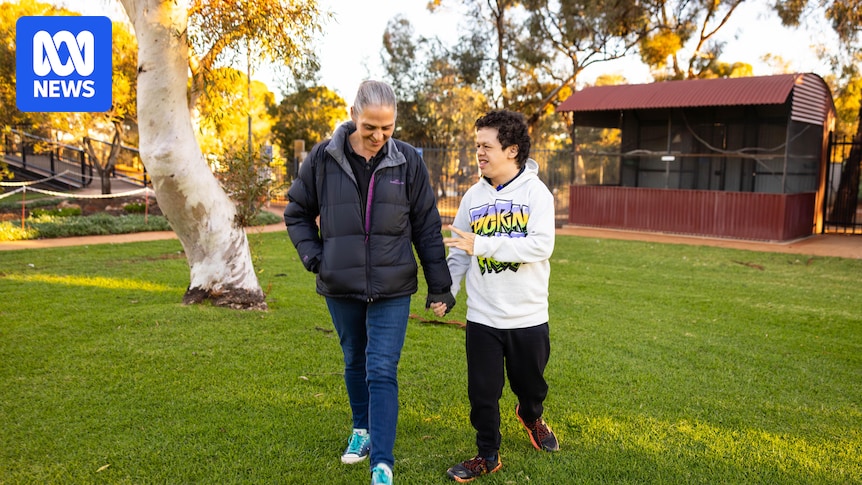
Tre Nicholas loves animals and regularly visits Hammond Park in Kalgoorlie with his NDIS support worker. (ABC Goldfields: Jarrod Lucas)
Anxious about changes
Originally from New Zealand, the family began a new life in Kalgoorlie-Boulder, about 600 kilometres east of Perth, in 2008, before Tre was born at Kalgoorlie Hospital in 2011.
He was diagnosed at seven months old with a rare genetic condition called Williams syndrome, which has affected his development.
Tre, or “Tre-bot” as he likes to be called, has received support from the National Disability Insurance Scheme (NDIS) for the past three years.
“The first year of his NDIS plan was an absolute nightmare. It has taken us two to three years to work it all out and get meaningful help,” Mrs Nicholas said.
Annette Nicholas hopes her son Tre will be able to live independently in the future. (ABC Goldfields: Jarrod Lucas)
Her anxiety has increased since the NDIS Amendment Bill was introduced to federal parliament in May.
It proposes sweeping changes to the now-$50 billion scheme, including new rules on providers and registration.
Mrs Nicholas’s lingering concern is the changes could jeopardise Tre’s chances of living independently in the future with the aid of support workers.
“I had not considered independent living until I met a local lady who developed a model and that made me excited for Tre and what that could mean for his future,” she said.
“That’s not us trying to push him out the door or anything like that, but we all have a choice to live away from our parents and have our own life.
“Now knowing that’s under threat and he may not have that choice in his future, it saddens me, and may mean he needs to stay with us.
“We’re older parents so does that responsibility eventually fall to my daughters?”
Parliament debates reforms
Under the proposed overhaul, the federal government expects about 300,000 people to be either kicked off or prevented from accessing the scheme, with many to be serviced by yet-to-be-built supports to be run by the states.
“So we’ve been emailing ministers, the commission, to try to slow it down because the reforms that have been announced are going to be devastating for a lot of people,” Mrs Nicholas said.
Mark Butler plans to reset funding for some support streams. (ABC News: Matt Roberts)
Minister for Disability Mark Butler told parliament only one out of 16 providers was registered, and measures would be introduced to address fraud and improve integrity within the NDIS.
The minister also plans to reset funding for social, community and civic participation support streams, which has risen from about $4 billion to more than $12 billion in the past five years.
“If left unchecked, that spending would skyrocket to around $20 billion by the end of the decade,” Mr Butler told parliament.
While the government has its budget priorities, it is the potential cost to NDIS participants’ quality of life that concerns WA-based disability service provider Tiani Lange.
She operates unregistered NDIS provider TLC Support WA, employing 25 people as disability support workers in Perth and in WA’s Goldfields and South West regions.
Tiani Lange is concerned about the impact the proposed changes to the NDIS will have on her staff. (Supplied: TLC Support WA)
She expects staff shortages to worsen if the registration process becomes mandatory, describing it as a costly “tick and flick” exercise.
“There are a lot of independent support workers who I don’t know if they would go through the registration process,” she said.
“A lot of our clients probably don’t understand what may be coming.”
Future uncertain
The same problem is faced by Mrs Nicholas, who is unsure if she will be able to continue as a disability support worker for her handful of clients under the proposed changes.
“We’re unsure what hoops we’ll have to jump through to become registered,” she said.
“The thought of returning to mainstream work and losing the work-life balance we have been able to achieve by being in this space. It has taken the pressure off.
“Now that is in real jeopardy.”
Annette Nicholas says her son Tre has received NDIS support for the past three years. (ABC Goldfields: Jarrod Lucas)
Mrs Nicholas said her son’s ongoing care was her top priority, adding that regional NDIS participants would be most affected and further isolated by the changes.
She said reducing funding for social and community access would affect Tre deeply, as he called his current support worker Steve “his best friend”.
“I don’t choose our providers based on whether they’re registered or not, I choose them based on who they are as people and what value they bring to Tre’s life and the difference they make to him,” Mrs Nicholas said.
“The red tape and ticked boxes are of no relevance when I’m selecting a provider for my son.”