







It’s been three years since artists and bands, spearheaded by UK metalcore act Architects, called out venues for their practices of taking merch cuts from bands after gigs.
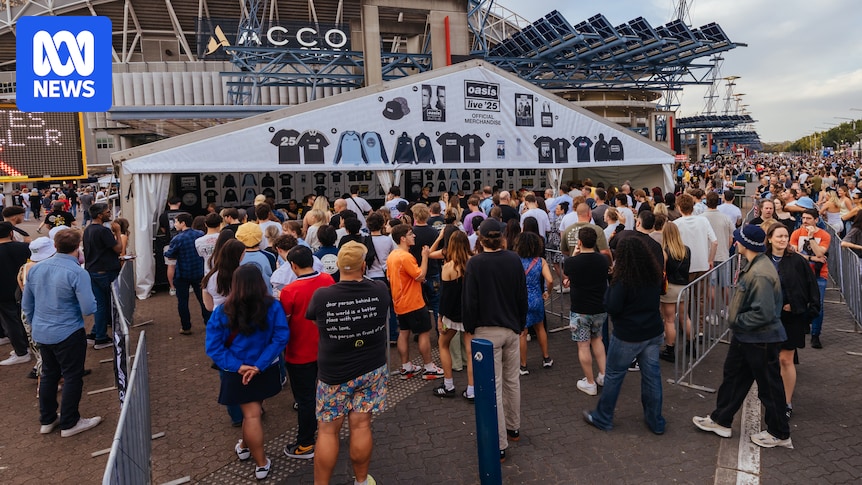
A merch cut is where a venue takes a percentage of an artist’s merchandise sales at the end of a live gig.
For a wave of fans, learning about merch cuts shattered the idea that buying merch at shows is the strongest way support your favourite artist, in a world where streaming residuals are likely a pittance.
These artists demanded better treatment in the aftermath of a global pandemic, and now amid dizzying costs of living pressures, so has anything changed in three years?
Where did merch cuts come from?
The history of venues taking a financial cut from the merch stand has various claimed beginnings.
Some say it came from the 1980s straight edge punk scene, where venues would cut a deal with artists because they wouldn’t be taking in as much over the bar with a crowd full of sober people.
Others, like Jason Netherton of Misery Index, trace it back to the 70s, when bands began to sell shirts as the new souvenir from live performances.
Large-scale arenas were likely the starting point for the practice in Australia, where the venue uses its own staff and point of service systems to sell an artist’s merchandise — especially if there are multiple stalls around the venue.
Over time, this practice has worked its way into medium and small-sized venues, spaces hired by artists to play a gig.
Typically, there is a single space or table for merch sales, artists provide their own seller, use their own sales systems and, sometimes, practically beg for a lamp to be provided.
Considering this deeply DIY approach to many merch desks, is it fair for venues to then expect a cut of the sales from the night?
After lockdowns, both venues and artists were eager to get the lights back on and work to recoup the losses from the years stuck inside.
Bands saw an increase in how much venues were expecting them to pay out of their merch sales for the night, with documents seen by triple j noting it ranges between 10 to 20 per cent at venues across the country.
It hasn’t slowed down as the years have rolled on.
“Honestly, I think it’s crazy that merch cuts have to be included at all,” Monica Sottile, Victorian president of the Musicians Australia union, tells triple j.
“Bands already paid to use a venue. The venue gets all of the bar sales. Why should they get merch sales?”
“If a venue can’t run unless they need merch cuts, then the venue should probably close.“
Australian metalcore acts Alpha Wolf, Northlane and Make Them Suffer were among the vocal groups in 2023, pushing for transparency within the live music industry.
The former called out a venue’s exploitative practices while on stage, while the latter have bootlegged their own shows — instead selling merch from the back of their van outside to avoid the venue taking a cut.
Bands taking it into their own hands (and vans)
More recently, bands like US hardcore punk act Gouge Away have refused to sell inside the building, pulling back the curtain on just how much venues are trying to force them into handing over money from the merch table.
Loading Instagram content
Refusing to sell merch inside a venue and instead slinging it from the backs of trucks or small bars nearby poses its own set of risks, however.
Apart from the liability of not being protected by venue security, there’s also the chance that a band could be blacklisted from the venue, affecting future live gig opportunities.
“It’s a really difficult thing to address in a public sphere, because if you publicly name and shame one of these companies, that hurts your booking agent, or maybe your management’s rapport with these companies,” Make Them Suffer vocalist Sean Harmanis tells triple j.
“They can always just turn around and say, ‘If you don’t like it, you can’t play our venues’.
“They’re these A-market venues that you need to be playing as an artist or else you’re going to see a dramatic decline in your ticket sales and your merch sales overall. So it’s kind of put artists in a bind.”
When a city only has a certain number of venues at the capacity a band can fill, taking one or more out of the equation severely affects an artist’s gigging options.
“We had to do that once in Italy,” Alpha Wolf guitarist Sabian Lynch tells triple j.
“I think they wanted 43 per cent of merch and started blaming it on city tax and all this other stuff.
“The promoter told us not to sell outside because there were some weird shady dealings going on with the venue, and if they caught wind of it, there’d be trouble. But we did it anyway.
“Sometimes you have to do what you’ve got to do, you know?”
Loading Instagram content
Ninth Life Records co-founder, Greyscale Records manager and host of Double J’s Short Fast Loud Josh Merriel manages Heavensgate, who recently toured the US with The Amity Affliction.
The Melbourne metalcore outfit opted to sell merch outside of venues to have a greater chance at breaking even on the tour.
“They’ve posted multiple times [online] that they’ll set up against their trailers out the front of the show,” he says.
“They’re like, ‘If you want merch, come outside’ because the venue will take 20 to 30 per cent tax plus sellers [fees] plus all these extra things.
“Either you’ve gotta sell shirts for $100 or you can’t sell merch. It’s how bands survive.”
Loading Instagram content
Northlane guitarist Josh Smith has deep experience in negotiating and navigating venues, both as an artist and as a manager with Immortal Music Group.
From his perspective, bands are routinely cornered by their contracts with venues, with little room to move.
“I feel like artists are being milked by everyone involved in the industry,” he tells triple j.
“They’re just doing it with the assumption of abundance in artists. But if it hits a breaking point, touring is not gonna become as viable anymore.”
These contracts are typically negotiated between venues and managers, which means that sometimes artists don’t know what’s in a contract until it’s been signed and delivered, trusting in their managers to aim for what’s best for them as performers.
Alpha Wolf have been in situations where they haven’t seen a contract for a show until it’s too late, and felt they’ve been unable to negotiate and just had to accept the deal to be able to continue booking shows.
“It’s a conversation between our agents and the actual venues,” Lynch says.
“We’re not involved in those emails, so we’re not seeing the contracts until they’re presented to us.”
Opening or support artists are rarely given the luxury of seeing these contracts signed by the headliner’s team, which results in smaller acts being confronted with agreed terms and expectations when they arrive to the venue on show day — including merch cut percentages.
Artists can try and counter merch cuts by adjusting their prices at the table, but that’s only viable to a point — make it too expensive and fans won’t be able to afford to buy.
Some bands have felt pressured to “price match” their merch to other bands on the show’s bill, usually the headliner.
“Who’s going to buy merch over a band they’ve known for 20 or 30 years for a band they’ve never heard?” Merriel says.
“I’ve been on a bunch of tours before and I understand some headliners want you to match whatever they’re selling T-shirts for, but some don’t care.
“[On this latest tour] I went up to the main tour manager and was just kind of like ‘just want to know where we stand on merch and price matching, what do you want to do?’.
“And [headliner] Frank Turner was sitting next to him and was like, ‘I don’t give a f**k’, and then he’s like ‘wait, no, I do give a f**k. F**k price matching’.”
The venue perspective
Loading…
From a venue’s side, it’s largely dependent on what services are being provided and budgeting for the venue being open with a window of a few hours to make profits over the bar.
Nate Farrell runs CLBR Music, which gives him a unique perspective as both a manager of bands and venues.
“The cold, hard fact is this is kind of a two-tiered venue race where you’ve got the smaller venues, maybe a thousand [capacity] and under, where maybe it’s easy to go hang out, watch the support band, have a few drinks and make a night of it,” he tells triple j.
“The main revenue sadly is through alcohol sales. That’s not great, but that’s just what it is.
“If you’re a bigger venue, like if you have a 2,000-3,000 cap venue, your opportunity to sell alcohol is pretty limited.
“People might get there for a drink or two before hand, most people don’t drink when the headline act is on on at all.
“At the end, the bar closes before the headliner is finished. So, in those instances, I guess charging a merch percentage is part of their model.
“I understand why it’s there, but I still don’t love it.“
With venues like Oxford Art Factory, Freo.Social and The Night Cat under his management, Farrell says they don’t take a specific cut from merch sales, but do charge a small fee for storage and logistics outside of show times.
“Some of our venues do a handling fee, because sometimes the merch will get dropped off three days earlier and picked up five days after that,” he says.
“You’ve got to make sure it’s in the right place at the right time and staff is going to be there.”
Loading Instagram content
So what can be done to challenge the practice of merch cuts, or give artists a chance at making a profit on their intellectual property? Should there be a cap on how much of a cut venues can take if they’re working a merch cut into contracts?
“I do think that there should be a cap on it, because I don’t think it is very respectable that the venues want to do that,” Sottile says.
“When you look at the music industry and who is making money within the revenue, the artists are at the very bottom.”
Can merch cuts be a fair practice?
The Featured Artists Coalition (FAC) launched the 100% Venues registry in the United Kingdom in 2022, a year before the issue of merch cuts reached a boiling point.
They created a database of independent live music spaces across the UK that operated under four key principles:
- Support acts must never be subjected to commission charges on merch sales.
- Artists should be offered the option to use their own staff to sell merch.
- Rates must be agreed up-front — no artist can be surprised when they arrive to the venue.
- Merch commissions must be open to negotiation at every show.
The FAC worked with the Union of Musicians and Allied Workers (UMAW) to expand the resources to the United States and Canada, creating an extensive, cross-continent resource for artists, bands and managers to use while booking shows and tours.
While this isn’t an active initiative from Musicians Australia (the arm of the MEAA union dedicated to musicians), the union has been working on efforts to make things financially fairer to artists and bands.
“We’re working on a document that lists venues that are willing to, and have signed up to, commit to paying a $250 minimum fee per musician, per show, per performance,” Sottile says.
“I think there’s a lot of opportunity for working together across all of the stakeholders, which would only make the industry stronger.
“We’ve just got to get there, because the ingrained culture is so deep and so individualistic and capitalistic — people are really scared for their businesses.
“[A 100% Venues list is] definitely something I think would be considered in the future because it actively and directly affects working musicians’ day-to-day revenue.
“It would be good to have something that is a little bit more peer-reviewed than just the things that we can find online.”
Although issues around merch cuts are ongoing, bands still want you to buy a shirt at the show. They may be facing a loss at the end of the night, but it’s still one of the strongest ways to financially support your favourite acts.
“I would encourage people to still continue to buy merch, particularly in smaller venues,” Harmanis says.
“That is still probably the best way to go about it. But just know as the venues get bigger, if you start seeing a higher price tag on the garments, it’s not necessarily in the power of the artist.”