






The growing problem of Islamophobia hit home to Usman Khawaja a couple of years ago when his mother was verbally abused while she was watching her son play in a Test match in Melbourne.
Wearing a traditional hijab, Fauzia copped abuse from two Australian fans at the 2024 Boxing Day Test match against India at the MCG.
“She had a couple of guys come up to her and start yelling into her ear and she was pretty shocked by the experience,” Khawaja said.
“I was playing so I didn’t find out until later in the day.
“Funnily enough, those two individuals were Australian supporters. They were doing that to an Australian — a fellow Australian.“
Usman Khawaja said he often felt like an outsider in the Australian cricket team due his religious beliefs. (ABC News: Alexandra Alvaro)
Having retired from international cricket in January after a stellar 15-year career, Khawaja is now using his high profile to fight against Islamophobia across Australia.
He’s joined a national campaign to raise awareness of Islamophobic behaviour, urging victims to report incidents.
Khawaja joined Aftab Malik, Special Envoy to Combat Islamophobia, at the campaign’s official launch in Melbourne on Monday afternoon.
A video, launched as part of the campaign, calls on bystanders to take action if they witness incidents of anti-Muslim hate.
“It can happen anywhere at work, online, while shopping, in the places we feel safe. Its effects are universal, ongoing and increasing,” the narrator says.
Aftab Malik (right) said the anti-Muslim rhetoric of One Nation was “unhelpful”. (ABC News: Alexandra Alvaro)
“When we call it out, when we report it, we make space for systemic change.
“Reporting gives organisations, institutions and the entire community the power and the backing to create a future where acts of Islamophobia can be properly addressed.”
Mr Malik described the rise of One Nation, and the anti-Muslim rhetoric of leader Pauline Hanson, as “unhelpful”.
“I think the discourse that surrounds these conversations are stereotypical, damaging and dangerous,” he said.
“It keeps me up all night. It’s the same everywhere you go across Australia.
“We have an understanding that what is reported is just the tip of the iceberg. We are deeply concerned and something needs to be done.”
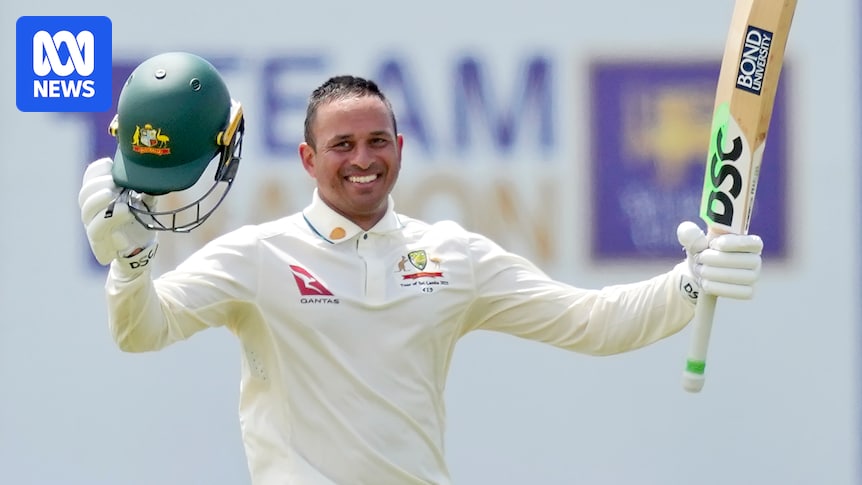
Pakistan-born Usman Khawaja scored more than 6,000 runs in 88 Tests for Australia. (AP Photo: Eranga Jayawardena)
Khawaja, who wrote the foreword to the campaign’s report, said he felt like “an outsider” for much of his time with the Australian cricket team, and faced Islamophobia throughout his career.
“I’ve experienced Islamophobia since I was a kid in lots of different, varying ways, but I’ve witnessed it more in recently because I’m more attuned to it and I think it’s more prevalent right now,” he said.
“In the Australian cricket team, I felt like an outsider for a very long time, until recently, the last five years.
“There were times when people tried to ostracise me and discriminate against me because of my beliefs in a broader sense.”
But Khawaja, 39, said that Muslim women, like his mother, suffered much greater challenges in modern Australian.
“If I walk down the street, I can get away with it. If you look at me, you don’t really see too much,” he said.
“But women who wear hijabs are targets right now, because they wear their religions on their sleeves. It’s very hard for them to walk down the street and blend in.
“I think hate right now is more prevalent that it has been before, not just in terms of Islamophobia, but in general.”
After the national launch in Victoria, the campaign will roll out in the other states and territories, with Mr Malik estimating a 40 per cent rise in Islamophobic incidents since the Bondi attacks last December.
“These incidents are becoming increasingly brazen, outlandish and violent,” Mr Malik said.
“I think people feel emboldened. When our politicians speak in certain terms, it encourages individuals to take action.“