







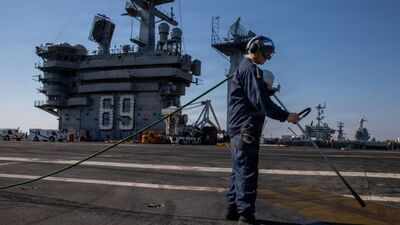
A series of fires, electrical failures and technical breakdowns aboard some of the United States Navy’s most advanced warships has reignited debate over the reliability of next-generation naval platforms.According to the South China Morning Post, citing the May 2026 edition of the Chinese military magazine Naval & Merchant Ships, the incidents suggest deeper structural challenges within the US Navy rather than isolated operational mishaps.The assessment follows a recent incident involving the USS Nebraska, where 64 sailors were exposed to diesel exhaust fumes after a generator malfunction.The Chinese publication argues that modern warships have become increasingly dependent on sophisticated electrical networks and digital technologies, making them more vulnerable to technical failures that can affect multiple onboard systems simultaneously.It cites a series of incidents involving frontline US Navy vessels as evidence of a broader pattern. Among the ships highlighted are the aircraft carriers USS Gerald R. Ford and USS Dwight D. Eisenhower, the stealth destroyer USS Zumwalt, and the Arleigh Burke-class destroyer USS Higgins.According to the report, these incidents expose vulnerabilities linked to prolonged deployments, an increasing reliance on advanced technology and inadequate shipyard support.One example cited is a fire aboard the USS Gerald R. Ford in March 2026. The report claims the incident reflected maintenance shortfalls caused by extended global deployments, which delayed scheduled upkeep and contributed to crew fatigue.It also points to an electrical failure aboard the USS Higgins during an Indo-Pacific deployment in April 2026. The blackout temporarily disabled the destroyer’s power and propulsion systems, with the report attributing the incident to high operational demands and insufficient maintenance.The Chinese magazine further argues that the US Navy is facing wider structural challenges in maintaining its fleet, including persistent repair delays, limited shipyard capacity and a shortage of skilled workers.It says the rapid introduction of advanced technologies has outpaced the Navy’s maintenance infrastructure. Modern warships equipped with integrated electrical systems, automation and complex combat technologies require specialised maintenance and technical expertise, increasing the difficulty of sustaining operational readiness.The report concludes that as navies around the world invest in increasingly sophisticated, software-driven and electrically powered warships, technological superiority alone will not guarantee effectiveness. It argues that long-term fleet readiness will depend as much on maintenance capacity, industrial support and logistics as on advanced weapons and sensors.