








Listen to this article
Estimated 5 minutes
The audio version of this article is generated by AI-based technology. Mispronunciations can occur. We are working with our partners to continually review and improve the results.
Experts are raising the alarm after a months-long RCMP human trafficking investigation in Saskatchewan led to two arrests.
Two men tied to a trucking business in the RM of Edenwold, east of Regina, are facing human trafficking charges. Police said they cannot confirm the name of the business at this time.
The RCMP human trafficking and counter exploitation unit aided White Butte RCMP with the investigation into the trucking business after receiving a tip about a potential human trafficking scheme in November.
RCMP say an employee of the company was required to pay a large amount of cash to secure their job, with the promise of obtaining permanent residency. Police also say the owners were withholding pay and exploiting employees by forcing them to work long hours in unsafe conditions.
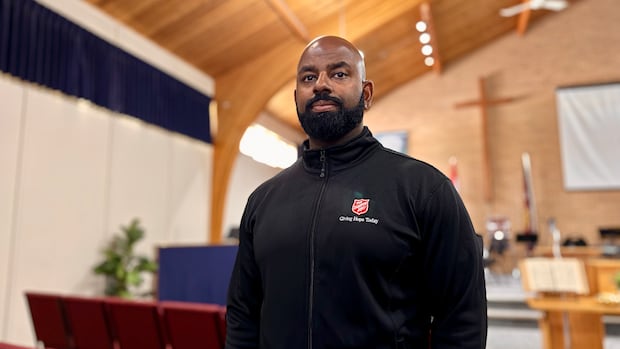
Stephen Moorgen, slavery and human trafficking facilitator for the Salvation Army Prairies and Northern Territories Division, said labour trafficking is Saskatchewan is not new or uncommon.
“Lots of people don’t know that this exists here in our backyard. And when we hear it happen on the news … we’re shocked,” Moorgen said.
“But the sad reality is this is happening every day. Last year in our Prairie region, we worked with 97 individuals specifically that were labour trafficked in the Prairie region. So this isn’t a one-off.”

Moorgen said labour trafficking is increasing at an exponential rate in Saskatchewan, and in other Prairie and territorial regions.
“We know that because of how we operate with shelters, with food, with resettlement services for newcomers. And so we hear these stories often about the extent of labour trafficking,” he said.
“Whether we’re talking about human trafficking, sexual exploitation, labour trafficking … anytime we see a disparity between power and control, we know that someone could be the victim of human trafficking.
Helping fearful victims
The Salvation Army provides services to victims of human trafficking to help with what Moorgen calls their “restoration.” This work requires a great deal of care and trust-building.
Moorgen said that when victims come to the Salvation Army in Saskatoon, for example, they are afraid. He said they have experienced extensive coercion and control, making them hesitant to talk to people who can help.

Moorgen said that when a victim is exiting a human trafficking situation, the Salvation Army can provide shelter, food, clothing, spiritual care and access to wraparound services. It can also connect them to government agencies to help with lost wages, counselling services and police.
However, he said many trafficking victims who go to the Salvation Army for help don’t want to speak with police. The organization can introduce them to support services where civilians that work alongside police can help.
RCMP urge public to look out for red flags
Sgt. Kelly Plamondon, commander for the RCMP human trafficking and counter exploitation unit, is urging people across the province to be on alert for signs someone is being trafficked.
She said that due to the large sums of money some people pay to come to Canada and gain employment, they don’t have the freedom to leave their job or even the workplace.
“Once they get here, they have that debt bondage, that money that they have to pay back in order to get their permanent residency,” Plamondon said.
Often their documents are withheld from them. So their passports, their work permits, those can all be withheld. Same with their bank cards.– Sgt. Kelly Plamondon, Saskatchewan RCMP
She said victims are subject to threats from their employers, as well as punishments if they try to leave or get help.
“Often their documents are withheld from them. So their passports, their work permits, those can all be withheld. Same with their bank cards. The wages that they were told they were getting are often not the same once they arrive,” Plamondon said.
She said red flags include long work hours beyond industry standards, often without pay, and unsafe conditions without proper equipment.

Trafficking victims are commonly given unsafe and unsanitary housing, sometimes without heat or water.
“They may have fear, anxiety, they may avoid talking about their job. They may change the subject. They may not want to talk to police or they may look to the employer to see if they’re able to answer the questions that we’re asking,” Plamondon said.
She said sexual exploitation and labour trafficking are “hugely underreported,” especially within Saskatchewan.
In a statement, the Saskatchewan Trucking Association said it was “deeply concerned” by the allegations of human trafficking at the trucking company in the RM of Edenwold.
“Labour trafficking has no place in our industry or our province,” said the association.
“These cases often involve vulnerable workers being exploited through immigration pathways, wage theft, and coercive employment practices — and they undermine both human rights and road safety.”