







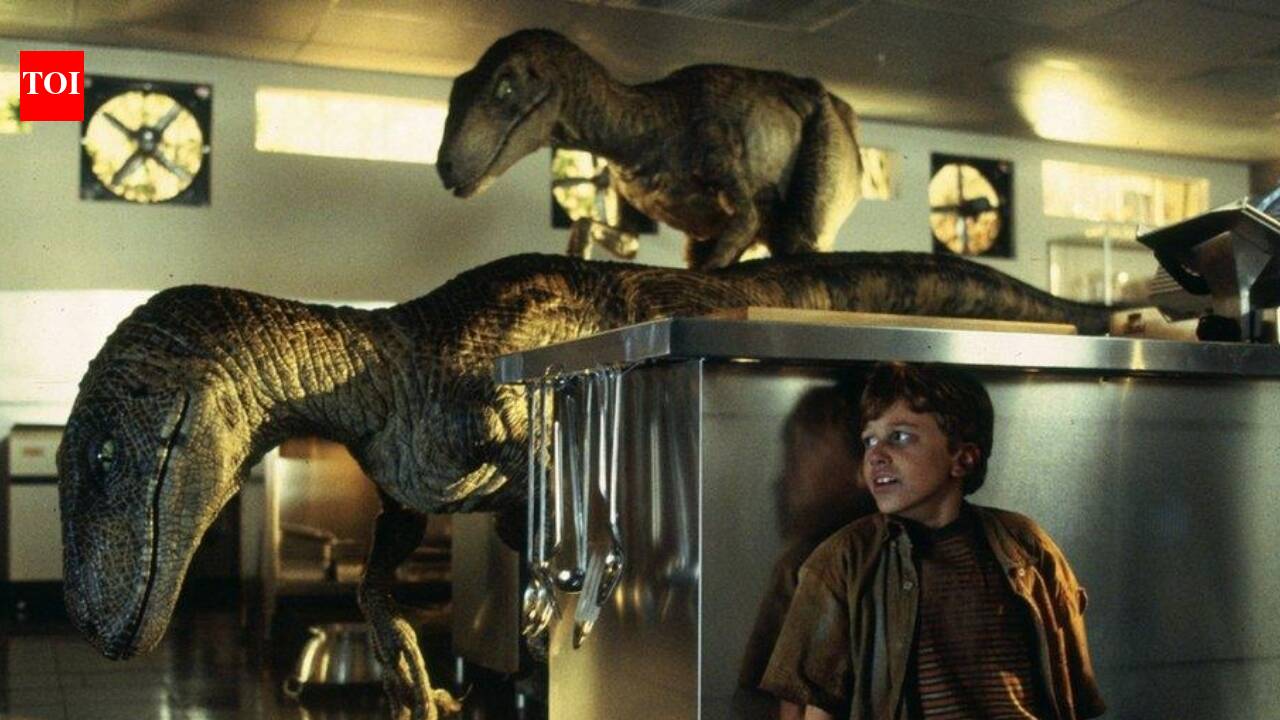
If you’ve watched ‘Jurassic Park’, you probably remember the beast pretty clearly. When someone says the name Velociraptor, you picture the dinosaur as a nightmare on two legs: huge, scaly, clever enough to open doors, more monster than animal.The actual Velociraptor? Well, it would barely reach your knee and was closer to a scrappy turkey than a Hollywood terror.Sounds almost unbelievable, right?Read on.For decades, that scary, human-sized image ruled pop culture. Steven Spielberg’s film made fans jump with those kitchen scenes, but paleontologists have spent years gently shaking their heads: that’s not what the real raptor looked like. In life, Velociraptor was about 15 kilos, maybe 30 pounds, standing half a meter tall, two meters long if you stretched out its tail. And the most surprising thing? It was covered in feathers. Not sleek dinosaur scales, but honest-to-goodness birdlike plumage.We know this thanks to fossils dug up in Mongolia. Scientists found evidence of quill knobs, little bumps where strong feathers anchor onto bones, on the forearms of a Velociraptor. Modern birds have these; so did the raptors of the Cretaceous. The discovery ended any doubt and reimagined this animal as a fierce, feathered predator, not a scaly menace.Velociraptor lived around seventy-five million years ago in what’s now Central Asia. It was nimble, lightweight, and armed with that famous sickle claw; not so much for slashing wildly, but more for gripping prey, pinning down small animals like a bird of prey does today. It belonged to the dromaeosaur family, a group known for their intelligence, agility, and birdlike features.For a while, the idea that raptors were feathered was mostly speculation, based on their relatives in China, fossils with delicate feather imprints. But the Mongolian specimen changed things, becoming solid proof. The feathers probably weren’t for flying, as Velociraptor’s arms were too short for flight. Instead, they might’ve helped attract mates, regulate temperature for eggs, or keep balanced during a hunt. If you squint, you can see echoes of modern birds in this little predator’s life: nesting, brooding, perhaps even social behavior.This all fits the bigger scientific story that birds didn’t just descend from dinosaurs; they are dinosaurs. Modern birds carry features once thought unique to them: wishbones, hollow bones, brooding behaviors, feathers. Velociraptor sits right in the middle of that evolutionary chart, showing just how much today’s robins or hawks owe to their scaly ancestors.So, why do movies get it so wrong? Turns out, a lot of it comes down to timing and drama. Michael Crichton’s Jurassic Park novels and Spielberg’s films landed before that 2007 paper confirmed Velociraptor’s feathers. Plus, the movie raptors were actually based on a larger, more intimidating cousin, Deinonychus. The name “Velociraptor” just sounded better for marketing, so Hollywood ran with it.Nowadays, artists try to get it right: they paint Velociraptor with fluffy feathers, sharp beaks (well, snouts), and alert, birdlike eyes. Maybe these images aren’t quite as scary, but scientists argue that the truth is just as fascinating; in some ways, even more. Who wouldn’t be intrigued watching a beautiful, fast, feathered creature dart through prehistoric brush, hunting and nesting like its modern avian kin?That’s the real trick of science: every discovery makes the story richer, not duller. We used to think of dinosaurs as slow, lumbering lizards; now, we see them as lively, social, and sometimes downright strange. The real Velociraptor probably wouldn’t terrify you in your kitchen, but it would definitely surprise you. Not King of the Dinosaurs, but a cunning, clawed, turkey-sized predator with a legacy that’s still strutting around in your backyard bird feeder.‘Jurassic Park’ gave us drama. Science gives us wonder. And sometimes, a fluffy, fierce little raptor turns out to be the coolest dinosaur of all.