








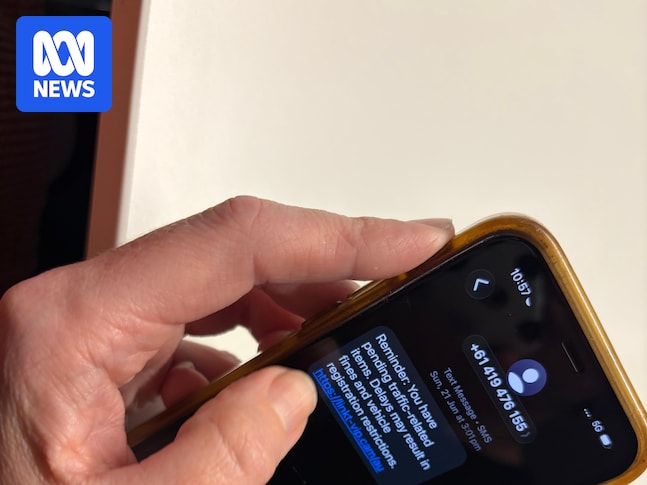
The growing volume of scammers posing as organisations and brands will face an additional hurdle from tomorrow, with new regulations kicking in aimed squarely at spam texters.
Starting July 1, text messages sent using sender IDs not part of an official register will be labelled as “unverified” by phones.
The changes are aimed at helping people identify spam texts, following a surge in senders posing as organisations such as the Australian Taxation Office (ATO) and myGov, the federal government’s portal linked to government services.
The Australian Communications and Media Authority (ACMA) estimates Australians lost nearly $18 million to SMS scams last year, with many of those messages masquerading as major brands.
However, according to the latest Targeting Scams Report from the Australian Competition and Consumer Commission (ACCC), the largest decrease in reported scam contact methods was text message, down from 77,365 in 2024 to 29,058 in 2025.
The numbers suggest this was due to an increase in awareness and reporting by recipients.
In 2025, the National Scam Centre referred 4,246 unique numbers and 825 unique sender IDs to telecommunications companies for disruption, over four times as many as in 2024.
And telecommunications companies have been doing their part to block more than 153 million scam text messages in 2025 alone, as part of their obligations under the industry’s scam code.
These new rules will take these measures further.
Here’s how.
How will it work?
The new initiative will give people more confidence that messages sent with a branded sender are legitimate.
Up to this point, some scammers have been able to mislabel the top of their texts to pretend to be from banks, government or other legitimate businesses.
Now there will be a new thread in the message app labelled “unverified”.
ACMA spokesperson Samantha Yorke said people should act with caution when dealing with “unverified” messages.
“We are introducing a register for these branded text message IDs and companies that can demonstrate they have a legitimate use of a particular company name or brand can register that with us and they will continue to come through to you as they do today,” she said.
“If a message is marked as ‘unverified’ people should treat it with extra caution and not click on any links or provide personal information.”
Telecommunication companies will be required to tell their customers about the changes.
Professor of cybersecurity practice at Edith Cowan University, Paul Haskell-Dowland, said the changes would deliver benefits.
“We’re going to get an increased level of protection for the most likely vehicles that criminals are using to attack us purporting to be a bank and purporting to be the ATO,” Professor Haskell-Dowland said.
“Even my own university had an update yesterday that they’ve gone through the registration process so clearly there’s a big movement for larger scale organisations that are quite dependent on these technologies.”
What do businesses need to do from July 1?
Businesses will need to contact telecommunications providers and register their sender IDs.
Businesses that do not register a sender ID by July 1 risk having their text messages labelled as “unverified”.
More than 17,000 sender IDs have already been registered.
The ACMA has a dedicated website with detailed instructions on how to register your text ID.
There is no cost to businesses.
“The examples we think of tend to be larger organisations like the tax office or myGov or Australia Post but many small businesses and community groups and charities are using branded SMS messages as well,” Ms Yorke told ABC Radio.
“It’s really businesses of all sizes if they’re using a branded ID and they want to continue using that beyond July 1 they should register them.”
Caution advised from July 1
From July 1, if your business, charity or organisation is not registered with your telecommunication company, text messages to customers will likely be put in an “unverified” folder.
It’s a bit like a spam folder but for text messages.
Since not all businesses have registered, it is important to remember some text messages might not be scams.
Mohiuddin Ahmed, associate professor in cybersecurity at Adelaide University, has some advice about dealing with unverified messages.
“I would suggest any receiver should not be interacting with unverified messages because it is highly likely it is a scam,” Dr Ahmed said.
“If it is a really pressing issue, the sender of those unverified text messages will try to call you.”
How do I avoid getting scammed?
Dr Ahmed said the end of financial year was rife for scam texts.
“Scammers will try their hardest to scam people because they still have that option to send through texts without that sender ID registered,” he said.
“With tax time, inflation, RBA decisions and cost of living which means Australians are going through a lot so would love some good deals.
“Scammers will take advantage of these emotional situations particularly at tax time to people hoping to get the best possible tax returns so if you think anything looks dodgy, just do not interact.”
He said to be aware of unsolicited communication, question any requests for payment and verify communication before acting.
There is also a text line you can contact to flag a potential scam if you are a Telstra customer.
Customers can flag potential scams by forwarding them on to 7226.