







A volunteer-run wildlife organisation that rescued a bird which later tested positive to the deadly H5 bird flu says it did not expect to be “ground zero” for the first case in South Australia.
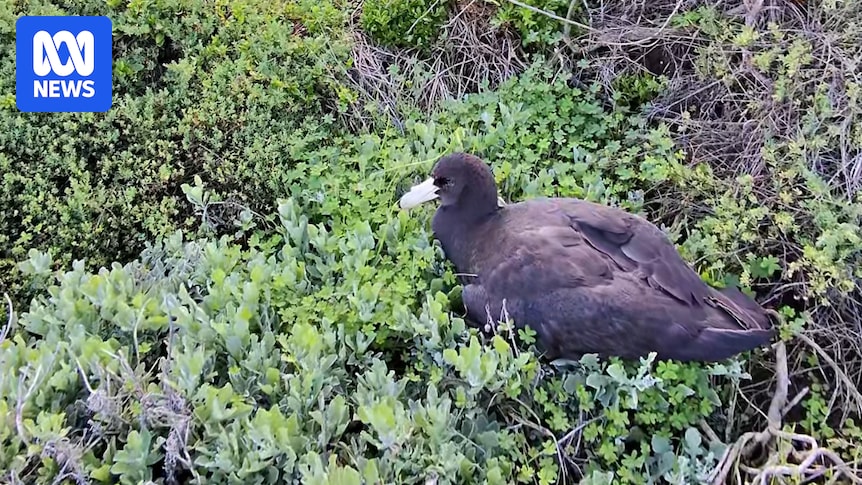
Australia’s third confirmed case of the avian influenza was recorded on Tuesday in a giant petrel found at Knights Beach on the Fleurieu Peninsula, about 80 kilometres south of Adelaide.
Wildlife Welfare Organisation SA’s Justin Biddle said the migratory bird came into the group’s care on June 14 but it did not appear to have the usual symptoms of the illness.
“It’s presented like a lot of other giant petrels and other sea birds have where it was a bit weak and debilitated,” the wildlife carer said.
Mr Biddle said confirmed cases found near Esperance in Western Australia raised “a red flag” and he contacted the Department of Primary Industries and Regions to coordinate testing.
Justin Biddle says the sick bird came to the rescue on June 14. (ABC News)
He said the facility had been “locked down” for biosecurity reasons after receiving a call on Tuesday confirming the SA bird had the strain.
“We’re not expecting to be ground zero for the first one in South Australia,” Mr Biddle said.
Mr Biddle said he and other volunteers at the charity felt well physically but obtained antivirals as a precaution under instructions from SA Health.
He said none of the other birds in care at the facility were in direct contact with the sick giant petrel.
“We like to keep our protocols in place, we wash our hands, do all the right things in between birds,” he said.
The Wildlife Welfare Organisation SA has been locked down after a confirmed case of H5 bird flu. (ABC News)
Mr Biddle said his team had been given swabs for testing birds but he had also requested personal protective equipment and other supplies in the event the facility needed to be in quarantine.
“Our rescue centre has been under a lot of pressure both from the algal bloom perspective and now obviously avian influenza,” he said.
SA Premier Peter Malinauskas said on Tuesday that two dead seabirds that washed up on the shores of Fowlers Bay Beach earlier this week tested negative to avian influenza.
Giving birds ‘the best fighting chance’
Speaking to ABC Regional Drive SA, Spirit of the Coorong cruise manager Joel Hirsch said bird flu’s arrival was “significant” but that the government had taken precautions since Victoria’s 2024 outbreak of the H7N8 strain.
“That involves improving habitat for wild bird populations, including the Coorong offshore islands off Victor Harbor,” he said.
“We’ve had burn off weed removals, other pest birds being eradicated, to give wild bird populations the best fighting chance … to weather that storm.”
Mr Hirsch also said he was “closely watching and monitoring” for symptoms of the disease in migratory seals in and around the Coorong.
More than 13,000 baby seals perished on Heard Island, in the Australian Antarctic Territory, last year after acquiring bird flu.
Willunga egg farmer Catriona Byrne told ABC Regional Drive SA there would be “increased vigilance” for symptoms on her farm and an effort to keep hens away from lakes and dams, where migratory birds could congregate.
“We keep an eye out for our flocks, our flocks are visited by humans every day … so we do have pretty good vigilance in observing birds,” she said.
“In one sense, it’s a bit like a natural disaster, as much as you can have a plan … you’re very much subject to the enormity of it.”
Emily Bourke says environmental staff have been trained to detect symptoms. (ABC News: Daniel Taylor)
SA Environment Minister Emily Bourke encouraged members of the public to avoid contact, visually record, and report dead birds to the Emergency Animal Disease Hotline on 1800 675 888.
“If you are seeing a bird acting in an unusual way … heavy breathing is a sign, discolouration, a little disorientated, we want you to record what you’re seeing,” she said.
She also said environmental agencies would be “looking at new spaces where we should be doing observations” and that staff had been trained over recent days to detect symptoms.