







The rate at which capital city dwellers are moving to the regions is at its highest level on record, according to a new report that suggests the trend is more than a post-COVID blip.
The Regional Australia Institute (RAI) began tracking the population movement, labelled the Regional Movers Index, in 2021 by analysing relocation data among Commonwealth Bank customers to calculate the net internal migration.
In the March quarter report, capital city residents moving to Australia’s regions outnumbered those moving in the opposite direction by 29.7 per cent.
Liz Ritchie says policy makers can no longer ignore the trend of capital city residents moving to the regions. (ABC News: ABC News: Luke Stephenson)
“What this tells us is that the demand for regional living is not abating,”
RAI chief executive Liz Ritchie said.
“For all the reasons that we know only too well, which is around cost of living, housing opportunities and lifestyle opportunities, that citizens across the country, in particular our capital city dwellers, are looking for a move to regional Australia.”
The index rose 20.1 per cent from the December 2025 quarter, is 4.2 per cent higher than the same time last year and up from its previous peak in mid-2022.
“This is not new information, but hopefully with this record movement, we might start to see a greater focus on this issue,”
Ms Ritchie said.
Sydney and Melbourne dominated the list of capital cities that people were most likely to leave for the regions with a 55 per cent and 36 per cent share, respectively.
The Sunshine Coast local government area again took the largest share of net capital-regional migration, followed by Greater Geelong and Moorabool in Victoria, and Lake Macquarie and Mid Coast in New South Wales.
Infrastructure pressure
Moorabool Shire Mayor Steven Venditti-Taylor himself left Melbourne for a regional change 10 years ago when he moved to Bacchus Marsh.
Working as a house painter at the time, Councillor Venditti-Taylor said leaving Melbourne’s traffic to raise his family in a regional town was the “best thing I’ve ever done”.
Steve Venditti Taylor left Melbourne 10 years ago to raise his children in Bacchus Marsh. (Supplied: Steven Venditti Taylor)
But with a booming population, Cr Venditti Taylor said the pressure on their infrastructure was starting to grow.
“We’ve got to receive a fair share of funding as well from all sources of government around education, health, recreation, roads and new services as well,” he said.
“The growing pains are going to be there and, looking forward, we really need that infrastructure in place.“
Bacchus Marsh in Victoria’s Moorabool Shire is an increasingly popular destination for domestic migration. (Supplied: Moorabool Shire Council)
Ms Ritchie said it was a common story across Australia, but that it “doesn’t have to look like this”.
“This is a once-in-a-generation opportunity to be bold and courageous and set an ambitious plan for the nation that encompasses this demand that we see for regional Australia,”
she said.
Productivity ‘opportunity’
With so many people looking for a lifestyle change, RAI argues that the regions create “enormous opportunity” to help address the “burning issue” of national productivity.
“One of the ways that we can improve our productivity is to further enhance the agglomeration benefits that will come from second- and third-tier cities that we see in this Regional Movers Index report,” Ms Ritchie said.
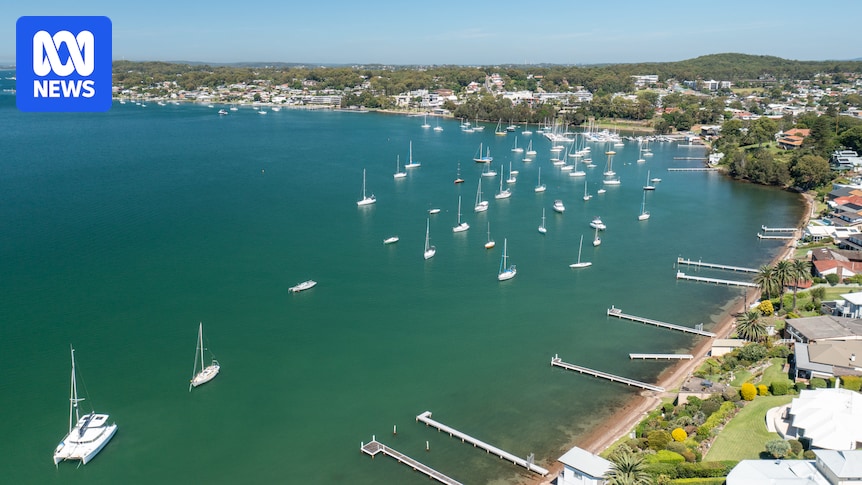
Lake Macquarie has seen one of the highest rates of capital city to regional migration. (Supplied: Lake Macquarie Council)
As well as improving transport and health services, finding jobs for newcomers is a key priority for Lake Macquarie City Council’s chief executive Tony Farrell.
“The population is coming regardless, but our big issue and the thing that we are working most towards is trying to find opportunities for new employment,”
he said.
“Our local economy has been well served by coal mining and coal-fired electricity generation, and as that reduces and we transition away from the carbon economy, we need to find new opportunities, so people that want to move to the area can work here, can have long and fulfilling careers.”
The federal Minister for Infrastructure and Regional Development, Catherine King, was not available for comment.