






Dozens of emails land in my inbox every day. But this one was different.
It was from a child in residential care, and they were desperate.
“What I am currently going through is not okay,” they wrote.
“If I die while in my situation, I want residential care to be called out for what it is. Evil and inhumane.”
The child felt completely alone. She described workers sitting in the office with the door closed and rarely checking on her.
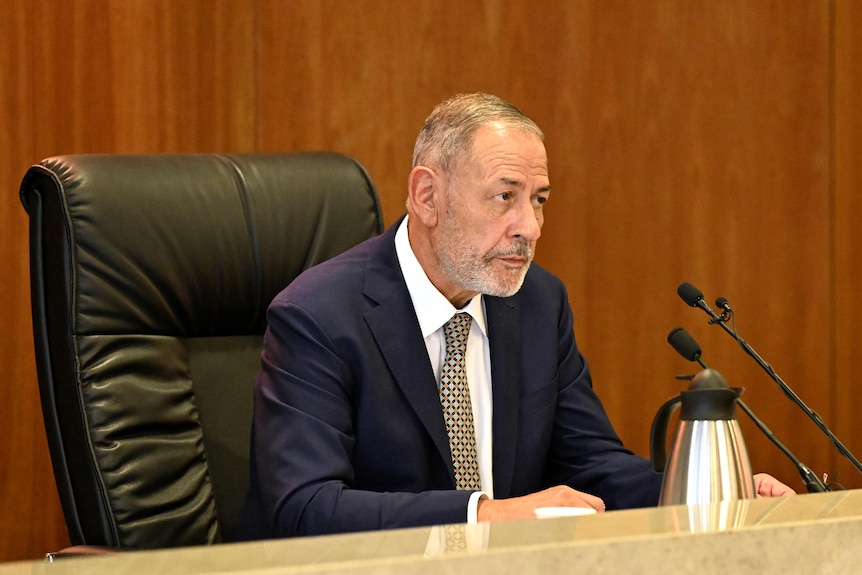
Commissioner Paul Anastassiou said the Department of Child Safety needs to be rebuilt from the ground up. (AAP: Darren England)
“The state (is) my parent, but it (doesn’t) act like one,” she said.
“The fact I was 14 years old and preferred sleeping on the street over a roof over my head is a massive problem and a huge red flag.“
The harrowing stories many youth workers, foster carers and young people have of the Queensland child protection system will leave lifelong scars, which can teach more than any inquiry.
This week, 52 recommendations have been published from the latest one.
The $20m inquiry is the fourth in almost three decades into what the Queensland government has described as a “broken” system.
Still, the commissioner Paul Anastassiou has published radical, if optimistic, recommendations.
But he said, “no tweak or tinkering will change the present trajectory of the child protection system.”
The department, he says, needs to be rebuilt from the ground up.
That starts with shifting children out of the $1bn residential care system, where they’ve experienced harm, abuse and neglect.
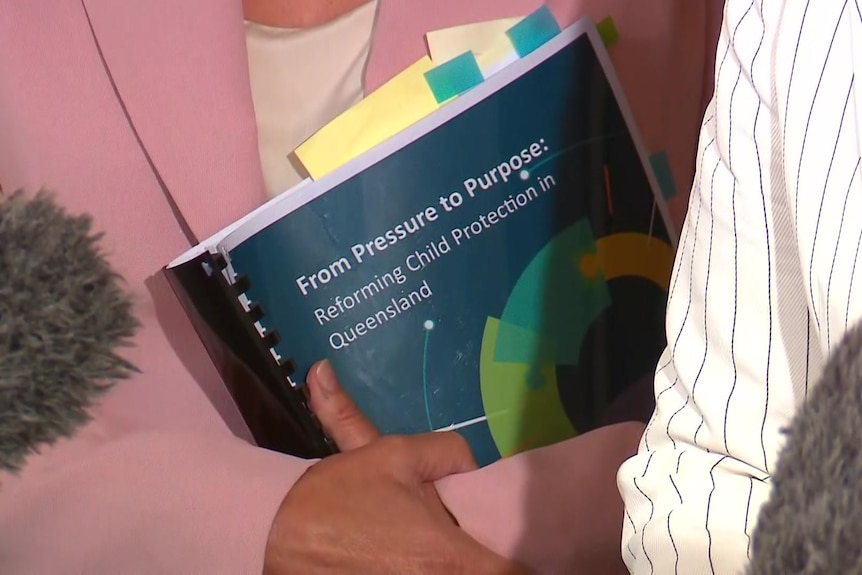
The report delivered 52 recommendations to the Queensland government. (ABC News)
These group homes were supposed to be last-resort, short-stay accommodation for teenagers, but they’ve made service providers millions. Many of them are unlicensed.
CEO of the Youth Advocacy Network, Katherine Hayes, told the ABC this week the department was a “huge expensive failure” and reforming it will be “like turning around an ocean liner”.
The government announced it’ll start by removing children under five from residential care.
There are still questions about how this will work in practice.
Experts have asked what it will mean for sibling groups in care. Will they be separated?
The inquiry has recommended a transition to family-based care after decades of underinvestment in kinship and foster care.
Child safety minister Amanda Camm said this week that Queensland now has a shortage of 1,000 foster carers.
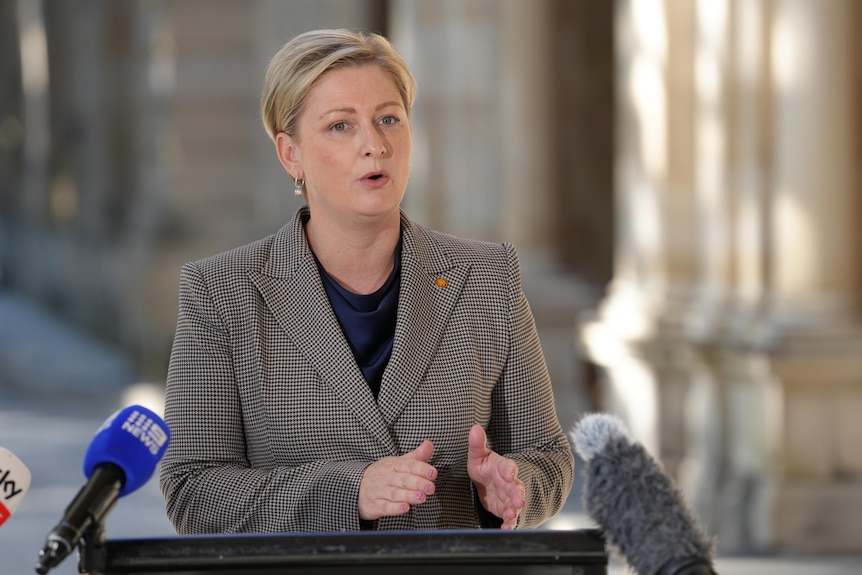
Child Safety Minister Amanda Camm says some of the report’s findings “should keep Queenslanders awake at night”. (ABC News: Curtis Rodda)
But some foster carers say it’s a difficult job, for which they’ve felt unprepared, underpaid and unsupported.
As one expert said this week, “who would want to be a foster carer in Queensland?”
To address this, the government is piloting a $27m professional foster carer program in Townsville and south-east Queensland.
An independent complaints and escalation framework has also been recommended by the inquiry to protect those who raise concerns.
This is important to workers who say they fear reprisals from both the department and their employers.
To keep children safe, staff say they need to feel comfortable raising complaints.
Privacy provisions from the department, designed to protect these vulnerable children, can also make it hard for systemic failures to be exposed.
Some foster carers say it’s a difficult job for which they’ve felt unprepared, underpaid and unsupported. (ABC Kimberley: Andrew Seabourne)
What often comes back in response to media questions is a single line that the department cannot comment — even when a child is deceased.
Investigating whether these provisions hamper transparency was one of the inquiry’s terms of reference, but no recommendations on this were made.
This means if a teenager in care wants to be identified and tell their story, they can’t.
Without the bravery of whistleblowers, many of the horrors inside the system would stay behind closed doors.
Several submissions to the inquiry spoke about a culture of “defensiveness” inside the department and “risk aversion” in response to scrutiny.
Child Safety Minister Amanda Camm said some of the findings of the report “should keep Queenslanders awake at night”.
The challenge is enormous, but the inquiry’s report has made clear, for the sake of Queensland’s children, inaction is not an option.