







Listen to this article
Estimated 4 minutes
The audio version of this article is generated by AI-based technology. Mispronunciations can occur. We are working with our partners to continually review and improve the results.
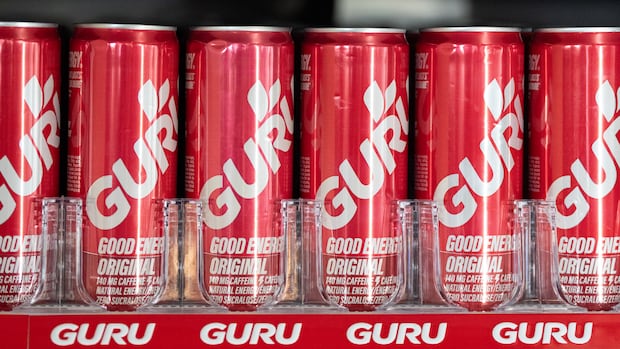
Proposed legislation to ban the sale of energy drinks to people under 16 in Quebec is expected to pass on Thursday.
It would make the province the first North American jurisdiction to impose age-based restrictions on caffeinated energy drinks.
The Coalition Avenir Québec (CAQ) government needed unanimous consent to fast-track the legislation before the end of the week, when the parliamentary session ends.
While some Independent MNAs remained on the fence until the final hours, they have now joined the CAQ in supporting the accelerated adoption of Bill 9, dubbed the “Zachary Miron Act.” Amendments could still be introduced in the future.
The provincial government introduced the legislation after 15-year-old Zachary died in 2024 from drinking a can of Red Bull in combination with ADHD medication.
The National Assembly adopted the principle motion allowing Bill 9 to move forward.
Pharmacists, cardiologists, public health experts and lobby groups addressed elected officials in Quebec City on Tuesday after the Conservative Party requested special public consultations.
Independents offer support
The final two Independent MNAs who had been wavering, Pierre Dufour and Sona Lakhoyan Olivier, decided Wednesday morning to support the measure after speaking with cardiologist Dr. Paul Poirier, who has studied the risks associated with caffeinated energy drinks for years.
Dufour, the MNA for Abitibi-Est, had said Tuesday that he would not support the accelerated process for the bill, arguing that the ban should apply only to children under 14.
He had also criticized experts from the Institut national de santé publique du Québec (INSPQ), saying they had failed to clearly explain why the age threshold had been set at 16 during Tuesday’s committee hearings.
“When a public health organization gives a presentation, it should be talking about health. When half the presentation is spent talking about marketing, I don’t think that’s their role,” he said.
Lakhoyan Olivier said she also would have preferred legislation banning energy drinks only for those under 14.
“I think we’re moving too quickly and emotionally,” said Lakhoyan Olivier, the MNA for Chomedey. She acknowledged the pain Miron’s parents had endured, “but as legislators, we can’t always prohibit everything.”
Still, she said Poirier had promised her that cardiologists would continue working to strengthen the legislation under a future government.
Independent MNA Youri Chassin, who had indicated he intended to block the accelerated adoption process, ultimately agreed Wednesday not to do so. However, he said he would vote against the bill itself.
Laporte MNA Isabelle Poulet also will not oppose the accelerated process.
Rules and fines
On Wednesday morning, Health Minister Sonia Bélanger said the goal is to protect children. She called the legislation a reasonable and prudent measure.
Under the legislation, selling or giving an energy drink to anyone under 16 would be prohibited. It would also be illegal for someone 16 or older to purchase an energy drink on behalf of a person under 16.

The CAQ government wants to adopt the bill banning the sale of energy drinks to those under the age of 16 before the end of the session this week. Pressure for such restrictions has been mounting since the death of 15-year-old Zachary Miron in 2024. Miron died after drinking a can of Red Bull while on ADHD medication.
Customers would have to show government-issued photo identification to buy the beverages. Online sales and sales through vending machines would also be prohibited. Inspectors would be authorized to conduct compliance checks.
A person under 16 who violates the law could face a $100 fine. Adults could be fined between $500 and $1,500.
For businesses, fines could reach $62,500. In all cases, penalties could be doubled for repeat offences.
Among the proposed amendments, only one was accepted: requiring the government to publish a follow-up report on its website two years after the law comes into force.