









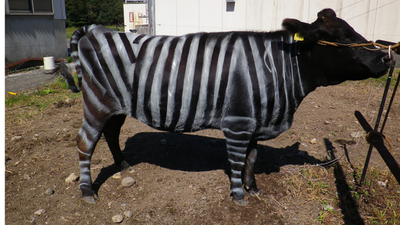
For decades, farmers have used pesticides to protect livestock from biting flies, but what if a paintbrush could do part of the job instead? It might sound odd, but scientists in Japan discovered that painting zebra-like black-and-white stripes on cows can greatly reduce the number of biting flies that land on them.This idea is based on one of nature’s biggest riddles: why do zebras have stripes? Despite several explanations proposed over the years for why this pattern evolved, scientific research suggests that the stripes may help deter biting flies. A peer-reviewed study tested whether that same effect could be recreated in domestic cattle, and the results were striking.Six cows were tested under three different conditionsAccording to a study published in PLOS ONE in October 2019, scientists from the Aichi Agricultural Research Center and Kyoto University tested the idea using six Japanese Black cows during the 2017 and 2018 grazing seasons.Researchers used a 3 × 3 Latin-square experimental design so that each cow experienced all three treatments over time. Cows were divided into three categories: painted with black and white zebra-like stripes using water-based lacquer, painted with black stripes using black lacquer or unpainted (control). The black-paint control helped the researchers determine whether the effect was due to the paint smell itself. According to the study, the painted stripes were 4 to 5 centimetres wide, and it took about 5 minutes to paint each cow.
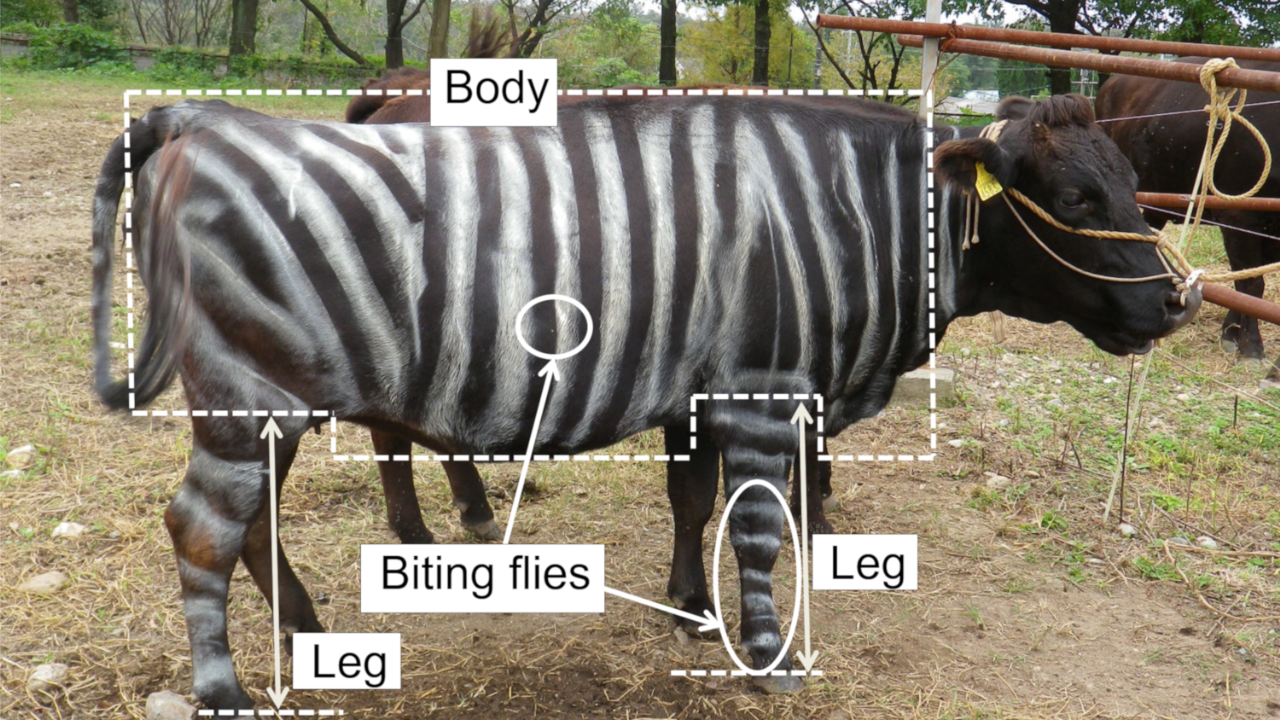
The research showed a fifty percent reduction in biting flies on striped cattle. Such fly bites negatively impact grazing and animal welfare. This eco-friendly approach could supplement traditional pest control methods. Image Credit: PLOS ONE
Zebra-like stripes reduced biting flies by 50 percentThe results showed a clear difference. According to the researchers, black-and-white painted cattle attracted about half as many biting flies as cattle with no paint or with black stripes alone. The difference was statistically significant.Cattle with stripes showed 20 percent less fly-repellent behaviour during the 30-minute observation period. Fly-repellent behaviours included tossing their heads, ear beating, leg stamping, and tail flicking, which are common signs of cattle trying to chase away flies. The researchers suggested that the decline in these behaviours was due to fewer flies on the cattle.Why do zebra stripes make it harder for flies to land?Scientists continue to explore the underlying mechanism, but more evidence suggests that stripes disrupt a fly’s approach and landing process. According to zoologist Tim Caro’s work, earlier hypotheses such as camouflage or predator confusion have not been proven by experiment. In fact, the evidence has become stronger that stripes provide protection from biting flies.A related 2019 PLOS ONE study found that horseflies approached stripes differently from plain black and white surfaces, and sometimes the insects did not brake properly before landing. In addition, earlier scientists found in laboratory and field experiments that flies landed less frequently on narrower black-and-white stripes than on solid-colour surfaces.Importance of this research to agricultureFly bites are more than just a nuisance. The PLOS ONE study reports that biting flies shorten the time cows spend grazing, eating and sleeping, while also triggering stress-related behaviours. High levels of biting flies are also associated with reduced milk yield and weight gain. Insecticides are still the main tools for biting fly control, according to the study. However, the insects can become resistant to chemicals over time, highlighting the need for alternative solutions.The researchers recommended using a zebra-striped design as an eco-friendly supplement to traditional pest-control methods that could help cut pesticide use and improve animal welfare. They noted that because the water-based paint wore off within a couple of days, more durable and realistic methods were needed.Promising results in a tiny studyThe results are promising, but they should be interpreted cautiously. The research was carried out on just six cows; however, every animal received all the treatments in a cross-over experimental design. This strengthens the comparison, but more research in different breeds, climate zones and husbandry systems is needed before zebra striping can become common in farming. Instead of developing yet another chemical compound, the answer might lie in imitating the pattern that zebras have worn for millions of years.