







The second tranche of Western Australia’s new laws to regulate the towing industry comes into effect today, aimed at better regulating the operators of towing businesses.
The laws were drafted following a 2022 Towing Industry Consultation Report, which found that bad behaviour was a “major problem” for 85 per cent of consumers.
The report found it was common for tow-truck operators to intimidate drivers to secure business, charge excessive fees, and drive illegally.
The first stage of the changes was introduced in 2025 and focused on predatory behaviour at crash sites.
It included a ban on advertising, payment or receipt of spotter fees, maximum charges for towing and storage of crashed light vehicles in Perth and Peel. It also mandated that operators must disclose the charges to potential clients.
What’s new?
Phase two focuses on towing business operators. From today, towing businesses will have to apply for an authorisation if they want to provide crash towing services.
Anyone with convictions for a number of disqualifying offences, including some firearms and drug offences, will not be eligible to apply.
If they clear that hurdle, they will be assessed further, Michelle Porter, acting director of governance and intelligence at the Department of Transport and Major Infrastructure, said.
“Provided someone associated with the business hasn’t been convicted of one of those disqualifying offences, we’ll then go through and request that they provide us with their national police clearance, and we’ll be looking at the suitability of their past behaviour to make sure they’re of good repute,” Ms Porter said.
“We want them to have good character, honesty and integrity to provide those crash towing services out to the community.“
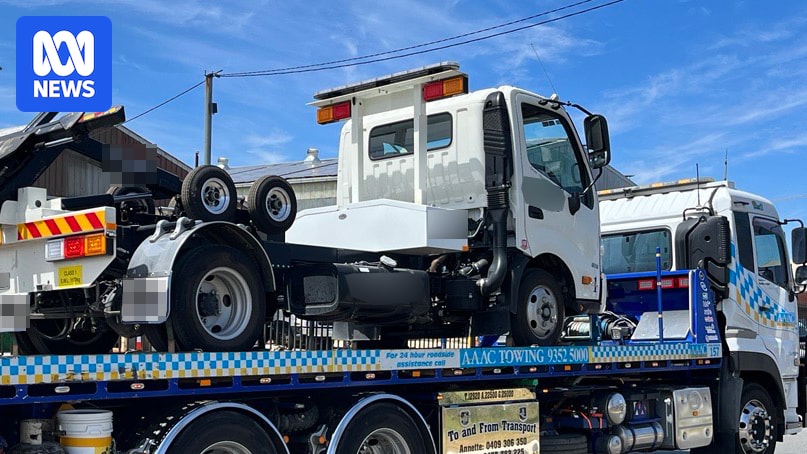
The laws are designed to protect consumers by regulating the businesses offering crash towing services. (ABC News: Maren Preuss)
Businesses operating in Perth and Peel will have until September 1 to get their registrations if they wish to keep operating. Towing businesses in the south-west of WA have until October 1, and all other regions until November 1.
“At this stage, we’re aware of some businesses out there that may or may not meet some of those tests.
“We’re already aware that there are some businesses that have left the crash towing industry, but we’ve been working really hard with industry, and I think we’ve visited over 70 businesses over the last few months to let them know that these authorisations are coming in.
“We’re certainly there to help those reputable industry players get their authorisations and continue to provide great service in the community.”
How will consumers know who is authorised?
Any business offering crash towing services after September 1 will need to use the department’s “authority to tow” forms to show they are a legitimate operator.
“They’ll also be able to have at their premises their authorisation details advertised.
“We’ll certainly be investigating if we have reports of businesses that are operating that haven’t been authorised.”
Rules around storage yards for vehicles that have been towed are also tightening, with transparency for consumers about where their cars have been towed.
“Sometimes we don’t know where the vehicles have been moved to, and some of the locations that they’re being moved to simply just haven’t been safe or secure,” she said.
“We’re looking for storage yards to have things like particular heights on the fences, some CCTV facilities, as well as some signage at the front so customers can be sure that they know where their vehicles are, and they can locate those vehicles when they need to.”
Fee caps going up
There will be small increases to maximum fees that can be charged for crash towing and storage, in line with CPI.
The maximum fee for towing a car in the Perth and Peel area will increase from $485 to $523. Maximum charges for storage will increase from $25 a day to $27 for light vehicles and $12.50 to $13.50 for motorcycles.
There are currently no fee caps on crash towing charges for regional WA due to its vast distances.
“The size and scale of WA make it very difficult for us to determine precise fee caps when we need to make considerations for other factors such as variable distances, the cost of fuel, some environmental issues, and, of course, recognising sometimes in regional and remote areas, there are higher costs for running a business.
“That’s not to say though that regional businesses can charge whatever they like. They still must only charge a reasonable amount.“
Secondary tows and release fees
The issue of secondary tows, where a vehicle must be towed from a storage yard to a repairer, and release fees, where customers are charged hefty amounts to get their car out of a storage yard, have not been addressed in this tranche of laws, but are on the department’s radar, Ms Porter said.
“These reforms are a multi-year reform.
“When we originally started, the focus was on the behaviour at [crash] scenes, businesses and on workers.
“We’re very conscious of the fact that as we’re introducing these regulations to an industry that has not previously been regulated, we’re seeing other behaviours emerge.
“Future reforms certainly will deal with whatever emerging behaviours we’re seeing.”
A third tranche of changes, focusing on the regulation of individual workers in the sector, is planned for next year.