








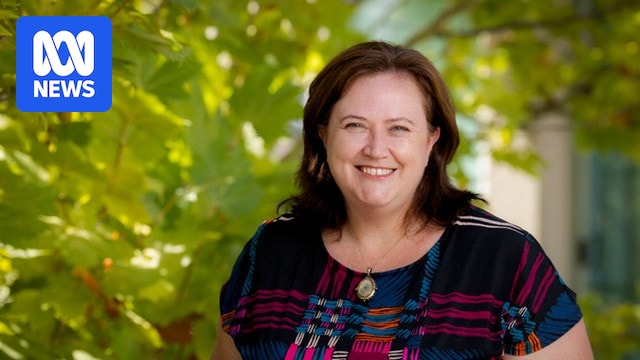
When Jo Riley lost her father to suicide 20 years ago, after experiencing a period of suicidal crisis herself, she started to think there was something wrong with her.
“I guess, at the time, it felt deeply personal,” the suicide prevention advocate said.
Now, as a member of the Lived Experience Partnership Group with the National Suicide Prevention Office, Ms Riley has realised people do not come to these suicidal points in isolation.
“They’re shaped by the conditions that we live and work in, the different pressures we carry, whether we feel connected, and whether we feel that we matter,” she said.
In hindsight, Ms Riley said better social or mental health support services to help with major life changes, such as relationship breakdowns or a new job, could have made a difference.
And decades on, these services do exist, but she thinks there is still a gap in what decision-makers know works.
Each year in Australia, more than 3,000 people die by suicide, with an estimated 55,000 attempts. It can average out to one person dying by suicide every three hours.
“So we have places, like safe havens, that people can turn to in periods of crisis and receive non-judgemental, compassionate care,” Ms Riley said.
But they are also “inconsistent” and while it “saves lives”, there needs to be more focus on “reducing the likelihood that people will reach that point in the first place,” she said.
Which is why she has been involved in developing a key component of the National Suicide Prevention Strategy, the National Suicide Prevention Outcomes Map.
The world-first initiative will measure success in suicide prevention, in addition to looking at the number of deaths by suicide, while also looking at whether people feel connected, supported, safe and able to access help.
Ms Riley said it paired “quantitative data with lived experience and narrative data”, so policymakers, mental health experts and those working on the front line could figure out which services were working and which did not.
Data to shape prevention work
Professor of mental health nursing at Adelaide University and chair of the National Suicide Prevention Office Advisory Board, Nicholas Proctor, said the map will give people like him the evidence needed to identify what was driving distress.
Nicholas Proctor says the map will provide important data to decision-makers. (Supplied: National Suicide Prevention Office)
“So that we can then learn at scale across Australia where to invest for the greatest impact in the future,” he said.
Professor Proctor said the map used information from people with lived experience of suicide to explain what services they were engaging with.
“They might go to their GP, they might go to a Medicare mental health service, they might go to an ED alternative, Safe Haven Cafe, they might go to a community health service. So this is an initiative that takes us outside of just mental health services,” he said.
So how does this map work?
It outlines the key outcomes to preventing people reaching suicidal distress, which include people feeling safe and secure; having good health, financial literacy and education; feeling valued and being able to navigate major life changes.
These are then assessed against qualitative and quantitative measurements to track the progress of whether the outcomes are being met.
The map also looks at whether the help for those actually experiencing suicidal distress was accessible and coordinated across different services. It could include measuring access to a GP or whether carers were getting mental health support.
National Suicide Prevention Office head Alex Haines said the map provided “the evidence to better inform government policies, funding decisions, and service design”.
Alex Haines says the map will show where people turn for support. (Supplied: National Suicide Prevention Office)
So in practical terms, he explained how it might be applied for those experiencing challenging life events, such as relationship breakdowns or redundancy.
“It will help us understand the number of people that Australians feel they can call on for support during those times,” Dr Haines said.
“It will also enable us to identify the strength of those relationships or the sense of connection to these supports and whether this is changing over time. So that will have a material influence on what it is that governments can do about it.”
The first report based on the map will be released next year.