





Growing up in Somalia, Koos Ali said when natural disasters would hit, her community would turn to each other to survive.
“We have learnt to make sure if anything happens we have a community approach and we don’t wait for the government,” she said.
Droughts, floods and extreme heat are common in Somalia, she said, along with war.
But nothing prepared her for the sorts of disasters she would experience when she migrated south.
“When there’s war, there are bullets. You can run, you can hide,” she said.
“But when it comes to Australian disasters, it’s a whole learning process. It’s a totally different approach.“
Almost as soon as she landed in Australia she was confronted by the Black Summer bushfires of 2019–20 and remembered seeing darkness and clouds.
She said the danger did not hit home until some of her colleagues were forced out of their homes by the blaze.
Koos Ali says nothing prepared her for the reality of living through an Australian bushfire. (ABC Gippsland: Danielle Kutchel)
“That’s when you understand what it means to be prepared,” she said.
“Seeing it happening makes a huge difference [compared] to all the pamphlets that I’d read.”
Communication is key
Ms Ali is a settlement support officer for Gippsland Multicultural Services (GMS), an advocacy body promoting the rights of the culturally and linguistically diverse community in Gippsland.
Through its activities within multicultural communities in the region, the organisation helps promote good preparedness for emergencies like bushfires and floods.
GMS also established the Gippsland Multicultural Regional Emergency Management Network to support mainstream agencies, including firefighters and police, to better understand and connect with communities.
The idea is to create a bridge between official emergency messaging and the real-life experiences of multicultural communities living in the region.
There are other similar networks around Victoria, targeting approaches to multicultural communities in different parts of the state.
The missing link
GMS access and support officer Kate Allen said people new to Australia may simply not understand common phrases about emergencies.
Arriving in Australia from Belarus, where she experienced severe snowstorms, she said she had no concept of the speed and severity of a bushfire, or how to prepare for or monitor fire conditions.
Kate Allen says some migrant communities distrust authority due to the trauma they have experienced in their past. (ABC News: Danielle Kutchel)
“No-one understands [Watch and Act]. Watch who act?”
she said.
“Should we be packing a bag or leaving the house? Or stand outside to watch the sky, or just listen to the radio for the whole night?
“If you’re not familiar with the system it means nothing.
“The government is doing an amazing job by providing this information, but there is also a missing link explaining what this information means for your street, for your house, for your daily life.”
Ms Allan said multicultural communities need more than translated information, they need clear and targeted points of action, and context delivered with a human approach.
Learning to trust again
Ms Allan said some of those who came to Australia had a distrust of authority and had unsafe experiences with government systems in the past.
“Trust in authority is not automatic,” Ms Allen said.
Authorities can counter this by building relationships with multicultural communities through consistency and reliability.
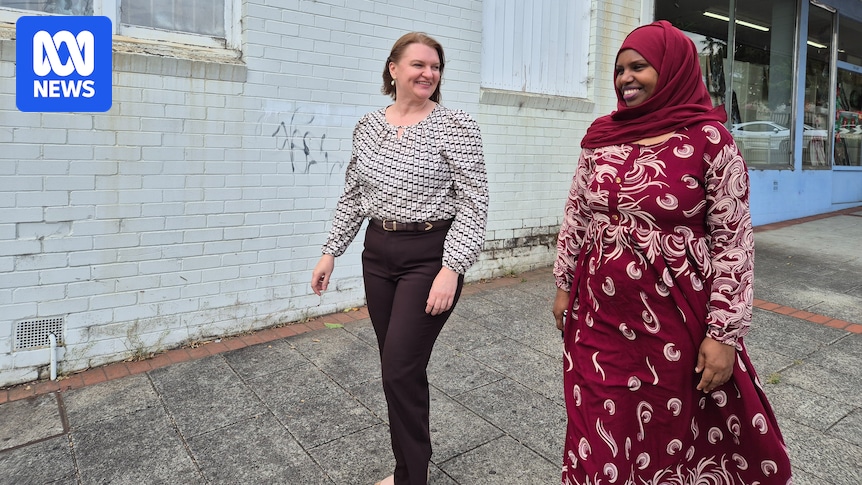
Koos Ali and Kate Allen draw on their experiences to help others settling in Australia. (ABC News: Danielle Kutchel)
“It’s never just about official websites, it’s more about community organisations, multicultural networks, faith leaders and local services,” she said.
Building community
Richard Ogetii is the co-chair of the Multicultural Emergency Management Partnership (MEMP) which brings together emergency management agencies with leaders from multicultural communities.
It was founded during the pandemic when multicultural leaders realised that while communication was being provided on what to do, no-one was checking whether the information was being received in the right way.
Richard Ogetii says authorities can built trust simply by “showing up”. (Supplied: Richard Ogetii)
“Communication should be a two-way process,” he said.
After the pandemic years the MEMP shifted its focus, using what had been learned during COVID-19 to inform better communication during emergencies.
“It’s about making sure that you’re always prepared, and whatever information is being put out there is accessible to everyone,” Mr Ogetii said.
He said the services needed to counter mistrust in multicultural communities that did not place faith in uniformed figures.
“Trust is built through showing up … [and] attending community events, building rapport and proving that authorities can be counted on to do the right thing,”
he said.
“Multicultural communities are often relational, so there needs to be a relationship there to enhance understanding.”
The CFA visits a migrant community event in Wodonga to help build relationships between the two. (Supplied: Richard Ogetii)
Services promise understanding
An Emergency Management Victoria spokesperson said the organisation delivered emergency information through multiple channels and community leaders.
“During high‑risk weather periods we develop and share in‑language emergency messaging in priority languages with multicultural networks, supported by a dedicated accessible communications officer who works closely with peak multicultural organisations,” the spokesperson said.
Ambulance Victoria Gippsland director Ross Salathiel said the organisation worked closely with multicultural communities and the Victorian Multicultural Commission to provide tailored communications in-language.
Similarly, CFA acting chief officer Alen Slijepcevic said the CFA worked to build relationships with local communities to improve the cultural accessibility of its communications.
The CFA visits a multicultural community event in the Wodonga region. (Supplied: Richard Ogetii)
“CFA recognises that trust is built through relationships, not just through translated information. CFA’s engagement is most effective when it is localised,” Mr Slijepcevic said.
“CFA also understands that some newer arrivals, particularly humanitarian entrants, may have experienced trauma, low trust in institutions, or unfamiliarity with Australian public systems.”
A Victoria Police spokesperson said it held regular engagement with multicultural communities to help them feel safe and prompt conversations.
“We also have dedicated multicultural liaison officers and new and emerging community liaison officers who help provide direct links to multicultural groups across Victoria to support migrant communities,” the spokesperson said.