






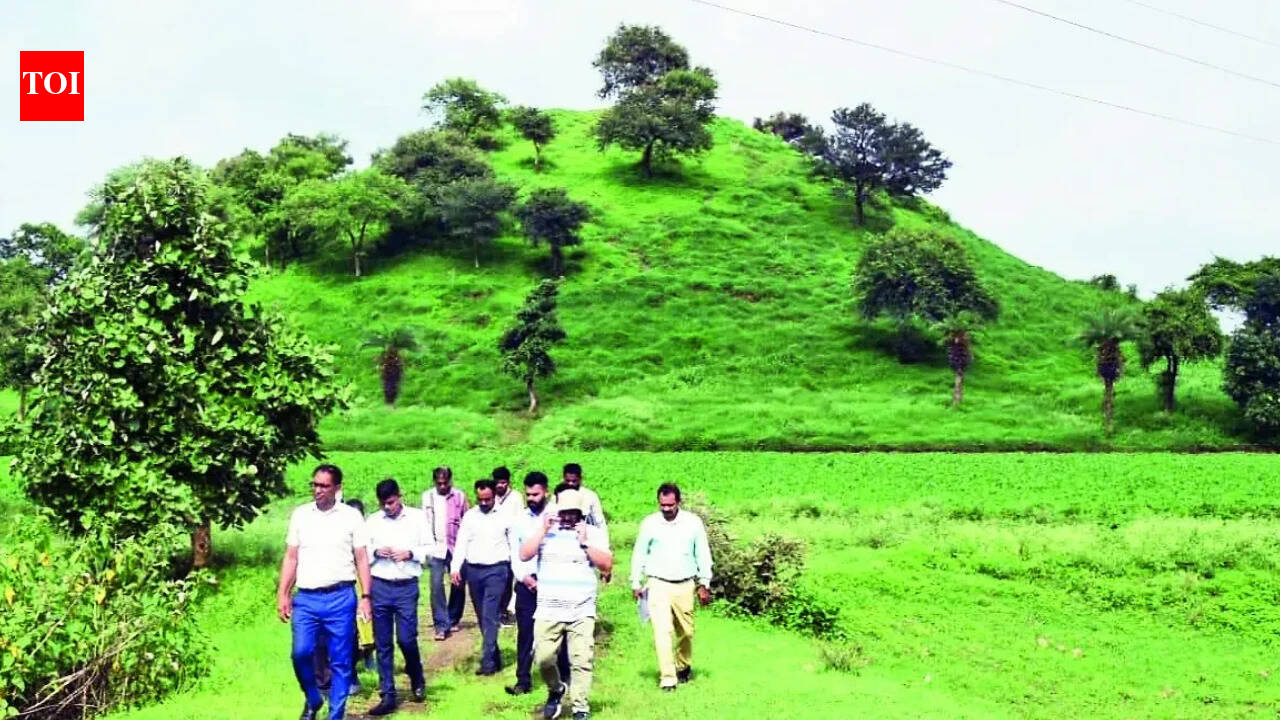
BHOPAL: Bigger than Sanchi. Older than 2 millennia. Born in Ashoka’s era. Inspired by his wife Devi. A massive mound in Ujjain’s Vaishya Tekri kept its secrets buried since a 1938-39 excavation uncovered what an archaeological report called “perhaps the biggest known” Buddhist stupa before work was halted after a gas leak left labourers unconscious. Madhya Pradesh is ready to dig again.CM Mohan Yadav is pushing the project ahead and state govt is working with ASI to explore a fresh excavation.The British-era report put the stupa at 350ft in diameter and at least 100ft high, dwarfing Sanchi’s 120ft diameter and 54ft height. It dated the structure to the Mauryan period, around the 3rd century BCE, making it roughly 2,200 years old. Vaishya Tekri lies about 236km west of Sanchi.The report described Vaishya Tekri as a large circular mound ringed by a rectangular depression. Partial digging exposed the main stupa and remains of two smaller stupas. It was described as a “peculiar construction not met with anywhere else”.Ujjain stupa linked to Ashoka, say expertsThe report left open the possibility that the stupa could be among those attributed to Emperor Ashoka, though no conclusive link was established. ASI superintending archaeologist Shivakant Bajpai said some records associate the monument with Ashoka’s time.“It is believed that when Ashoka was governor of Ujjain, he had constructed a stupa at this site under the inspiration of his wife, Devi, daughter of Vidisha’s Nagarshreshthi. Therefore, this Buddhist site, established on the inspiration of a Vaishya’s daughter, came to be known as Vaisya Tekri,” Bajpai said.Vaishya Tekri has also been linked to Kanakgiri Vihara in ancient Buddhist literature and possibly to a massive stupa described by Chinese traveller Hiuen Tsang, though both remain unproven.Ujjain divisional commissioner Asheesh Singh said the administration was working with state and central archaeological departments and would provide all support, including land acquisition.The 1939 excavation revealed the stupa’s core of rammed local murum and outer facing of large bricks in mud mortar, with bowl-shaped masonry at the base to counter outward pressure. Much of the brick facing had vanished, and the top was believed washed away, leaving the original plan and elevation unclear.“The mound indicates scale, but only systematic excavation can establish the original plan,” Bajpai said. Work stopped in 1939; nearly nine decades later, Vaishya Tekri may see a fresh excavation.