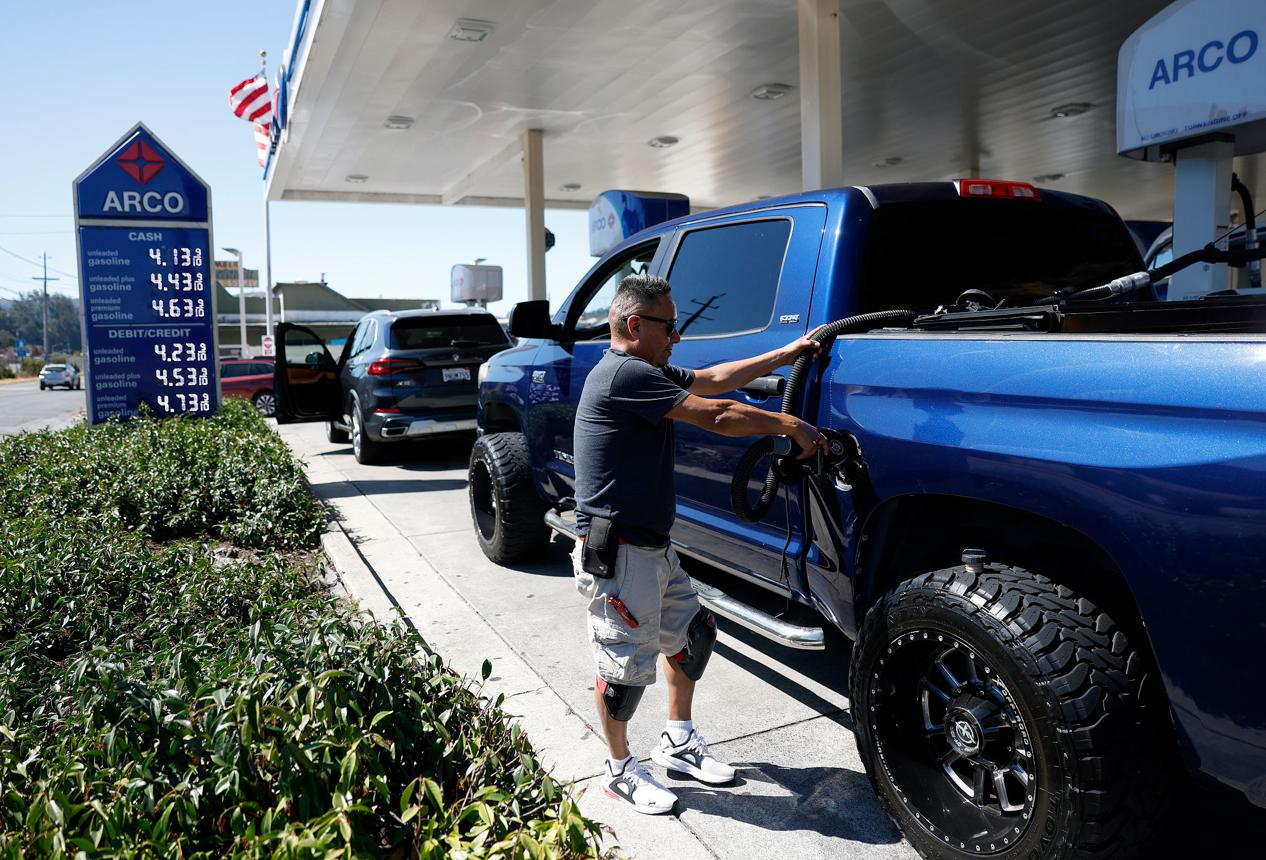







The crisis in the Strait of Hormuz almost immediately caused a fuel price shock felt in bank accounts around Australia.
Even if the Strait returns to normal, that shock will keep sending prices up in a range of industries.
Economic ripples will filter through to a plethora of products, such as plastics, fertilisers, building materials, industrial chemicals, and pharmaceuticals.
Anthony Halog, a researcher in the circular economy at the University of Queensland, says oil shocks take time to emerge through supply chains.
“We often focus on energy. But the real depth of our fossil fuel dependence is really in materials.”
And that’s because of an uncomfortable fact about our relationship to oil: it’s an ingredient in nearly every object we make.
It’s hard to put an exact number on it, but Dr Halog says it’s estimated that around 70,000 everyday products use fossil fuel-derived ingredients at some point in their supply chain.
Plastics, pharmaceuticals, and a host of other industrial chemicals are derived from oil. (Unsplash: Roberto Sorin)
Most of the everyday products we use, from foods to electronics to building materials, contain carbon that is predominantly sourced from fossil fuels — particularly “crude oil”, the raw material mined from the ground.
Karen Wilson, a chemist at Griffith University, says petrochemical refineries convert crude oil into a vast array of different substances beyond fuels.
In fact, most of these substances are more valuable than the refined fuels which end up in our energy and transport systems.
“The clever thing that the petrochemical industry is able to do is take this complex mixture… [and] convert every gram of it into a valuable product,” Professor Wilson says.
Dr Halog says the current shortages are a “wake-up call”, highlighting how vulnerable our material systems are to global shocks, but it could also drive investment in more resilient, and local, alternatives.
“For Australia, I think this is both a risk and a strategic opportunity,” Dr Halog says.
The oil-made components of our lifestyles
To get an idea of where every gram ends up, click on the cards below to look at a few examples.
Material systems are vulnerable to oil shocks
These are not the only examples of fossil fuel-derived materials.
Dr Halog calls fossil fuels the “chemical backbone of modern industry”, meaning oil shortages ripple right through global supply chains.
“In Australia, we are particularly exposed because we import most of our refined fuels and chemical feedstocks,” Dr Halog says.
These ripples can take different amounts of time to show up, depending on the industry.
But there are also ways to soften the blow, according to Mehdi Seyedmahmoudian, a researcher at Swinburne University of Technology.
“What we can do in the immediate to medium term is we reduce our dependency on oil in industries like energy production,” he says.
Switching to renewable energy can lower pressure on oil supply for manufacturing, according to Professor Seyedmahmoudian.
But in the longer term, Dr Halog says reducing our dependence on petrochemicals is necessary for achieving “true net zero”.
“Without tackling this industrial dependence on fossil feedstocks, we risk locking in emissions and vulnerability for decades to come.”
Are there alternatives to petroleum?
There isn’t one single substitute ingredient that can be switched out for petrochemicals, but Dr Halog highlights three particularly promising areas: recycled materials, green hydrogen, and biomass.
Recycling and reuse strategies can help recover things like plastics from waste streams.
Green hydrogen, meanwhile, is made from water with renewable energy. It’s a vital for things like fertilisers and green steel, as well as turning non-fossil carbon sources into useful materials.
Biomass is any organic matter coming from sources like forestry, agriculture or seaweed.
“Basically, naturally occurring and renewable carbon containing feedstocks that have a reduced impact on global warming,” Professor Wilson says.
For instance, most plants are ready sources of lignin, which has a lot of molecules that could be useful in pharmaceuticals, and cellulose, with sugars that can be turned into ethanol and then plastics and polymers.
“All of these components can feed into what we call platform chemicals,” Professor Wilson says.
Agricultural waste, like the fibrous waste left from sugarcane, could be turned into chemical feedstocks. (ABC Landline: Cameron Lang)
The problem with biomass is it can compete for resources with food, since it’s often coming from the same places.
Professor Wilson says this has prompted researchers to focus only on waste biomass, like agricultural waste and municipal solid waste.
“That allows you to get large quantities of bio-based feedstock that doesn’t compromise food production.”
Another potential waste source is carbon dioxide (CO2), taken directly from the atmosphere.
“The challenge with utilising CO2 is that it’s a very inert molecule,” Professor Wilson says.
In other words, it’s a very stable substance, making it hard and energy-intensive to turn it into anything else.
This is why CO2 molecules accumulate so easily in the atmosphere in the first place.
Can we move off oil entirely?
None of these alternatives are developed enough to switch in for petrochemicals.
“We have gone through a really massive, revolutionising transition in the energy sector. We have invented solar panels; we have invented wind energy; we have incorporated it into people’s lives,” Professor Seyedmahmoudian says.
A similar scale of change is needed in our materials systems, but Professor Seyedmahmoudian says there isn’t a similar level of social pressure, or government policy, to power it.
“I haven’t seen a revolutionary mindset in the industry to move away from petrochemical processes,” he says.
The petrochemical industry has had more than a century to find uses for every component in the fossil fuels it extracts. (Unsplash: Maria Lupan)
Professor Wilson points out the petrochemical industry has had more than a century to become embedded in our economy.
“The renewable chemicals industry has probably been trying to get off the ground for the last 20-ish years. So it’s got a lot of future ahead of it to achieve similar goals,” she says.
“The question is whether it’s going to be given the investment and time.”
She says subsidies are critical for boosting these industries.
Dr Halog agrees that investment is needed, adding that digitisation and AI may make smarter manufacturing systems that are better at reducing and using waste.
He says there’s an opportunity to invest in research and production that makes more sustainable materials — and makes them locally.
A transition like this is not just about protecting the environment, Dr Halog says.
“It’s about securing Australia’s economic future in a rapidly changing world.“