
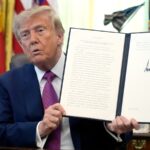
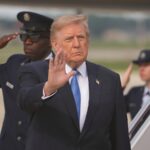
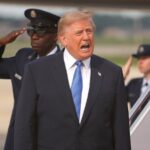


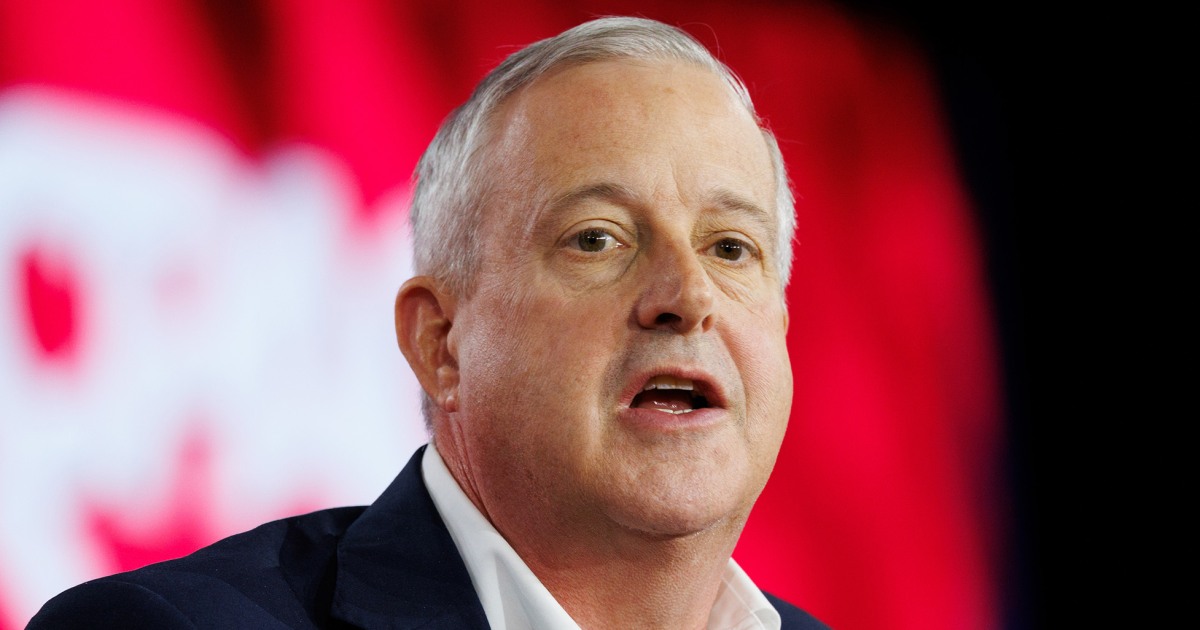
Standing next to President Donald Trump after Hurricane Helene devastated North Carolina in 2024, Michael Whatley wanted those watching the storm briefing to know how affected he was by the disaster, saying he had deep roots in the region.
Limited time: Save 25% on NBC News subscription
Get exclusive reporting, live Q&As and ad-free reading.

“As a son of western North Carolina, I was in Watauga County with Samaritan’s Purse recently and got a chance to see the devastation that all of these communities have hit,” said Whatley, who was then chair of the Republican National Committee and the Trump administration’s “recovery czar.”
Whatley is now running for Senate against Roy Cooper, North Carolina’s former Democratic governor. And on the campaign trail, his ties to the region are a central part of his political DNA. He frequently talks about how he “grew up” in the tiny town of Blowing Rock in western North Carolina. An NBC News review found that Whatley has used some variation of that line at least 15 times since he announced his Senate run in July.
“I grew up in a tiny, little town in North Carolina called Blowing Rock,” Whatley told conservative commentator Mark Levin in December. “We have one stoplight and a Hardee’s. You know, I went to church and I played sports and I worked.”
But records show that Whatley spent most of his childhood away from North Carolina. He was born in Michigan and stayed there until his early high school years. He then lived in Blowing Rock for roughly three years before going elsewhere in the state for college.
On Oct. 7, 1968, the Lansing State Journal ran a short announcement on the birth six days earlier of a baby, Michael David, to Mr. and Mrs. Robert W. Whatley.
Whatley’s picture appears in the 1983 East Lansing High School yearbook, when he was a freshman. The first time his picture appears in the Watauga High School yearbook, the school he attended while living in Blowing Rock, was as a member of the sophomore class in 1984.
Whatley’s campaign spokesperson said that the brief period of time he lived in Blowing Rock was formative for him, and there is no contradiction when he calls himself a “son” of the region.
“Michael Whatley moved to Blowing Rock, graduated from Watauga High School, earned degrees from the University of North Carolina at Charlotte and Wake Forest University, and today is a proud resident of Gaston County,” said DJ Griffin, his campaign’s communications director.
He added that Whatley “became an adult” in western North Carolina.
It’s a different sentiment than Whatley uses regularly on the political stump.
His own campaign website says he was “raised in Blowing Rock” and makes no mention of his Michigan roots.
In August, Whatley told Spectrum News that he “grew up in Blowing Rock, and, you know, delivered newspapers.” That same month he repeated the line, telling a conservative radio host, “I grew up in Blowing Rock, and I played sports, and I went to church.”
In September, he told The Talk Station, “I am a kid who grew up in Blowing Rock.” And in January, he told the “Agriculture in North Carolina” podcast that he “grew up in Blowing Rock, North Carolina, obviously a very small town.”
Whatley has been careful not to say that he was born there, according to interviews reviewed by NBC News. He has, however, not always corrected others when they say so.
During an Election Day radio interview in 2024, a local host referred to Whatley, who at the time was RNC chair, as a “North Carolina native” to start the interview. It went unchecked as the two went on to discuss Trump’s presidential campaign.
Even though he didn’t spend his childhood in the state, Whatley does have long-held ties to North Carolina both personally and politically.
He received two degrees from North Carolina universities. After a stint in President George W. Bush’s Energy Department, he became the chief of staff to former North Carolina Sen. Elizabeth Dole and in 2019 became the chairman of the North Carolina Republican Party.
That résumé has largely been de-emphasized on the campaign trail, replaced instead by the idea he was raised in North Carolina as he runs in a nationally watched Senate race against Cooper, who has a sizable lead according to public polling released Tuesday by Catawba College-YouGov.
Jason Husser, a political science professor at Elon University in North Carolina, said the issue could impact voters’ perception of Whatley’s authenticity. But, he said, they are more likely to focus on bigger issues.
“I see two dimensions here: whether it contributes to a perception of inauthenticity for Whatley, and whether depth of childhood ties matters to voters,” he said. “On the former, it likely doesn’t help Whatley persuade or ‘win back’ those who already were leaning for Cooper, but I doubt it moves the needle much on the latter.”
The race itself is seen as one of a handful that is likely to determine who controls the Senate, which Republicans currently hold with a slim majority.
Whatley is a longtime ally of Trump, who has endorsed his campaign, while Cooper was heavily recruited to run for the seat by the Democratic Senatorial Campaign Committee.
“This year appears to be setting up as a classic mid-term environment: a referendum on the president and his party,” Michael Blitzer, a professor at Catawba College, said in a statement when his school released the poll results this week. “Cooper has a commanding portion of those North Carolinians who disapprove of the president, which is a majority of likely voters so far.”