






The fragile Gulf ceasefire is looking more fragile by the hour.
The key trade at the moment seems to be missile fire between US and Iranian forces. Shipping through the Strait of Hormuz has slowed to a trickle again.
Much of this escalation happened after US markets closed on Friday, but the anxiety was there with investors sitting on the sidelines and if anything, selling rather than buying.
Wall Street’s benchmark index, the S&P 500 edged down 0.1% on Friday to be down 2% for the week.
US markets are not alone in the doldrums. In the second week of the supposed US-Iran ceasefire, Eurozone shares fell 1.3%, Japanese shares 2.7% and China was down 1.5%.
Korea’s Kospi tumbled more than 7%, in large part due to more than 50% of the index being made up by two stocks — the giant chip makers Samsung Electronics and SK Hynix.
They were sold off savagely last week when markets yelled “Abandon chips” after some eye watering gains over the past 12 months.
It’s not exactly the so called “chip wreck” yet, but investors appear to be nervously eyeing the lifeboats.
The tech-centric Nasdaq slipped 0.2% on Friday to be down almost 5% for the week.
The best gauge for sentiment in the microchip/memory sector, the Philadelphia chip index fell more than 5% on Friday and 8% over the week on mounting fears that the massive spending to build AI data centres may take too long to pay off.
“It’s too early to conclude that there’s a major correction brewing in tech, but what I would say is that the questions around profitability and the capex story are certainly not going away,” at AlphaCore Wealth Advisory chief investment strategist David Stubbs told Reuters.
Higher-than-expected US inflation on Thursday — it rose above 4% over the year to May — keeps alive the possibility of the Fed raising rates, particularly after Apple announced it will jack up prices on its computers due to the soaring cost of chips.
“We saw a similar dynamic during the pandemic, when supply chain disruptions limited access to semiconductors,” B. Riley Wealth market strategist Art Hogan said.
“Now, we’re witnessing a comparable supply shock, this time driven by memory, which is creating renewed inflationary pressure.”
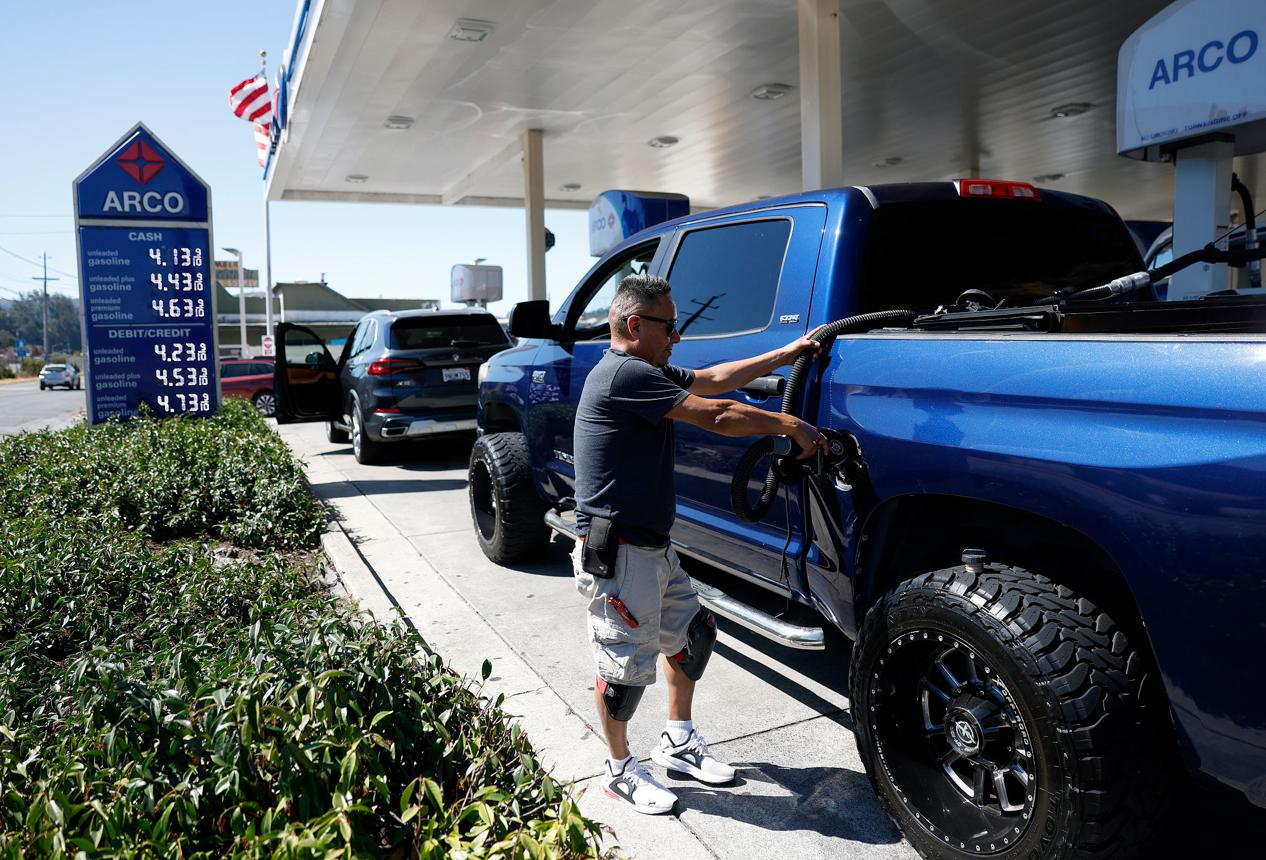
Operating in the other direction, oil prices continued to sink, which does provide some hope for inflation easing back to the Fed’s preferred level.
Brent crude futures settled at $US71.99 a barrel, down 4.3%, while the US benchmark West Texas Intermediate finished at $US69.23 a barrel, down 3.7%.
Brent has fallen more than 10% over the past five trading sessions.
“There is a growing sense that oil is going to keep moving through the Strait of Hormuz,” Price Futures Group senior analyst Phil Flynn said.
Traders’ anxiety has flipped from supply issues to demand issues.
“We’re going to get a flood of oil,” Mr Flynn said. “I think we’re going to see a huge flood of products.”
Oil giant Saudi Aramco resumed oil loading on Friday at its Ras Tanura terminal in the Gulf after a nearly four-month halt, shipping data from LSEG showed.
Two very large crude carriers (VLCCs), which can load cargoes of 2 million barrels, took on crude at the terminal while another waited nearby.
“There is a general selloff as the market reacts to the increased flows exiting the Strait of Hormuz and China not yet picking up crude demand,” oil market analyst at Sparta Commodities June Goh said.
Despite slightly hotter-than-expected inflation, the US dollar paused its recent gains on Friday.
That gave a bit of respite to gold and Bitcoin, but both lost ground over the week.
The Aussie dollar, though, continued to retreat.
Copper edged up on Friday but was down almost 2% for the week.
Iron ore also rose marginally, making its first weekly gain in seven weeks as traders covered short positions amid resilient demand in top consumer China.