




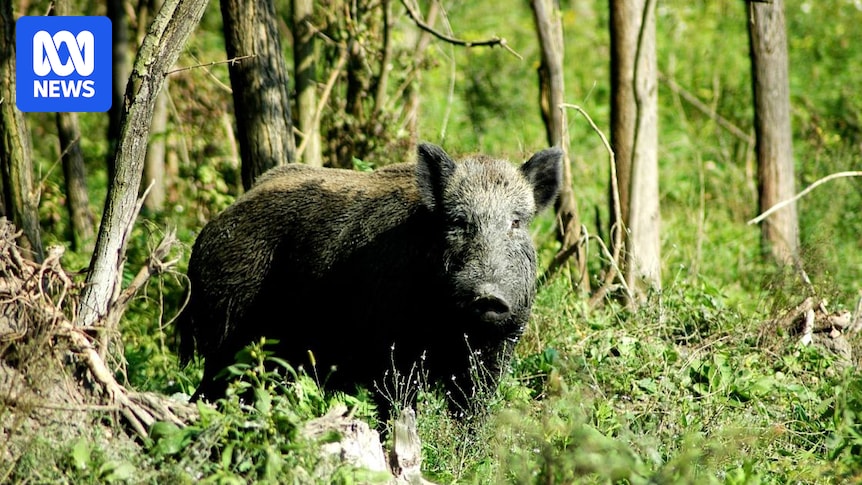
More than 220 years after a French explorer set pigs loose on Kangaroo Island, environmental authorities have eradicated the feral pig scourge on the picturesque South Australian island.
Already fox, deer and rabbit-free, there have been no feral pig sightings since three sows were destroyed in March 2024.
Readers are advised this article includes an image of a dead animal that has been poisoned.
The pigs have plagued the island, the third-largest island off Australia that is six times the size of Singapore, after French explorer Nicolas Baudin introduced pigs in 1803 at Hog Bay, now known as Penneshaw.
The achievement has been a silver lining after the 2019–2020 bushfires that devastated much of the 4,405 square kilometre island, making it the largest in the world to eradicate an established feral pig population.
Poison has been successful in dealing with feral pigs on Kangaroo Island. (ABC Landline: Kerry Staight)
It is also expected to save the agricultural sector millions of dollars in the future and protect native vegetation and animal species.
Farmer Rick Morris, who was the chair of Agriculture Kangaroo Island at the time of the fires, said the blackened landscape provided the island its only chance to eliminate feral pigs.
Before the fires, it was estimated about 10,000 feral pigs roamed wild on the island, causing $1 million damage annually to paddocks and natural habitats.
With the majority of the feral pigs perishing, and tree and bush cover burnt, Mr Morris said politicians came “with a bit of money” which led to the Kangaroo Island Feral Pig Eradication Program being established.
Rick Morris was the chair of Agriculture Kangaroo Island at the time of the devastating 2019/2020 bushfires. (ABC South East SA: Caroline Horn)
Since 2020, 878 feral pigs have been removed through the use of thermal imaging-assisted helicopter culling, ground shooting, detector dogs and ground baiting.
In March 2024, the last three feral pigs were detected on the property next to Mr Morris’s sheep farm.
The three sows were killed, examined and found never to have bred.
Mr Morris said pig numbers became “far worse” from the early 2000s when more of the island was converted to plantations rather than agricultural usage, with fewer farmers around to keep the population in check.
“The little bit of damage we were receiving turned into major damage,” he said.
“It would be nothing to have a paddock turned upside down overnight with large mobs of feral pigs, so all of a sudden we’re facing a major challenge.”
High-tech campaign
Department for Primary Industries and Regions South Australia (PIRSA) principal biosecurity officer for pest animals Brad Page is one of the people being credited with driving the program.
Loading…
He said being able to declare Kangaroo Island officially feral pig free after two years was “a massive achievement”.
Dr Page said helicopters and ground monitoring have been used to search for any sign of pigs.
“We’ve also been doing forensic analyses of environmental DNA, seeing if there’s any of that remaining in the creeks and waterways on Kangaroo Island,”
he said.
In addition, 1.475 million images captured by 350 cameras installed in remote areas of the Flinders Chase National Park have been scanned by artificial intelligence processes for any evidence of pigs.
Brad Page says eradicating feral pigs from the island is a big achievement. (ABC South East SA: Caroline Horn)
Like Mr Morris, Dr Page was one of those who saw the opportunity the fires presented.
“They [the pigs] were really devastating that western end of Kangaroo Island,” he said, adding the pigs trampled and trashed native vegetation, crops, pastures and polluted waterways.
“This is our one chance to get rid of them.“
Kangaroo Island Landscape Board’s Will Durack said he had received messages from around the world about the achievement.
Will Durack wants the island to stay free of feral pigs. (ABC South East SA: Caroline Horn)
Mr Durack and the board will now try to ensure the island will remain feral pig-free, either through escapees from the small number of pig farms on the island or from people bringing pigs to the island.
“Complacency will be the killer,” he said, but added that Kangaroo Islanders were proactive about their biosecurity and that the board would support the small number of pig farmers on the island to keep their animals responsibly.
Under the Landscape South Australia Act, farmers can be fined up to $125,000 or imprisoned for two years for allowing domestic pigs to escape confinement.
Plan for statewide strategy
In the wake of the success, Primary Industries Minister Clare Scriven has tasked her department with creating a statewide feral pig strategy to “utilise the learnings” from Kangaroo Island.
Rick Morris says he is concerned complacency may threaten the island’s feral pig-free status in the future. (ABC South East SA: Caroline Horn)
She said it had been a great collaborative effort that included PIRSA, the Kangaroo Island Landscape Board and landholders and that the program had received $7.5 million in funding from the federal and state governments and Livestock SA.
“The success of this program cannot be underestimated. It will deliver long-term benefits for agriculture, biodiversity and the local community for generations to come,” Ms Scriven said.