







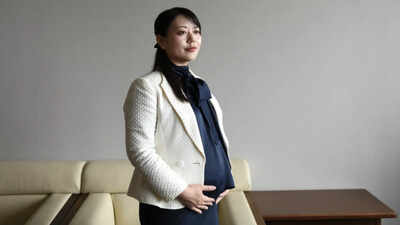
For most expectant mothers, taking maternity leave is more of a routine to get ready for a life-changing event, to usher in the next chapter in life. But, as it seems, Japan is having a hard time bracing for something so normal.Shoko Kawata, mayor of Yawata (a city in Kyoto Prefecture) in Japan, has become the center of a national storm — all because she decided to take the leave she needed.Per The Guardian, Kawata is set to welcome her first child this year, and she announced plans to take maternity leave. In a lot of places, this wouldn’t even make the news. In Japan, though, it seems like a historic move as well as a controversial one — no sitting mayor had ever done it! Naturally, that “unprecedented” decision calls for outrage. Supporters call Kawata a pioneer. Critics, on the other hand, claim she’s putting her personal life ahead of her public responsibilities.What started as a simple announcement exploded into a big conversation about how Japan treats working mothers, and what it means for women in charge, especially when tradition expects them to work non-stop, no matter what.
A mayor on maternity leave: A first for Japan
Kawata, now 35, made headlines when she became one of Japan’s youngest mayors in 2023 — she was 33 back then. She campaigned as an independent, promising better childcare options for families like hers. Her focus lay on issues like childcare, bringing new energy to rural communities, and tackling one of Japan’s biggest worries — its shrinking population.In May, she announced that she was pregnant and planned to take leave when her baby arrives in September. Right before birth, and then after — she’d pause her usual duties, relying on Yawata’s deputy mayor and her own team to keep things running smoothly.So why all the fuss?Under Japanese law, working mothers can take maternity leave, but the rule doesn’t cover elected leaders like mayors. Kawata was shocked to find out that she was the first sitting mayor to take it. “I’m surprised this is a first,” she told reporters, per The Japan Times, insisting the city was well-prepared. She stressed that taking leave should be normal, not news, and that organizations (not just women) should carry the responsibility to adapt.“Honestly, I didn’t expect it to turn into a controversy,” she told The Guardian. “There’s still this idea that you have to set your personal life aside to be taken seriously at work.”She added, “Japan needs to create an environment in which people can take that leave as a matter of course,” emphasizing that the onus was on the organisation to create a structure that supported change.“For men, childbirth doesn’t physically affect their bodies, so technically it’s possible to continue working while pushing private life into the background,” Kawata said, “But for women, physically, that simply isn’t possible.”Japan needs no introduction as a global powerhouse, but its gender gap is notorious in the country of the rising sun. According to The Guardian, in the most recent Gender Gap Report, it landed 118th out of 148 countries (that’s the lowest amongst the G7 countries) thanks in part to stubborn old stereotypes. Only 30% of local council members are women, and barely 1% of those are under 40. Kawata admitted, “Even though gender equality has improved, women still have a hard time reaching leadership positions here.”
Did Shoko Kawata get no support at all?
Not quite.Many people in Yawata were thrilled. Some sent the mayor handmade booties, others delivered congrats and words of encouragement. People said her honesty about pregnancy was refreshing — at last, a leader who gets what working women deal with every day.Advocates, activists, and ordinary citizens said this should be the norm. Why shouldn’t political leaders get the same support as everyone else? The symbolism hit hard, as this was one woman challenging the idea that leadership always has to look and act like a man’s domain. The catch, however, is that because mayors are elected, not regular employees, they aren’t protected by regular labor laws. Kawata’s leave exposes a gap that needs fixing.The naysayers came out swinging swiftly, claiming that she was putting herself over her job. A lot of the harshest criticism came — not surprisingly — from men. Many even wrote that mothers, and especially new mothers, have no place in government, or that a public official should be available around the clock.However, Kawata had her supporters rallying behind her, pointing out the obvious double standard. Men in politics often balance family responsibilities too. No one questions their priorities.
The looming shadow of ‘Matahara’
Now, in Japan, this isn’t a one-off backlash for women at work trying not to put their lives behind for the sake of the job. In the country of the rising sun, there’s even a word for harassment that targets pregnant women at work: “matahara.” The phrase refers to discrimination, bullying, or unfair treatment experienced by women because they are pregnant, give birth, or take maternity leave.Despite legislative efforts to improve workplace equality, plenty of Japanese women report that they get pushed out of jobs after pregnancy announcements or get passed over for promotions just for wanting a family. Kawata’s high-profile experience hits home for a lot of them — the very idea that motherhood could count against you, instead of being treated as a normal fact of life.
Is this a turning point for Japan?
Now, this all comes as Japan faces a real population crisis. More old people, fewer babies. The government wants more children born and tells women that work and family should coexist, but in reality, the system piles hurdles in the way.For many, Kawata standing at the crossroads is a bigger jumping-off point than just some local political conundrum. It’s about what kind of leaders Japan will accept, and whether it’s finally ready to let real life (pregnancy, parenthood, etc.) happen in the halls of power.As Kawata gets ready to become a mom herself, she’s become a living, breathing, and not-putting-her-life-on-hold symbol of a modern woman for change. A chunk of Japanese society sees her decision as a relic of progress and hope. Meanwhile, a bunch of conservative cynics and critics see only a woman deviating from tradition. One way or another, Kawata’s decision has forced people across Japan to rethink what it means to lead, to parent, and to balance the two. It’s a conversation the country can’t dodge anymore, especially with population decline as a seriously concerning issue in many Japanese municipalities.