






The centres of most galaxies, including the Milky Way, contain complex structures that have fascinated astronomers for a long time. These regions are dominated by two primary features named dense ‘nuclear star clusters’ and flat, rotating ‘nuclear stellar discs’. For decades, scientists believed these components formed through separate processes, as observations of various galaxies showed no clear relation between their sizes or masses.However, a major study from the ‘SMUGGLE-Ring project’ has fundamentally changed this view. By using high-resolution simulations, researchers have shown that these central structures are actually closely linked and grow together over time. This research provides a bridge between theory and observations, proving how a galaxy’s central bar acts as a conveyor belt, transferring gas in the heart of the system to fuel the growth of the cluster and the disc at the same time.
Conveyor belt at the core of a galaxy
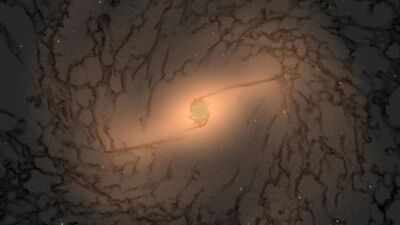
The research conducted by the Leibniz Institute for Astrophysics Potsdam (AIP) utilised a state-of-the-art simulation known as SMUGGLE to track the evolution of a Milky Way-like galaxy over four billion years. According to the study, the galaxy’s ‘stellar bar’ (a long, rectangular-shaped structure of stars stretching across the centre) is the engine supporting this growth. This bar creates gravitational forces that disturb the surrounding gas, causing it to lose its steady orbit and plunge toward the centre.As this gas is shifted inward, it doesn’t fuel just one structure. Instead, the simulation demonstrates that the bar acts like a cosmic conveyor belt, delivering gas from a single reservoir to the nuclear star cluster and the surrounding stellar disc at the same time. When this gas accumulates, it triggers bursts of star formation, building up hundreds of millions of solar masses worth of stars over billions of years. This means the two structures are not independent entities, but are effectively siblings born from the same source of fuel.
How do massive cluster mergers reshape the core of the galaxy
The evolution of a galaxy’s core is not always a slow, steady accumulation of gas. This research revealed the merger of massive star clusters. In the simulation, a particularly large cluster, weighing roughly 30 million times the mass of our Sun, twisted into the centre and merged with the existing nuclear star cluster.This is not just a theoretical possibility, the AIP report mentions that real-world observations have captured similar massive clusters in the bar of the galaxy NGC 1365, which are expected to collide with its centre very soon. Such mergers can rapidly change the size and mass of the galaxy’s core in a very short amount of time. Because most of these central regions also hide supermassive black holes, these mergers might leave a permanent mark on the black hole’s growth, further connecting the smallest parts of the galactic heart to the largest structures of the galaxy.
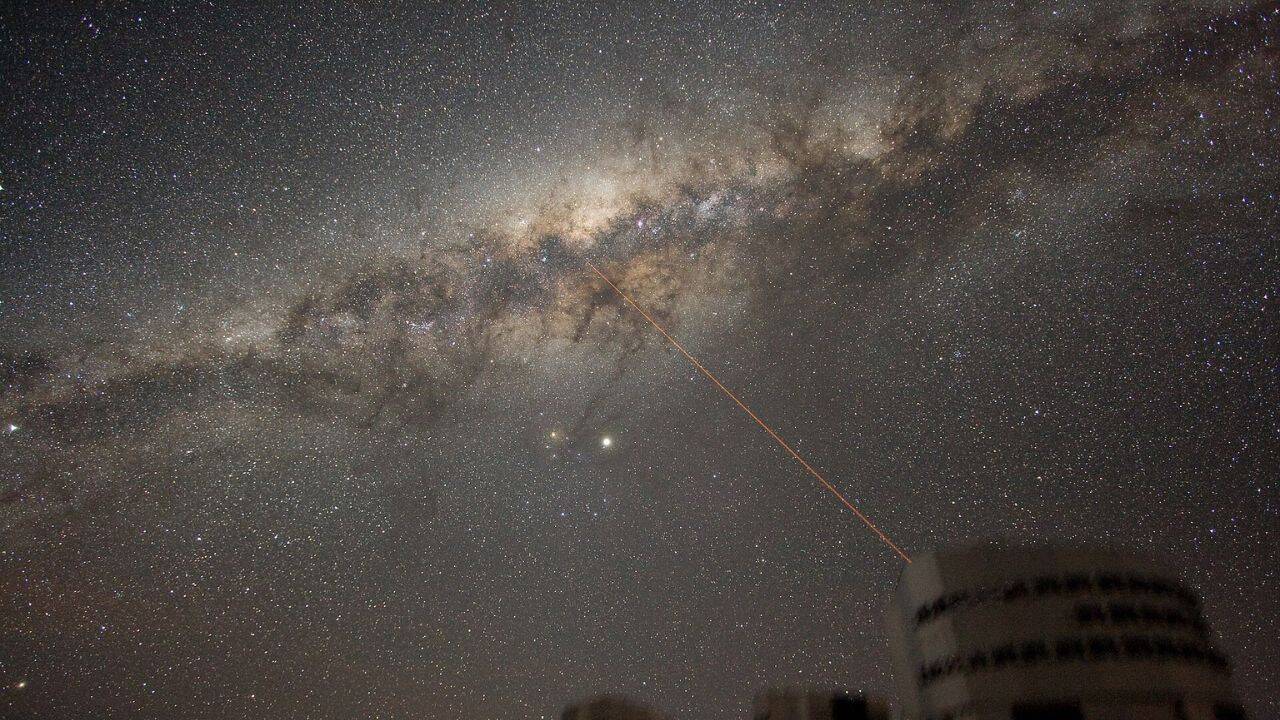
The Galactic Center as seen from Earth’s night sky. Image Credit: ESO astronomer Yuri Beletsky
Why did the connection between these structures remain hidden for so long
One of the most significant hurdles in astrophysics is that telescopes can only provide a ‘snapshot’ of a galaxy at one specific moment in its multi-billion-year life. The study points out that previous observational surveys failed to see a correlation between the mass of star clusters and the size of stellar discs because they were looking at galaxies at different stages of their development.The AIP report clarifies that the relationship between these two components naturally ‘drifts’ over time. During long periods of steady growth, the relative sizes and masses of the cluster and the disc gradually pull apart. Because of this, two galaxies that started with the same growth mechanism might look completely different if one is observed earlier in its life than the other. The simulation allowed scientists to ‘fast-forward’ through time, proving that even though they look disconnected in a single observation, their lives are intimately connected.
What role does dark matter play in this cosmic process
The success of this simulation relied heavily on its realistic treatment of dark matter. Unlike previous models that used ‘fixed’ backgrounds to represent the gravity of dark matter, this study used ‘live’ particles. As the study details, this approach allows dark matter to interact dynamically with the stars.This interaction is visible in what astronomers call a ‘dark gap’ around the bar region. This gap is evidence for the friction-like interaction between rotating stars and the invisible halo of dark matter that surrounds the galaxy. By including these realistic dynamics, the researchers were able to form a stellar bar that evolves naturally, which in turn leads to the realistic formation of the cluster and disc at the centre.
What does this mean for the future of galactic research
The findings from the SMUGGLE-Ring project represent a shift in how we understand the growth of galaxies. By showing that the disc builds from a central reservoir and expands outward, the study aligns with chemical analyses of the Milky Way which show younger stars at the outer edges of these discs.The researchers suggest that future projects will look into how external factors, such as mergers with other galaxies or the presence of a ‘circumgalactic medium’(the vast cloud of gas surrounding a galaxy) might further influence these ‘galactic hearts.’ This work ensures that the centre of a galaxy is no longer a collection of separate parts, but a single, co-evolving system driven by the heartbeat of its central bar.