







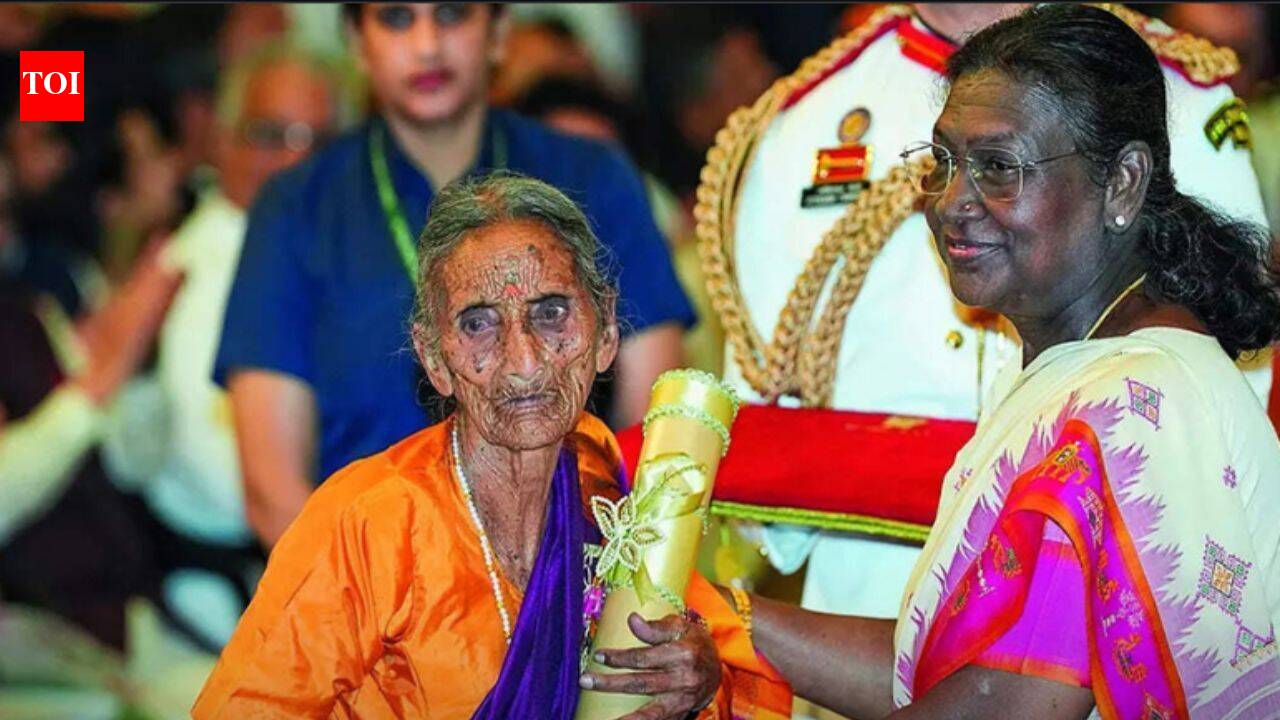
On the eve of India’s 76th Republic Day, a small, humble woman walked slowly onto a grand stage in New Delhi. She was 96 years old. As she reached out to greet Prime Minister Narendra Modi, she bowed to him out of respect. In a rare and touching moment, the Prime Minister bowed right back to her. The hall went silent for a second and then broke into loud applause. This woman was Bhimavva Doddabalappa Shillekyathara, a puppeteer from a small village in Karnataka. She had just received the Padma Shri, one of India’s highest civilian honours, from President Droupadi Murmu for her lifelong work in keeping an ancient art form alive.
Who is Bhimavva Shillekyathara ?
13 Jul 2026 | 13:11
What’s one stereotype about women that you’re tired of hearing?
Bhimavva was born in 1929 in Moranala village, in the Koppal district of Karnataka. She belongs to a family that has looked after a very old art form called Togalu Gombeyaata for more than a hundred years. This is Karnataka’s traditional leather shadow puppetry, in which puppets made of leather are used to tell stories. From a young age, Bhimavva learned this craft from her family. For more than seventy years, she has been performing and, quietly, patiently, keeping this art form alive when many people had almost forgotten about it.
What is Togalu Gombeyaata?
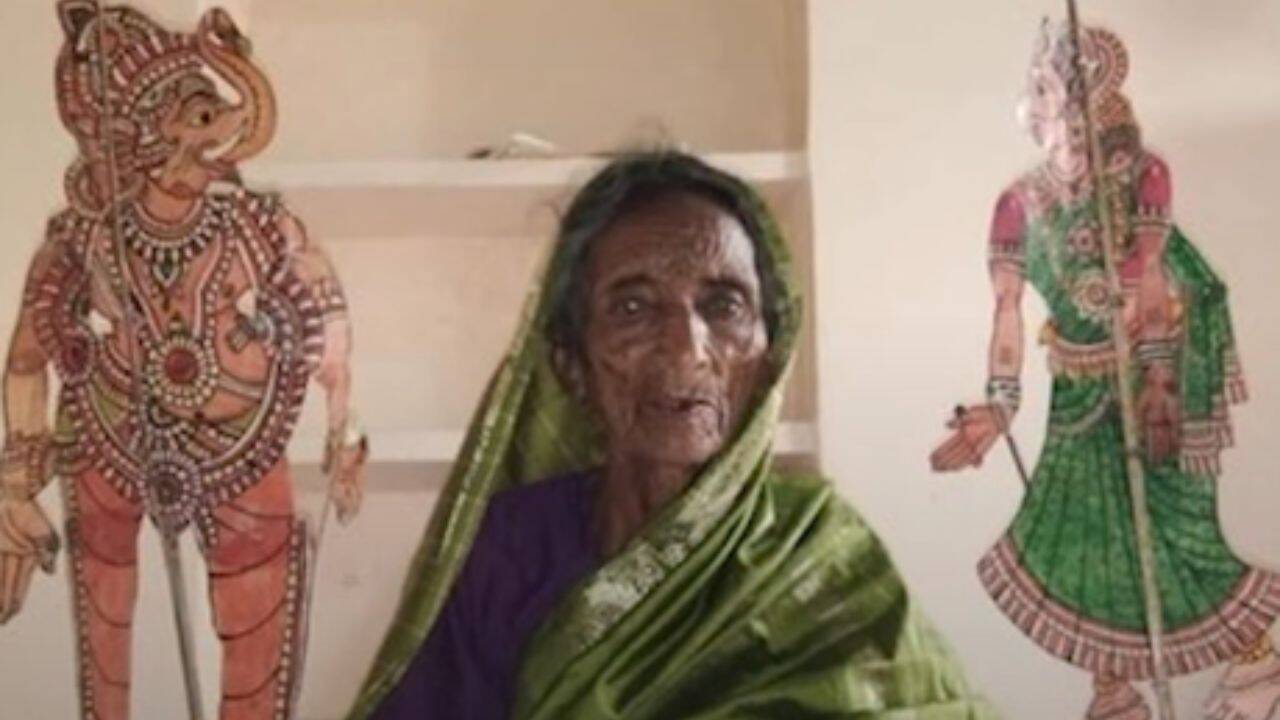
Togalu Gombeyaata
Togalu Gombeyaata means “leather puppet play” in Kannada. It is a form of shadow puppetry, where flat leather puppets are held behind a screen and lit from behind. As the puppets move, their shadows fall on the screen, and the audience watches the story unfold through light and shadow. This is not just entertainment. It is storytelling, music, and craftsmanship all combined into one. The puppeteers narrate great Indian epics like the Ramayana and the Mahabharata, along with other folk tales, while moving the puppets with great skill. Making the puppets themselves is also a careful craft, involving cutting and shaping leather into detailed figures.
A lifetime of dedication
For decades, Bhimavva performed these shadow plays in villages, keeping audiences spellbound with tales passed down through generations. As time went on and modern entertainment took over, fewer people practiced this dying art. But Bhimavva did not give up. She continued performing and, importantly, worked to train younger people so that the art would not vanish with her generation. Because of artists like her, Togalu Gombeyaata remains a living part of Karnataka’s culture today, instead of becoming only a memory in history books.
Recognition at last
The Padma Shri was announced in January 2025, and Bhimavva formally received the award in April 2025 at a ceremony in New Delhi. Along with her, other notable people from Karnataka were honoured that year, including folk artist Venkappa Ambaji Sugatekar and musician Dr. L. Subramaniam, who received the higher Padma Vibhushan. For Bhimavva, the award was not just a personal honour. It was recognition for an entire tradition, one that had survived mainly because she refused to let it fade away.
Why her story matters
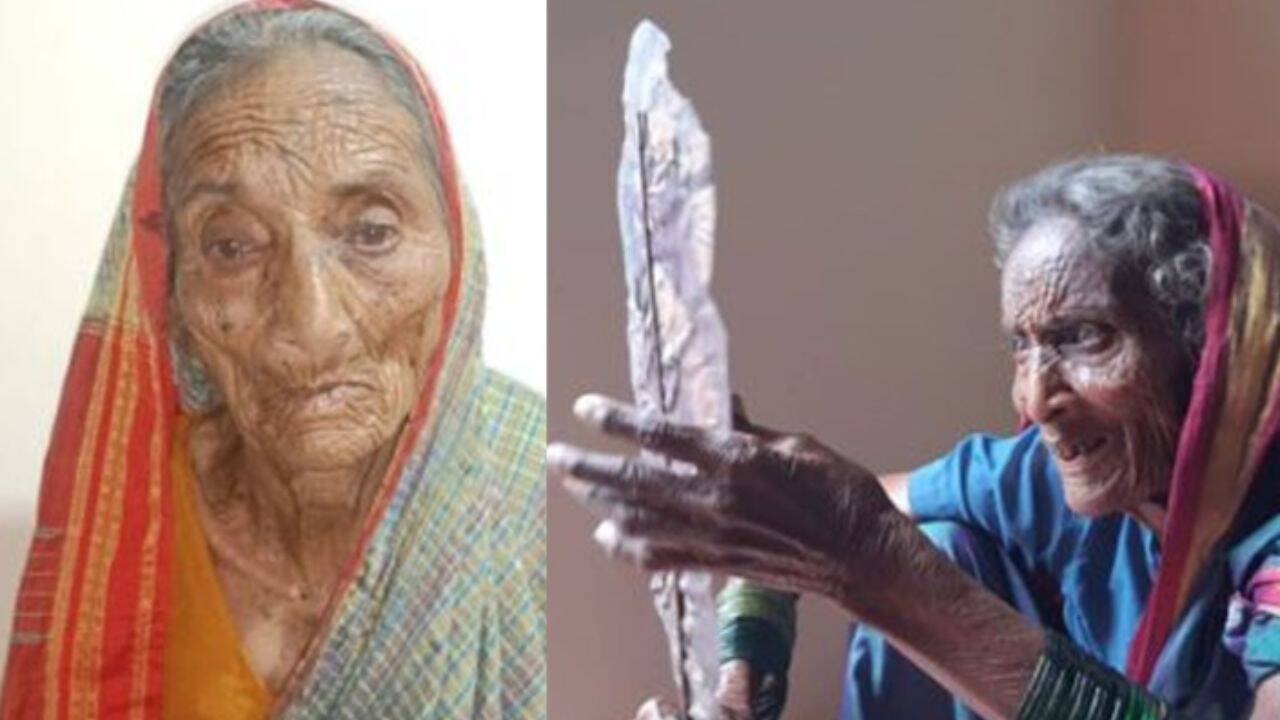
Why Bhimavva Shillekyathara’s story matters
Bhimavva Shillekyathara’s story reminds us that culture does not survive on its own. It survives because someone, often unnoticed for years, keeps practicing it, keeps teaching it, and keeps believing in it. At 96, when most people would have long stopped working, she was still a torchbearer for a centuries-old craft. The image of the Prime Minister bowing to her became a symbol of something bigger: a nation acknowledging the quiet, lifelong service of artists who protect its roots. Bhimavva’s life shows that true greatness often comes not from fame, but from patient, humble devotion to something worth saving.