








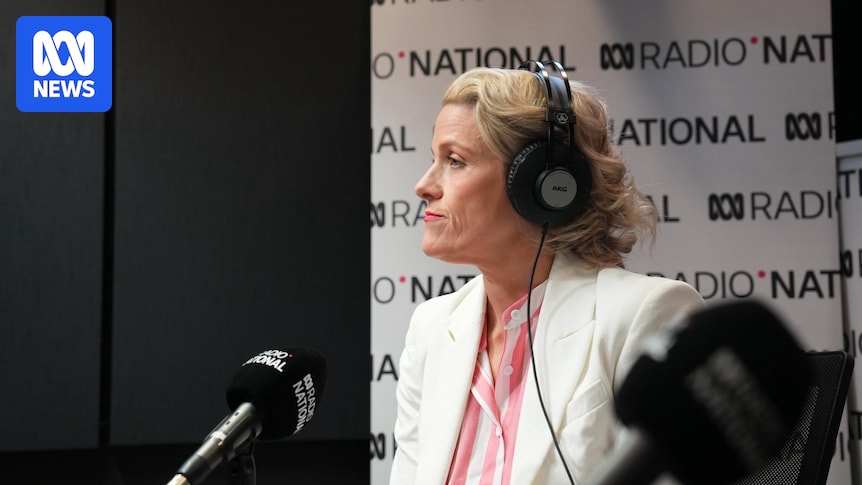
Housing Minister Clare O’Neil has acknowledged the property market is undergoing a correction, but insists the government’s proposed changes to negative gearing and capital gains tax are not the sole cause.
Auction clearance rates nationally fell below 50 per cent last week, their lowest level since the start of the COVID-19 pandemic, while house prices recorded their sharpest declines in Sydney and Melbourne.
Speaking on Wednesday, Ms O’Neil said the tax reforms would influence housing market outcomes but rejected suggestions they were the primary driver.
“The housing market’s cyclical in Australia, a very uncontroversial comment,” she told the ABC.
“We see periods of very significant house price growth and then we see the market make a correction, and that’s what we’re seeing at the moment.”
The minister pointed to a pre-existing downward trend in major housing markets and described current conditions as a “correction” after years of extraordinary growth.
“We’ve just been through what has been extremely high house price growth in the period from COVID, basically before COVID to today,” she said.
“House prices have gone up just in that time by more than 50 per cent and we are seeing a correction on that.”
A correction in market terms is considered a drop of 10 per cent, although Ms O’Neil’s office said the minister was speaking in a broad sense to describe what public data showed was a drop in prices.
The government’s tax overhaul aims to make it easier for first-home buyers to compete in the housing market by removing tax advantages that mainly benefit property investors.
The changes limit negative gearing tax deductions on investment property losses to new properties, while protecting the concessions for property already owned.
The government is also removing the 50 per cent capital gains tax discount on profits made on future asset sales, replacing it with an inflation-based discount.
Treasury modelling estimated 75,000 properties would be sold to first-home buyers which would have otherwise gone to investors if the changes were legislated.
Despite the government’s efforts to improve affordability, Ms O’Neil conceded that Australians were unlikely to notice a significant improvement in housing affordability before the next federal election.
Labor leans away from politically toxic property narrative
On budget night, the government painted an optimistic picture of the impact the tax changes would have on property values, forecasting continued growth, albeit at a slower pace.
Treasury modelling projected that price growth would slow by 2 per cent, although it did not specify over what period other than “medium-term”.
But in the weeks after the budget, the Commonwealth Bank revised down forecasts, with economists anticipating house prices would remain largely flat this year.
The bank’s original prediction just after the policies were announced was for a growth of 3 per cent.
Anthony Albanese has been careful not to ostracise Australians who already own property. (ABC News: Ian Cutmore)
The prime minister and other senior Labor figures had been careful to frame the dip in property values as a normalisation of prices, with politicians from all sides conscious of the need to appeal to first-home buyers and property owners.
Earlier this month, Anthony Albanese said the government was “rebalancing the system” so that investment decisions were driven by “economic reasons, not tax outcomes”.
Treasurer Jim Chalmers said the tax changes were not aimed at “a particular price outcome” but instead gave Australians trying to enter the market a “fair crack”.
This morning, Social Services Minister Tanya Plibersek urged people to “take a deep breath”.
“I think the fact that weekend clearance rates are a bit down at the moment, I think that’s just a feature of the instability we’re seeing globally and what’s happening with interest rates,” she said.
The Opposition had also struggled to articulate a goal for house prices, with leader Angus Taylor saying he wanted to see housing become “affordable again” and Shadow Treasurer Tim Wilson advocating for “market prices be at the market rate”.
Banks revise down growth estimates
It is still possible for the 2 per cent growth forecast to be achieved in the housing market in the medium term.
Economists at Commonwealth Bank pointed to several short-term headwinds for the market and a “loss of momentum” driven by a combination of the tax policy changes, inflation driven by the war between Iran and the US, and higher interest rates.
They warned the market reaction to the tax changes had been faster than expected, “increasing the risk of a sharper near-term slowdown”, but said the long-term impact “remains modest compared with interest rates, supply and population growth.”
Loading…
The bank is also anticipating prices to stabilise, then trend upwards, from next year.
ANZ is predicting a 2.1 per cent decline in housing prices in the capital cities this year, and a further 3.3 per cent decline in 2027.
In April, before the budget, the bank had predicted prices would rise 2.8 per cent and 2.1 per cent in the same period, but was already predicting a loss in momentum because of higher interest rates.
In May, investment bank Morgan Stanley predicted that house prices could fall between 5 and 10 per cent, which it described as “one of the largest price corrections over the past 40 years”.
Shadow Housing Minister Andrew Bragg said time would tell whether the housing market was experiencing a correction.
But he said high price was the persistent issue for first-home buyers.
“It’s a long game housing, and I’m not sure that she’s a forecaster,” Mr Bragg said.
“Ultimately, until we see a larger amount of housing supplied, I don’t think we’re going to see price stability or affordability.”