






The Sunday roast lamb, with seasonal vegetables and gravy, once a customary tradition in many households, remains the ultimate winter comfort food.
Add mulled wine, crackling fire pits and communal tables at a 200-year-old farm, and it is taken to another level.
For the first time in two centuries, the public has had the chance to dine on site on lamb raised by the Archer family at Longford’s Brickendon Estate, on the banks of the Macquarie River in Tasmania’s northern midlands.
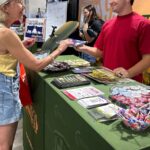
Brickendon also has a farm shop to help bring in money for the running of the historic property. (Supplied: Sarah Bensen)
The cattle, sheep and cropping property is Australia’s only privately owned UNESCO world heritage-listed convict site.
It has been run continuously by the Archer family for seven generations.
For farm manager Will Archer and partner Sarah Bensen, Tasmania’s off season campaign to drive interstate visitation during the cooler months, has become the launch pad for their farmhouse feasts.
The Brickendon Estate farm team: Grace Mitchelson, Sarah Bensen and Will Archer. (ABC Rural: Laurissa Smith)
The couple are keen to showcase Brickendon as an agrifood destination alongside its convict history, as Will’s parents — owners Richard and Lou Archer — transition into retirement.
“It might be the dream for a lot of farmers, to put their produce in front of other people,”
Mr Archer said.
“I’ve been wanting to do it for as long as I can remember.”
The pair have drawn inspiration from a trip to the UK last year, visiting other farms that have diversified into tourism.
Brickendon Estate is a 200-year-old sheep, cattle and cropping property. (Supplied: Sarah Bensen)
Many operators are cashing in on a surge in interest in paddock-to-plate experiences, off the back of the hit Amazon series Clarkson’s Farm.
“That’s brought farming and paddock to plate in front of the world,” Mr Archer said.
“It’s probably helping a lot of businesses like ours take the plunge into agritourism.
“Using your own produce, on your own farm and seeing other people eat it and enjoy it.“
In Tasmania, seven out of 10 tourists are seeking out agritourism experiences in Tasmania.
And locals are increasingly looking for the story behind their food too, a trend that grew during the COVID pandemic.
Brickendon Estate’s catering manager, Larna Pittiglio, designed the Sunday feasts menu. (ABC Rural: Laurissa Smith)
Larna Pittiglio is a big advocate for local food production, through her midlands-based catering business.
She has designed the Sunday roast menu, which also features ingredients from other farms, including pasture-raised chicken and a colourful array of heirloom winter vegetables.
“I’m passionate about more Tasmanian food on Tasmanian plates,”
she said.
“And educating people on how to better feed themselves, which is what this is all about.”
Roasted beetroot stuffed with whipped goat cheese, with heirloom carrots. (ABC Rural: Laurissa Smith)
The main attraction for most people visiting Brickendon is its colonial history and convict-built buildings.
In the 1820s, William Archer enlisted the help of the convict labour force to build the site.
Its brick granary, barns, woolshed, stables and blacksmith’s shop highlight the early colonial agricultural and pastoral farming practices.
Brickendon Estate has been run continuously by the Archer family for seven generations. (Supplied: Brickendon Estate)
But maintaining such a historic property does not come cheap.
Richard Archer said any income generated from agritourism would be reinvested in the upkeep of Brickendon.
“We’re finding that the sunlight is actually damaging a lot of the timber,” he said.
Richard Archer is working towards handing the farm over to the next generation. (ABC Rural: Laurissa Smith)
“We’re having to oil our buildings every two or three years.
“We’ve got rising damp issues, so the maintenance bill is huge.
“So it’s becoming a very expensive part of looking after a 200-year-old farm.”
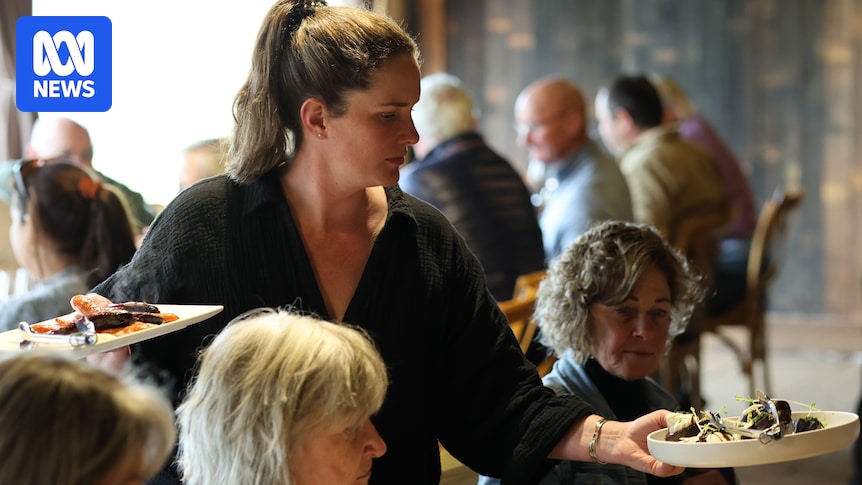
Brickendon roast lamb is served with Yorkshire puddings and gravy at the Sunday feast. (ABC Rural: Laurissa Smith)
In between serving platters of roast lamb and chatting to guests about the farm, Sarah Bensen clearly gets a kick out of bringing people together to share a meal that is distinctly Tasmanian.
“Strangers are getting to know each other,” she said.
“It’s a mix of interstate and local, a lot of ages, lots of families.
“It’s been amazing and everything we dreamed it would be.”