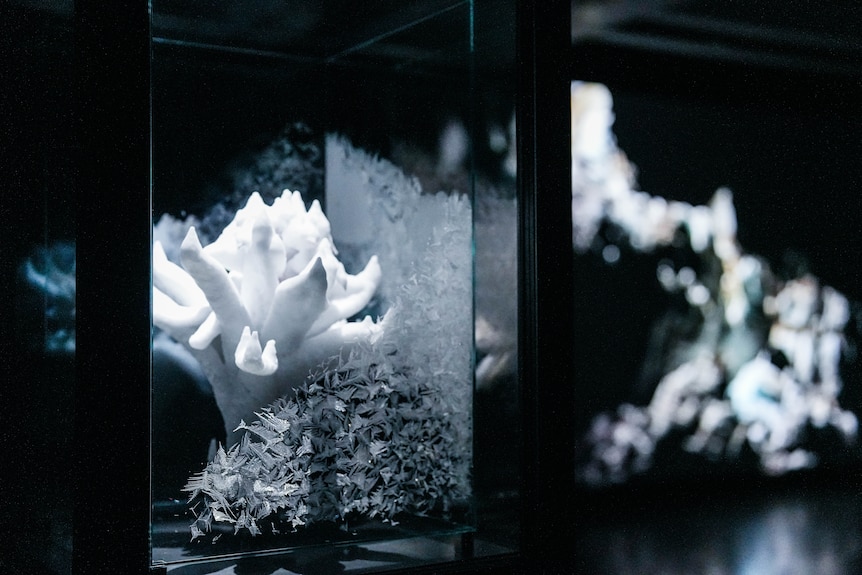









Scientists around the world are celebrating the creation of the largest magnetic map of the universe ever produced.
Five times larger than all previous efforts combined, the map will serve as a gateway to more answers about the material between stars, distant galaxies and how the universe has evolved over billions of years.
The project was created by an international team of researchers using the Square Kilometre Array, an enormous radio telescope in Western Australia’s remote Midwest.
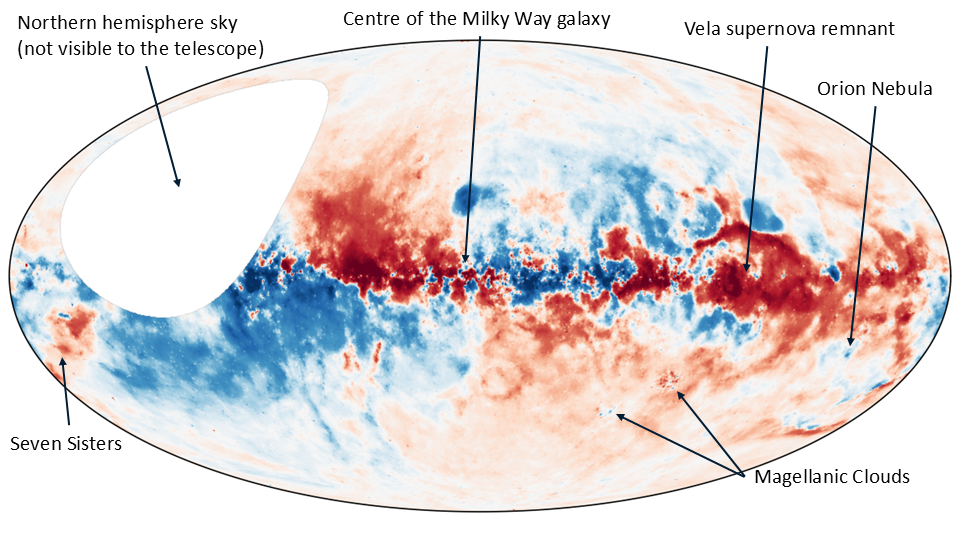
SPICE-RACS works on the principle that light twists as it travels through magnetic fields. (Supplied: CSIRO)
The team was led by Australia’s national science agency, CSIRO, and the SKA Observatory (SKAO), an intergovernmental organisation building two of the world’s largest radio telescopes.
How it works
The new map, called SPICE-RACS, works on the principle that light twists as it travels through magnetic fields.
SKAO Lead researcher Alec Thomson said his team found magnetic fields and determined their strength by measuring twists in the light detected by ASKAP.
He said measures were collected from nearly four million galaxies and reprocessed with original data to create the full picture.

Alec Thomson says his team found magnetic fields by measuring twists in the light detected by ASKAP. (Supplied: SKAO)
SKAO’s Chief Scientist Naomi McClure-Griffiths said SPICE-RACS was a huge leap forward, enabling researchers to answer questions they once thought were impossible.
“For the past 20 years, we have been working with essentially the same data set, which didn’t even cover the southern sky,” she said.
“We can even potentially find the answer to questions like when did magnetic fields first appear in the universe.“
The map is accessible to scientists around the world through the CSIRO’s data access portal.
CSIRO astronomer Tim Galvin said the data was already being used by many research teams.
“By having these resources freely available, we’re supporting the continued advancement of our collective understanding of the universe,” he said.
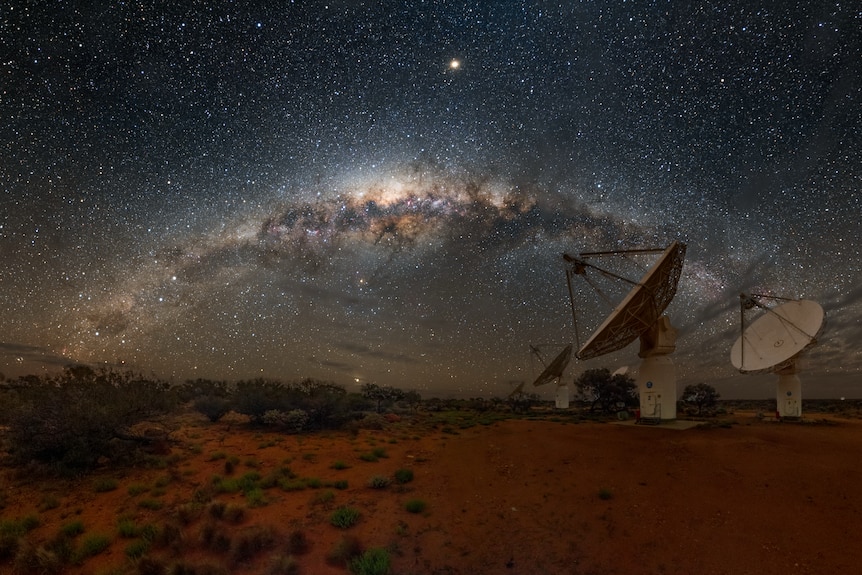
CSIRO’s ASKAP radio telescope on Wajarri Yamatji Country can see huge areas of the sky at once. (Supplied: CSIRO/Alex Cherney)
Biggest telescope
CSIRO said a magnetic image of this size was made possible by ASKAP’s ability to see huge areas of the sky at once, at a greater depth than many other telescopes.
The radio telescope is based at Inyarrimanha Ilgari Bundara, the CSIRO Murchison Radio-astronomy Observatory on Wajarri Yamaji Country.
ASKAP regularly scans the sky to build highly detailed maps of the Universe’s radio signals.
The SKAO is currently building the SKA-Low telescope at the same site and another SKA telescope in South Africa.
The incoming telescopes are set to begin early operations later this decade, to enable astronomers to chart details of the cosmic web in finer detail and help explain the origin of magnetic fields in the universe.