








The rise of One Nation is partly behind the government’s decision to take on tax reform in this year’s budget, the prime minister has admitted.
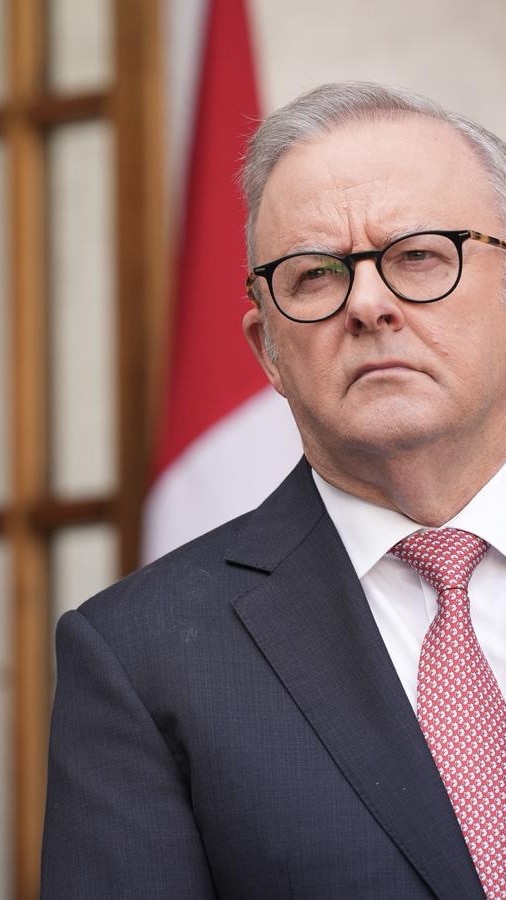
On Friday, Prime Minister Anthony Albanese delivered his economic outlook address to a Sky News Summit in Sydney, reiterating how the government is tackling the challenges it faces.
Among them, the consequences of global oil shocks, stalled business investment, the rise of artificial intelligence and the global shift to clean energy.
Mr Albanese also used the speech to justify the government’s recent budget measures to change capital gains tax and negative gearing, a decision that is facing a fierce backlash, particularly among business, and has fuelled a softening housing market.
He explained that the Howard government’s changes in 1999 to capital gains tax had turbocharged the property market as an investment vehicle, while this year’s budget measures will attempt to correct market distortions and boost supply.
“What we’re doing is rebalancing the system so that investment decisions are driven by economic reasons not tax outcomes,” he said.
But in questions after the speech, Mr Albanese was more candid, admitting it was a political call he had made with One Nation on the rise and a fear that if the government stood still, “the world will go past” it.
“That is in part the context that these decisions are made,” he said.
“If people think the economy isn’t working for them and they are working their guts out and they’re not getting opportunity, I tell you what, they will turn to more simplistic, grievance based politics.
“And that is the context in which my government is saying nuh-nuh, we’re going to deliver real change for the better.”
Treasury modelled One Nation tax proposal
In just 12 months, One Nation’s popularity has surged from 6 per cent to out-polling Labor in one recent poll, with Redbridge reporting it had a primary vote of 30 per cent to Labor’s 28 per cent.
The budget measures, sold as helping to get younger voters into the property market, instead fell flat according to Redbridge, with millennials preferring to vote One Nation over Labor or the Greens, and many gen Z voters unaware of the changes.
Mr Albanese said while he was critical of the rise of populism, on either the right or the left, labelling it “opportunism without answers”, he understood the frustration of voters.
“They don’t think the economy is working for them and they don’t want to work for the economy,” he said.
The prime minister revealed that One Nation’s alternate plan for negative gearing — capped at two properties, rather than banning it outright, with the exception of new builds — had been modelled by Treasury.
He said the advice was that it would lead to further market distortions as people who own multiple properties could stack up their debt to one of highest value and improve their deductions.
Mr Albanese defended his choice, reiterating that it would stop distortion while boosting supply.
“That is why we chose that model rather than one or two or five homes,” he said.