






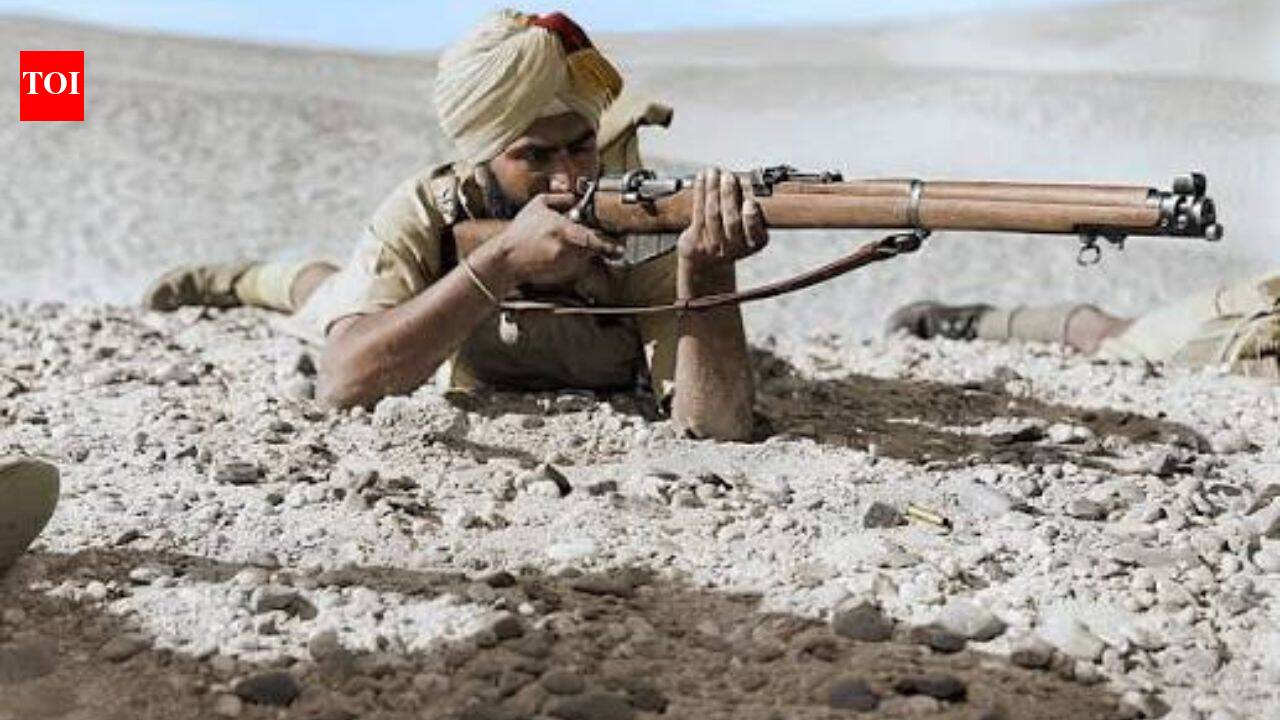
Since Independence, the Indian Army‘s standard infantry rifle has undergone several major changes, shaped by evolving battlefields, operational requirements and advances in small-arms technology. The journey from the British Lee-Enfield to the Russian-origin AK-203 reflects the Army’s effort to balance firepower, reliability, weight and ammunition requirements.A service rifle is the standard-issue firearm provided to infantry soldiers. It serves as the primary individual weapon in combat and is designed to offer reliability, accuracy, durability and ease of use across different battlefield conditions.For the Indian Army, the transition has moved from manually operated bolt-action rifles to self-loading rifles and, eventually, modern assault rifles.Lee-Enfield: The rifle India inheritedWhen India became independent in 1947, the Army inherited the Lee-Enfield .303, a British-designed bolt-action rifle that had been the standard infantry weapon of the British Indian Army.The Lee-Enfield was a robust and proven rifle, but militaries were increasingly moving towards self-loading weapons after World War II. Its bolt-action mechanism required soldiers to manually cycle the bolt after every shot.The rifle fired the .303 British cartridge and used a 10-round magazine. It remained in Indian service after Independence and was used during the 1947-48 India-Pakistan war.As infantry warfare evolved, the limitations of a manually operated rifle became increasingly apparent. The Indian Army therefore began looking for a self-loading weapon that could provide a higher rate of fire while retaining the range and firepower expected from a frontline infantry rifle.

7.62mm SLR
7.62mm SLR: Moving to self-loading firepowerThe next major step was the 7.62mm Self Loading Rifle, or SLR. India began manufacturing the British-designed L1A1 SLR under licence at Rifle Factory Ishapore.Unlike the Lee-Enfield, the SLR automatically cycled the action after firing, allowing soldiers to fire successive rounds without manually operating the bolt.The rifle used the 7.62×51mm NATO cartridge and a 20-round magazine. Its self-loading mechanism offered a substantially higher rate of fire than the Lee-Enfield, while the full-power 7.62mm round provided greater range and firepower.The SLR became the Indian Army’s main infantry rifle during the 1965 and 1971 wars with Pakistan and remained in service for several decades.However, its relatively heavy weight and powerful cartridge resulted in greater recoil. Carrying large quantities of 7.62×51mm ammunition also placed a greater burden on soldiers.By the 1990s, the Army was seeking a lighter assault rifle better suited to changing combat requirements. AK-series rifles were introduced as an interim solution, particularly for counter-insurgency operations, while India worked on a new 5.56mm rifle.
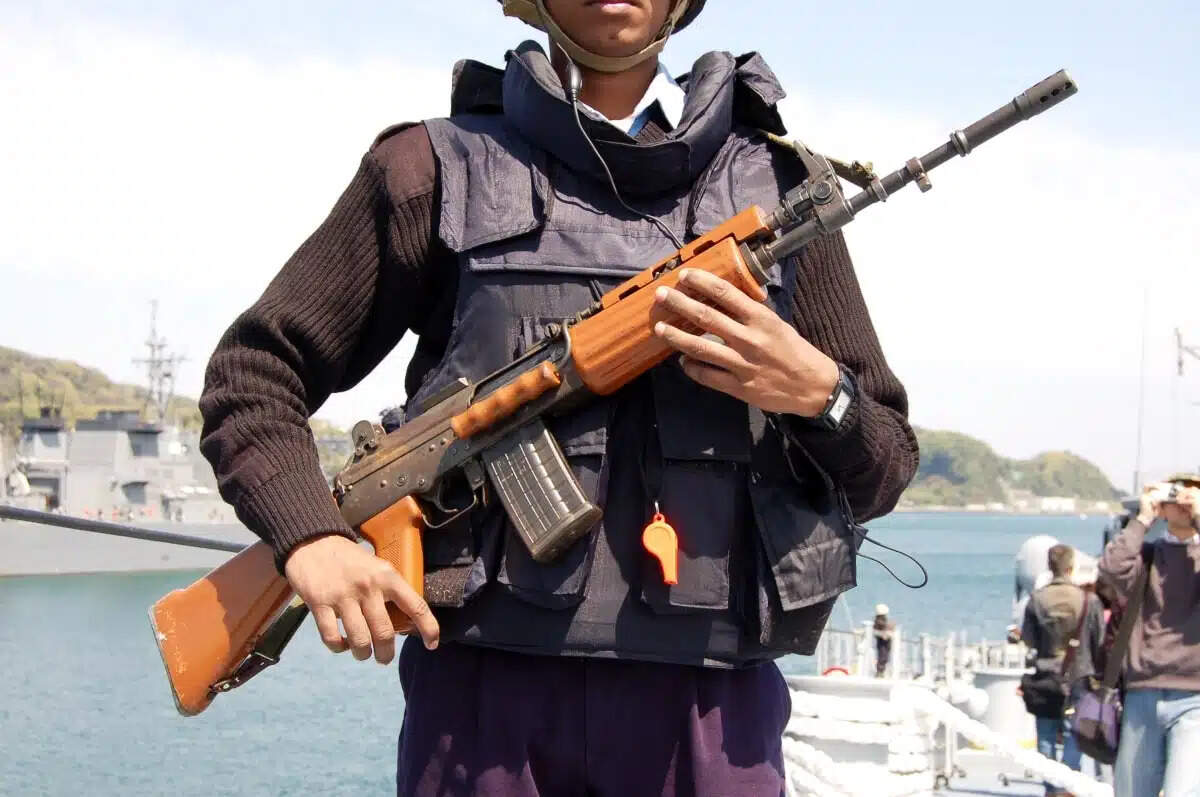
INSAS: India’s indigenous assault rifle
INSAS: India’s indigenous assault rifleThe Indian Small Arms System, or INSAS, marked India’s move towards an indigenous assault rifle. Developed by DRDO’s Armament Research and Development Establishment and manufactured by the Ordnance Factory Board, the rifle used the 5.56×45mm cartridge.The decision to induct the INSAS system was taken in 1994, with the rifle and its LMG variant beginning to enter service in the late 1990s.The shift from the SLR’s 7.62×51mm round to the lighter 5.56×45mm cartridge was aimed at reducing ammunition weight and allowing soldiers to carry more rounds.The INSAS saw combat during the Kargil War in 1999 and was subsequently used extensively by the Army, including in counter-insurgency operations.However, the rifle faced reliability concerns. A 2011 government reply recorded defects and accidents involving INSAS rifles, including issues related to materials and heat treatment. Modifications were subsequently made to address some of these problems.Over time, the Army sought a more modern and reliable rifle suited to contemporary combat and close-quarter engagements. In 2016, the government said the Army had decided to shift its requirement for a new assault rifle from 5.56×45mm to 7.62×51mm.That decision eventually paved the way for the replacement of INSAS with newer rifles.
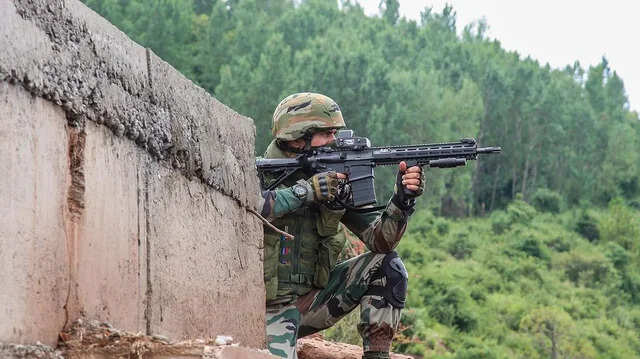
SIG716
SIG716: The interim solutionAs the Army sought an immediate modern assault rifle in the 7.62×51mm category, India turned to the American SIG716.The rifle was procured to meet the Army’s immediate requirement for a modern 7.62×51mm weapon, particularly for frontline troops.The SIG716 was therefore different from the AK-203 programme. While the SIG716 served as an immediate procurement to meet operational requirements, the AK-203 was selected as the longer-term replacement for the INSAS on a much larger scale.
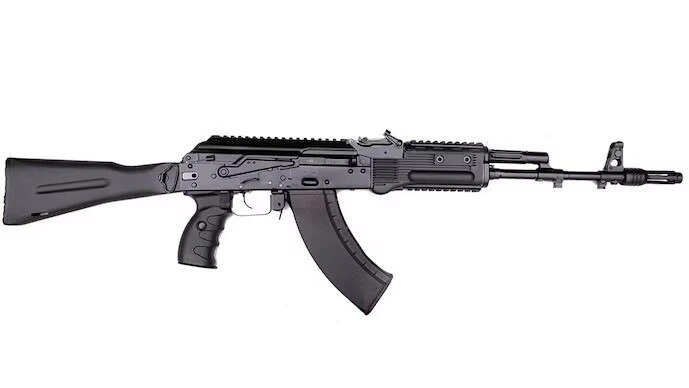
AK-203
AK-203: The latest chapterThe AK-203 emerged as the Army’s long-term replacement for the INSAS after the shift towards the 7.62mm category.Based on the Kalashnikov family of rifles, the AK-203 fires the 7.62×39mm cartridge. India and Russia signed a contract in December 2021 for more than 6 lakh AK-203 rifles.The rifles are being manufactured in India by Indo-Russian Rifles Private Limited (IRRPL), a joint venture involving Indian defence public-sector companies and Russia’s Rosoboronexport and Kalashnikov Concern.The AK-203’s 7.62×39mm ammunition sits between the two major calibres that preceded it in terms of characteristics. It offers greater power than the 5.56×45mm cartridge used by INSAS while being lighter and producing less recoil than the full-power 7.62×51mm ammunition used by rifles such as the SIG716.The evolution from Lee-Enfield to AK-203 therefore reflects a broader shift in the Indian Army’s infantry requirements: from a manually operated rifle designed for conventional warfare to lighter, higher-rate-of-fire weapons and, eventually, modern assault rifles built around the demands of contemporary combat.