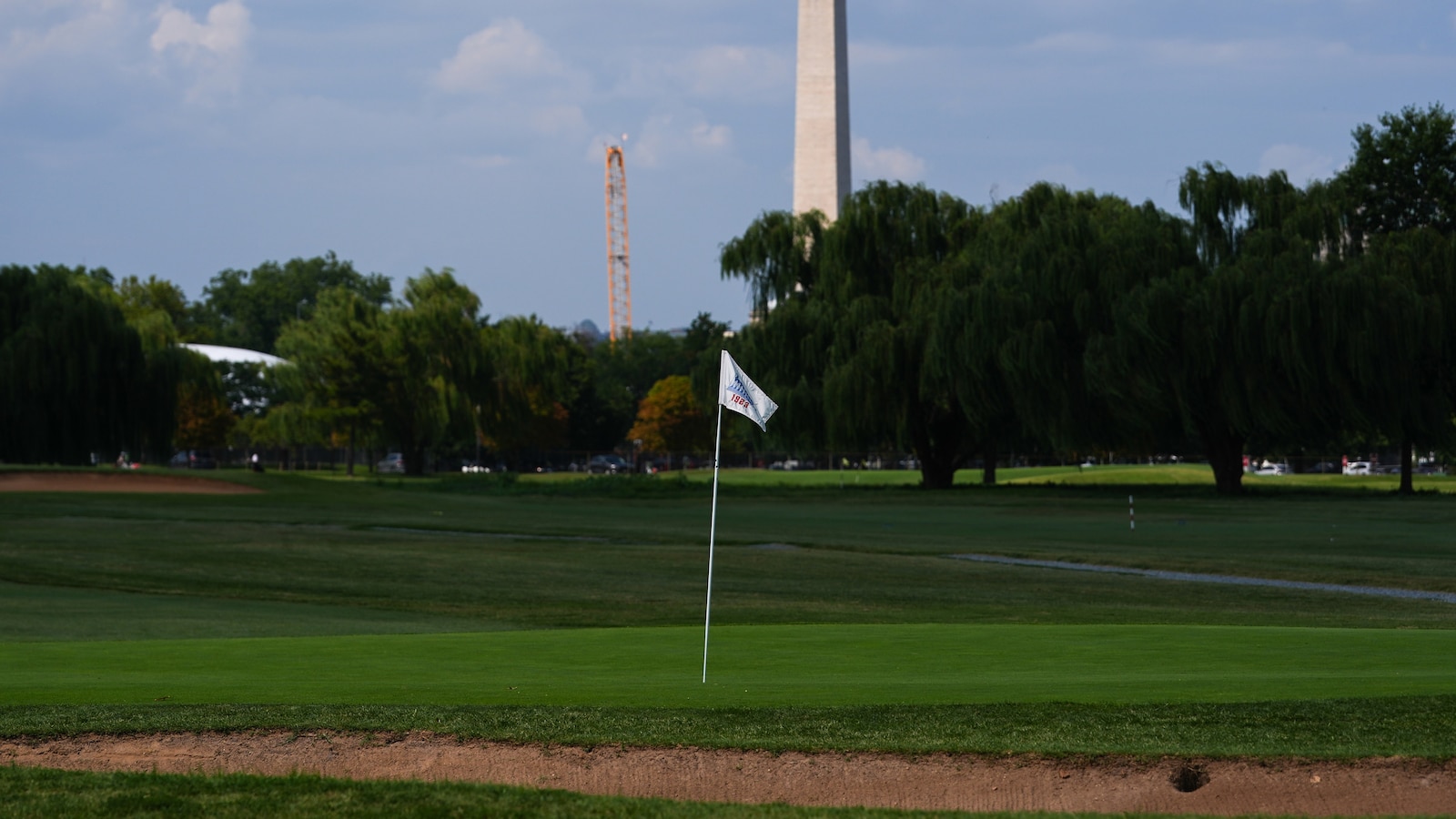






As you look out across the expansive Eungedup Wetlands, there is little evidence of its previous life as a potato farm.
Environmentalists bought the property near Denmark, 420 kilometres south of Perth, in 2023 with an ambitious plan.
Having raised close to $700,000, they wanted to flood the 104-hectare property and turn it into a sanctuary for rare and migratory birds.
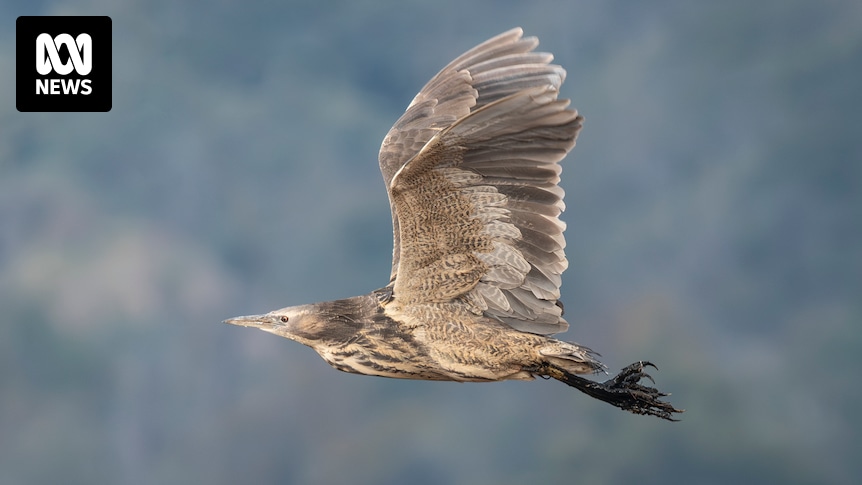
The endangered Australasian bittern travels to the wetlands in southern Western Australia. (Supplied: Helen Cunningham)
The plan, led by environmental group the Wilson Inlet Catchment Committee, was sparked by repeated sightings of the elusive Australasian bittern early in the decade.
Group spokesman Shaun Ossinger said the idea for a sanctuary for similarly rare and endangered birds grew from there.
The group has been managing the site since 2023.
Shaun Ossinger says the wetlands will provide a great research opportunity. (ABC Great Southern: Mark Bennett)
“It has 108 species that we’ve identified so far of birds that use the wetland,” Mr Ossinger said.
“It’s an absolutely amazing place.“
Paradise for birds
Wetlands were previously a feature of the landscape between Albany and Denmark.
But many were drained in the early 1900s for the development of agriculture.
The infrastructure used by previous farmers to drain the wetlands now helps control the sanctuary’s water levels.
“We have culverts that have been installed that allow us … to flood the wetland in winter and set it at a height to optimise the amount of habitat for the threatened fauna that we want to support,” he said.
“That ability to manipulate the water levels futureproofs Eungedup Wetlands, so this can be a safe haven into the future in a drying climate.”
The Eungedup Wetlands were once a potato farm. (ABC Great Southern: Mark Bennett)
Zoologist Tim Gamblin said the wetlands now played host to a vast range of waterbirds.
“In particular, the migratory waders … they fly down from Siberia after feeding there in that summer,” he said.
“They turn up at Eungedup and other local wetlands where the mud flats are exposed so they can feed up, put on weight and then fly back up to Siberia for the following summer to breed.”
Twitchers delight
The sanctuary is due to open to the public by the end of the year and is expected to be a major attraction for bird watchers.
The bird hide the public will be able to access is currently under construction. (ABC Great Southern: Mark Bennett)
Mr Ossinger said he hoped the project would spark others across the country.
“The bird hide is going to be the main point of access for school groups, travelling scientists or anyone in the community who is interested in seeing a functioning wetland,” he said.
“We’re hoping that what we did here is mimicked or copied in other places all around Australia.”
A 100-metre interpretive trail will tell the site’s Indigenous and farming history, while also providing information about the ecology of the wetlands.
Tim Gamblin says a range of water birds are utilising the wetlands. (ABC Great Southern: Mark Bennett)
Number of species visible
Mr Gamblin said there was a variety of birds that could be seen from the bird hide.
“You’ll be able to see the three species of rare cockatoos; the Carnaby’s cockatoo, the Baudin’s cockatoo and the red-tailed cockatoos will fly over,” he said.
“There’s a very good chance of seeing sea eagles and wedge-tailed eagles.”
Video from a network of cameras will be able to be accessed remotely for bird surveys or research.
Volunteers paint the wooden panels that will surround the bird hide. (ABC Great Southern: Mark Bennett)
Audio recording devices are also being set up strategically around the wetland to pick up the calls of the Australasian bittern.
“That means that when a bittern booms at dawn and dusk, the sound will be picked up by these very accurate monitoring systems,” Mr Gamblin said.
“We can see who was calling, where they were calling from and get a better idea of the population of bitterns.”
Threat management
A program is also in place to help manage threats such as foxes and feral cats.
“The very first photos we got were foxes all over the place walking around with water birds in their mouths,” Mr Ossinger said.
“We knew we needed to stop that straight away.”
Felixer grooming traps are used in the area to manage wild cat populations. (ABC Great Southern: Mark Bennett)
Control measures, including shooting, trapping and baiting, as well as the use of higher-tech Felixer laser traps, have reduced fox numbers by 85 per cent.
The main focus is now on reducing cat numbers.
“Cats are always the bugbear,” Mr Ossinger said.
“When you remove an apex predator like the fox, then what happens is that vacuum will oftentimes get filled by a cat.
“We were expecting that to happen and it did.”